What an MRI Tech Actually Does
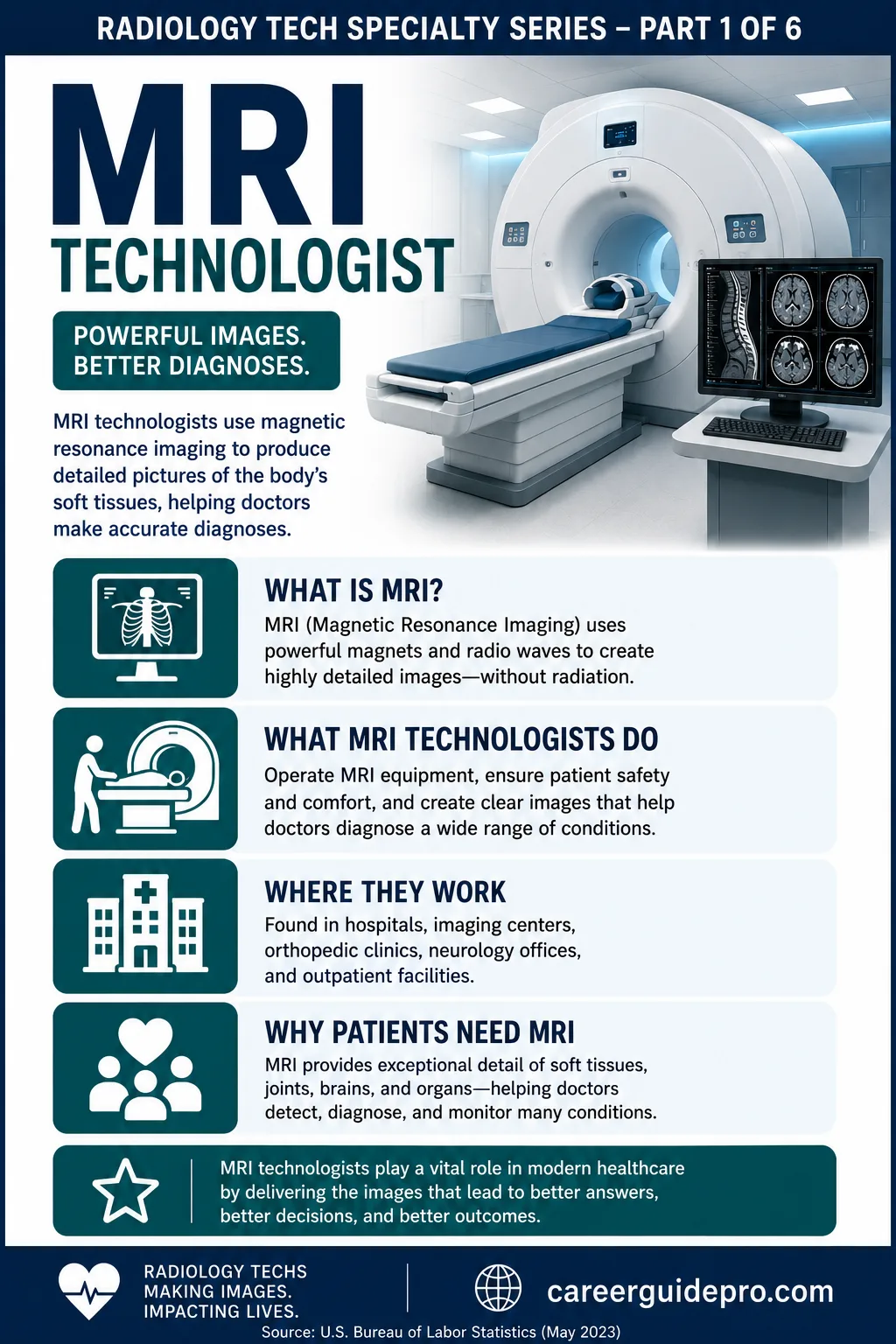
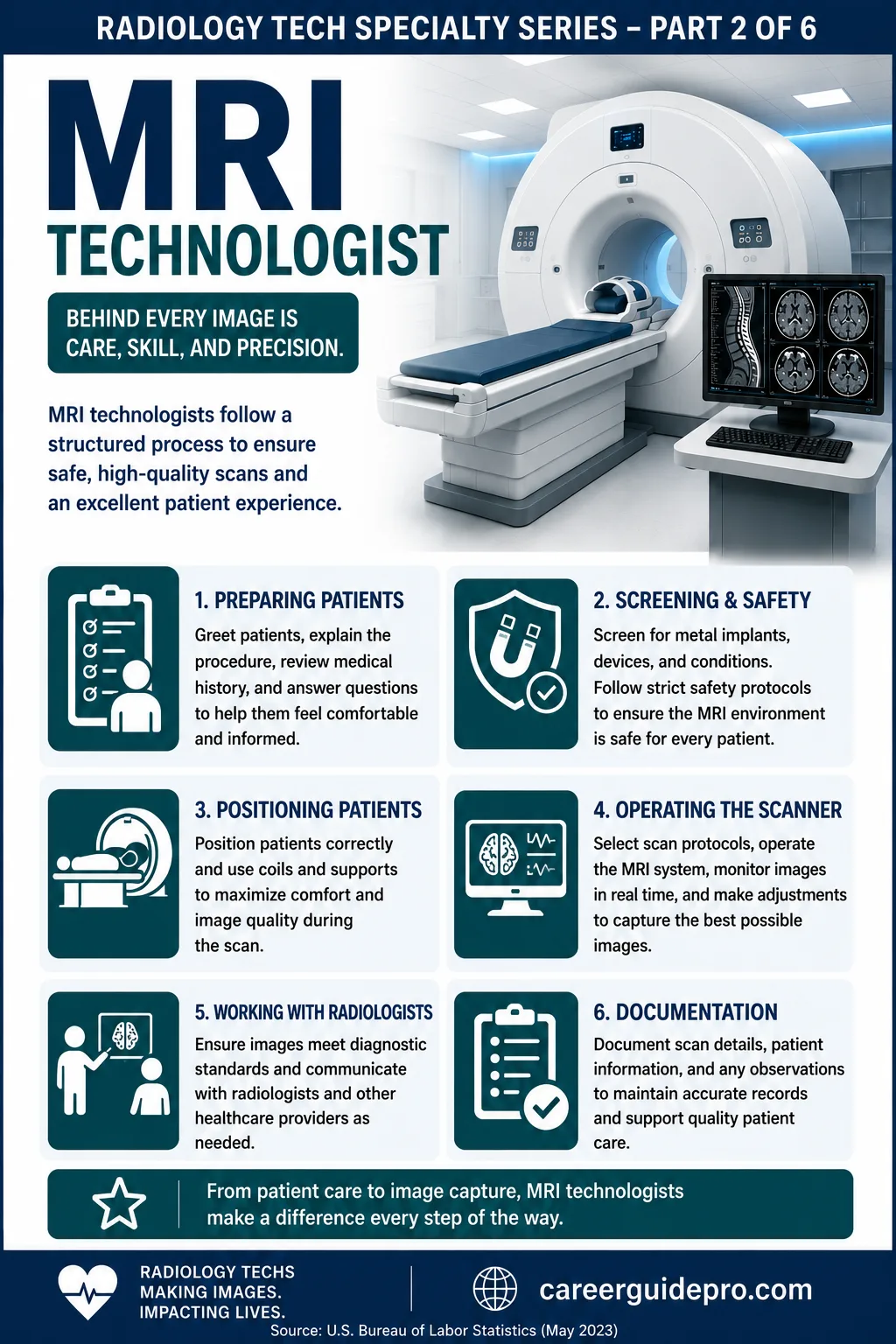
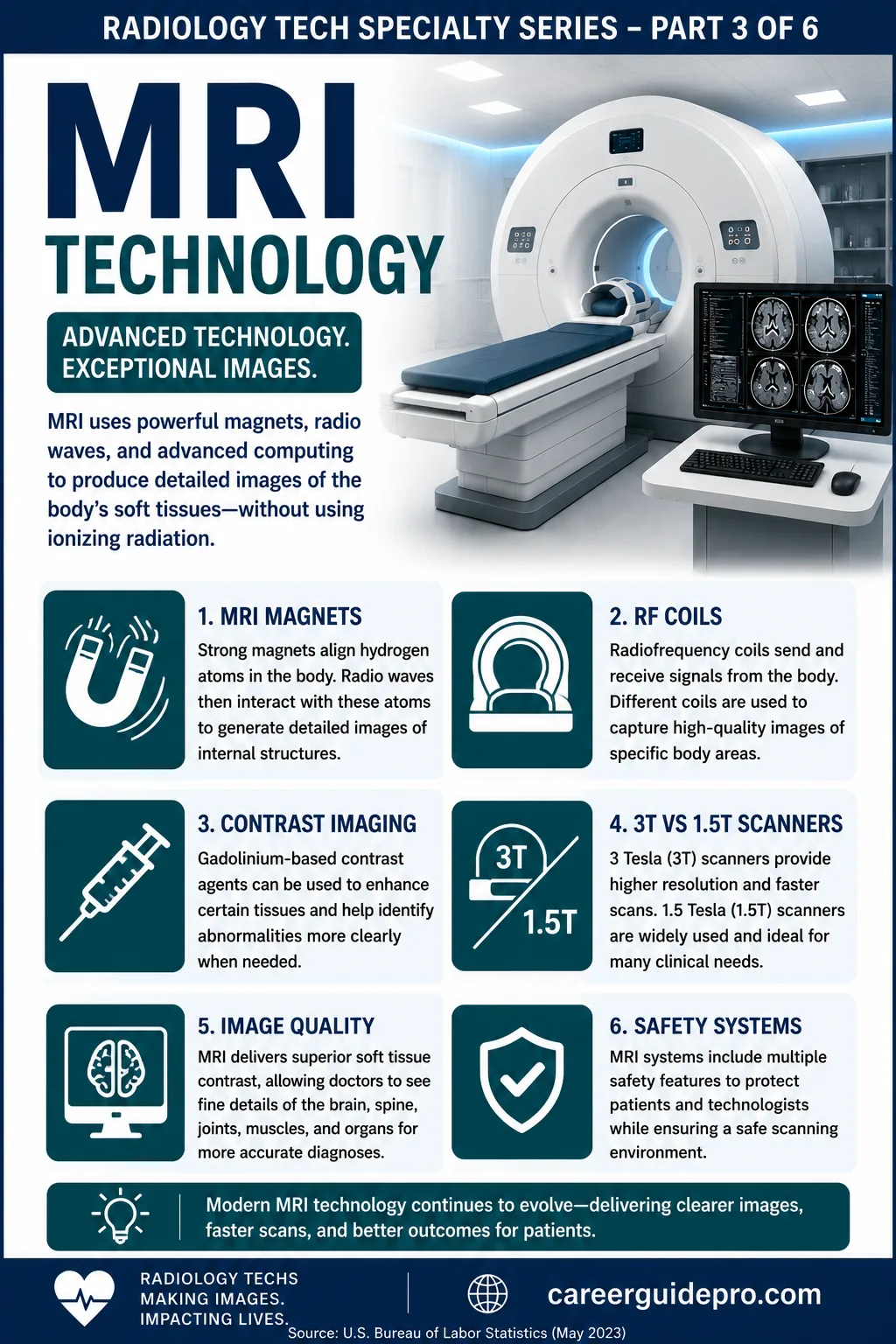
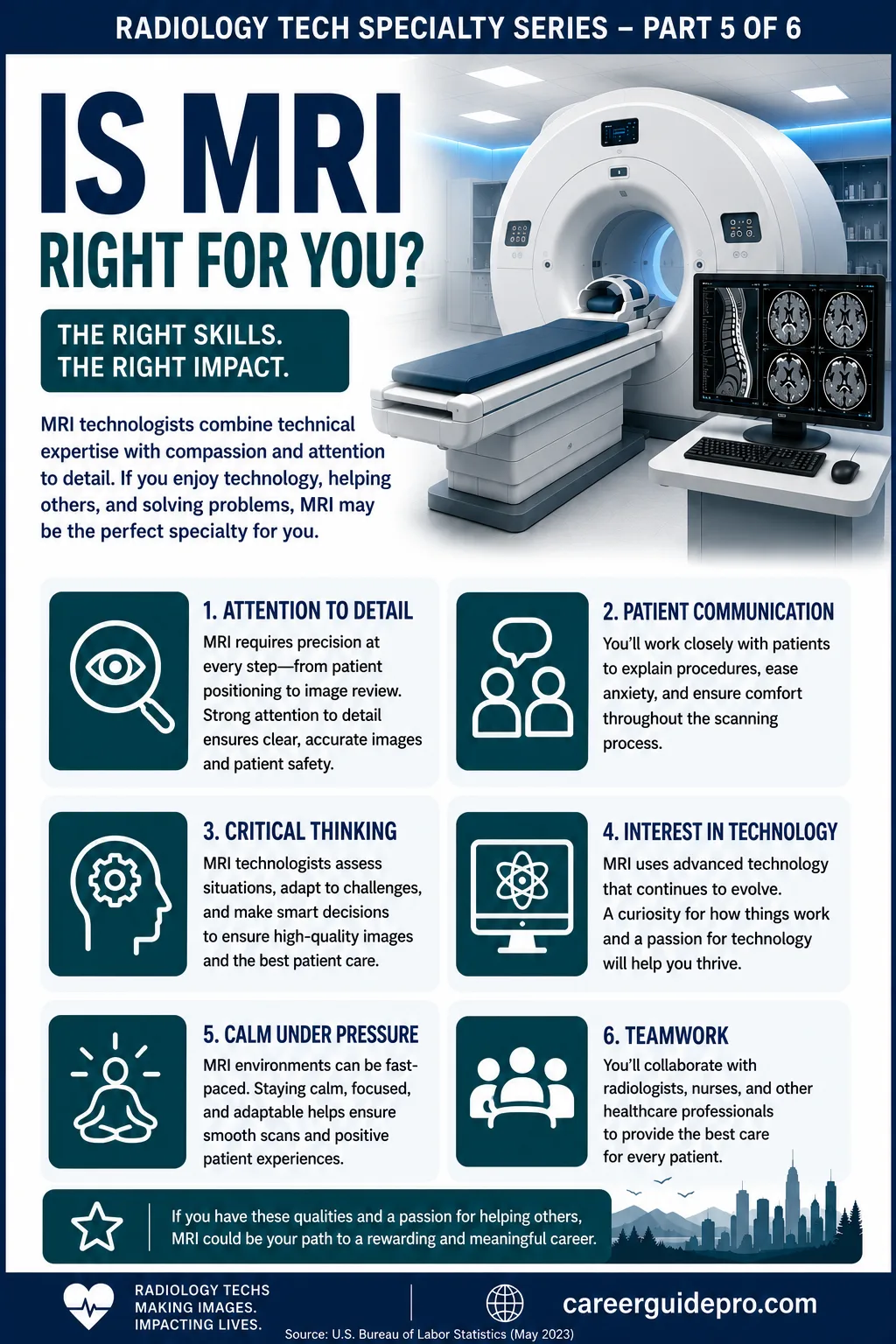
An MRI tech runs longer, more complex exams than general radiography. You position patients, run pulse sequences, and coach people through claustrophobia, anxiety, and breath-holds while they lie still inside a loud, enclosed magnet. Every single patient gets rigorous metal and implant screening before entering — pacemakers, aneurysm clips, and shrapnel can be life-threatening near the field. You may administer contrast per facility policy. Like all techs, you never interpret images or share findings; scope is set by state law and your facility. Screening vigilance isn't paperwork here — it's the personality the specialty selects for.
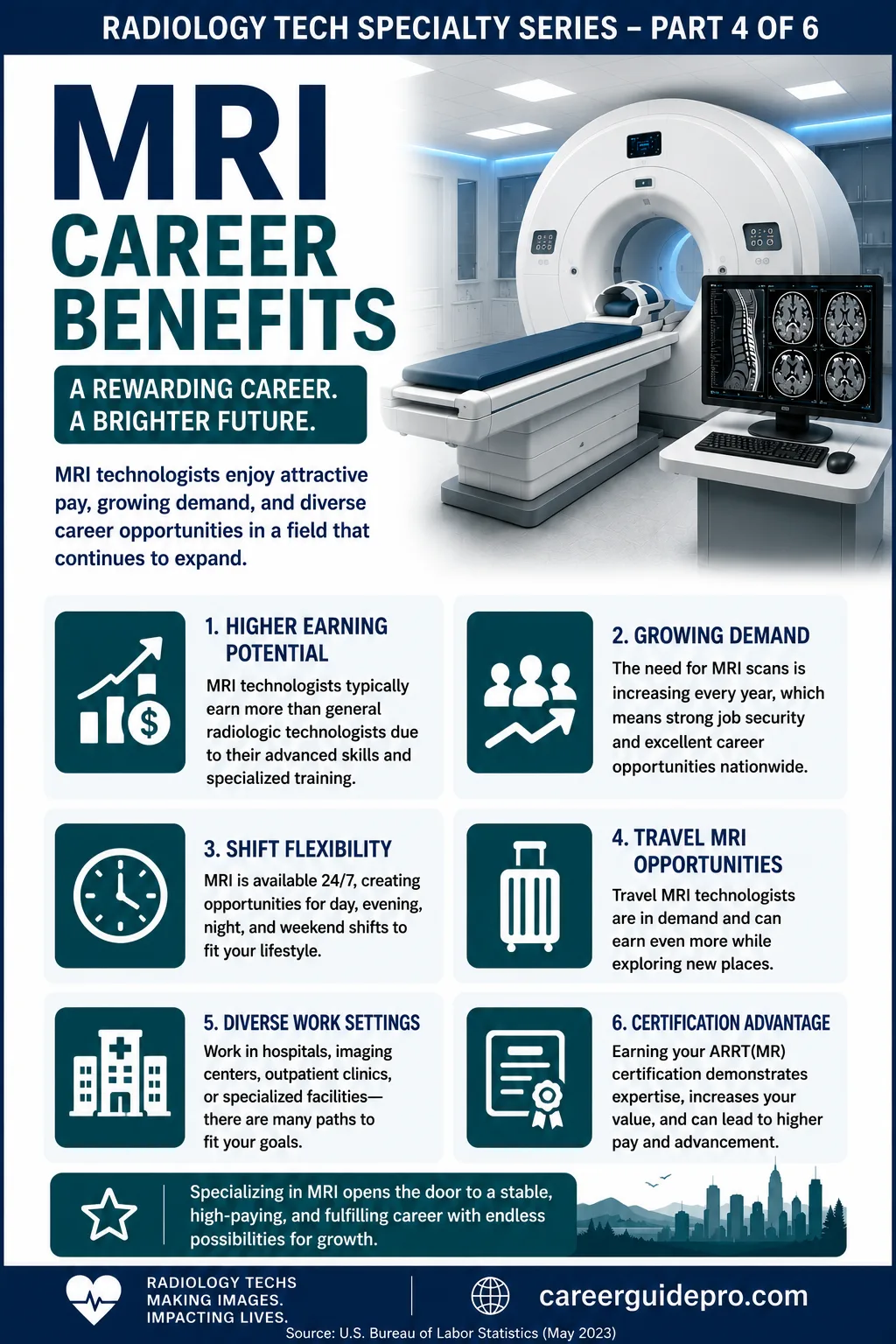
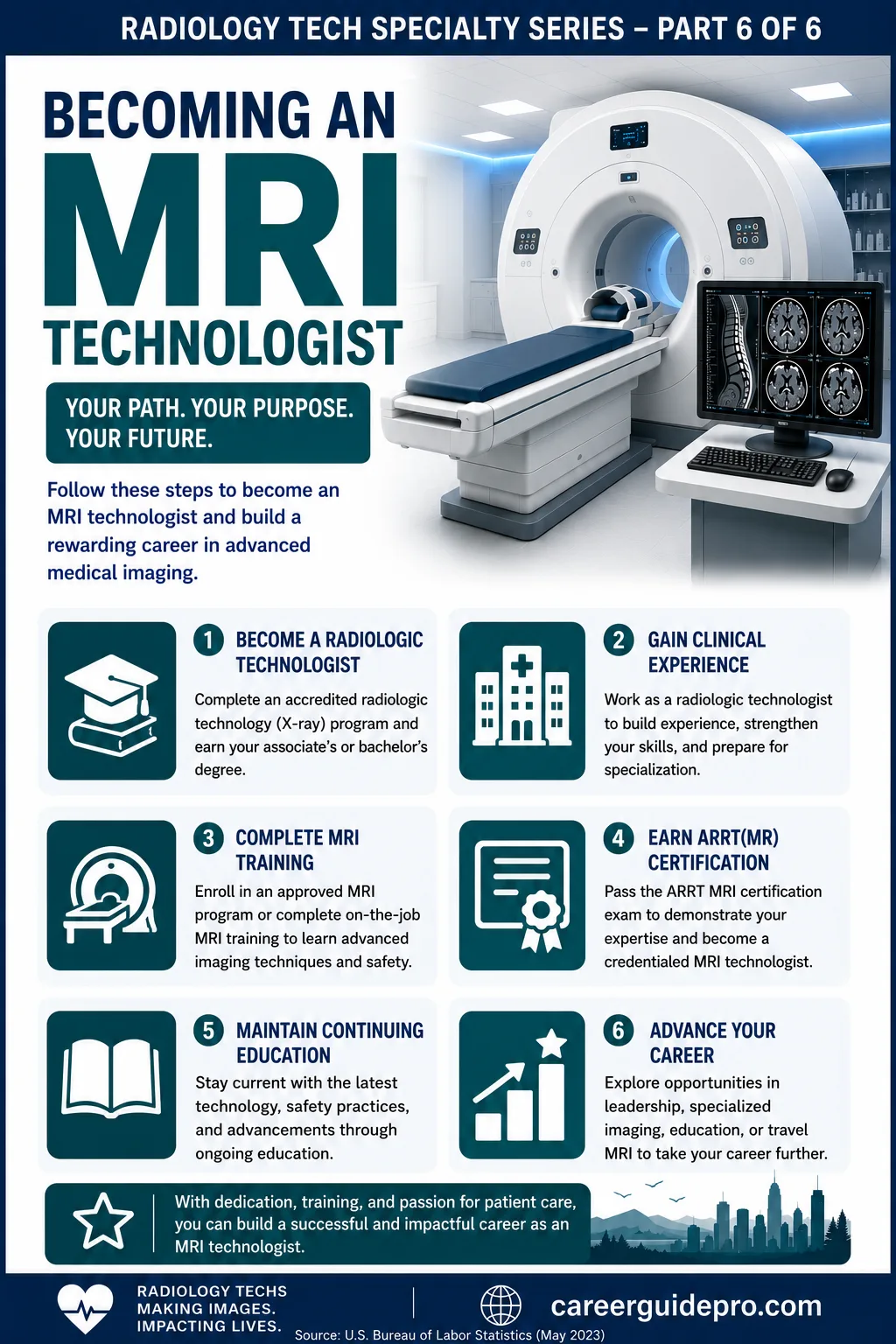
For working techs, MRI is a voluntary ARRT post-primary certification: hold an active R.T.(R), complete structured education in MRI physics, safety, and procedures, document supervised clinical procedures [VERIFY: exact procedure counts and structured-education requirements at ARRT.org], then pass the ARRT MRI exam ($225). The honest bottleneck is supervised hours — unlike CT, MRI cross-training is scarce without employer cooperation. The appeal: no ionizing radiation, steadier pacing, strong demand. Rad tech median pay is $77,660 (BLS May 2024); MRI techs are tracked separately [VERIFY: current MRI median from O*NET 29-2035.00].