What a CT Tech Actually Does
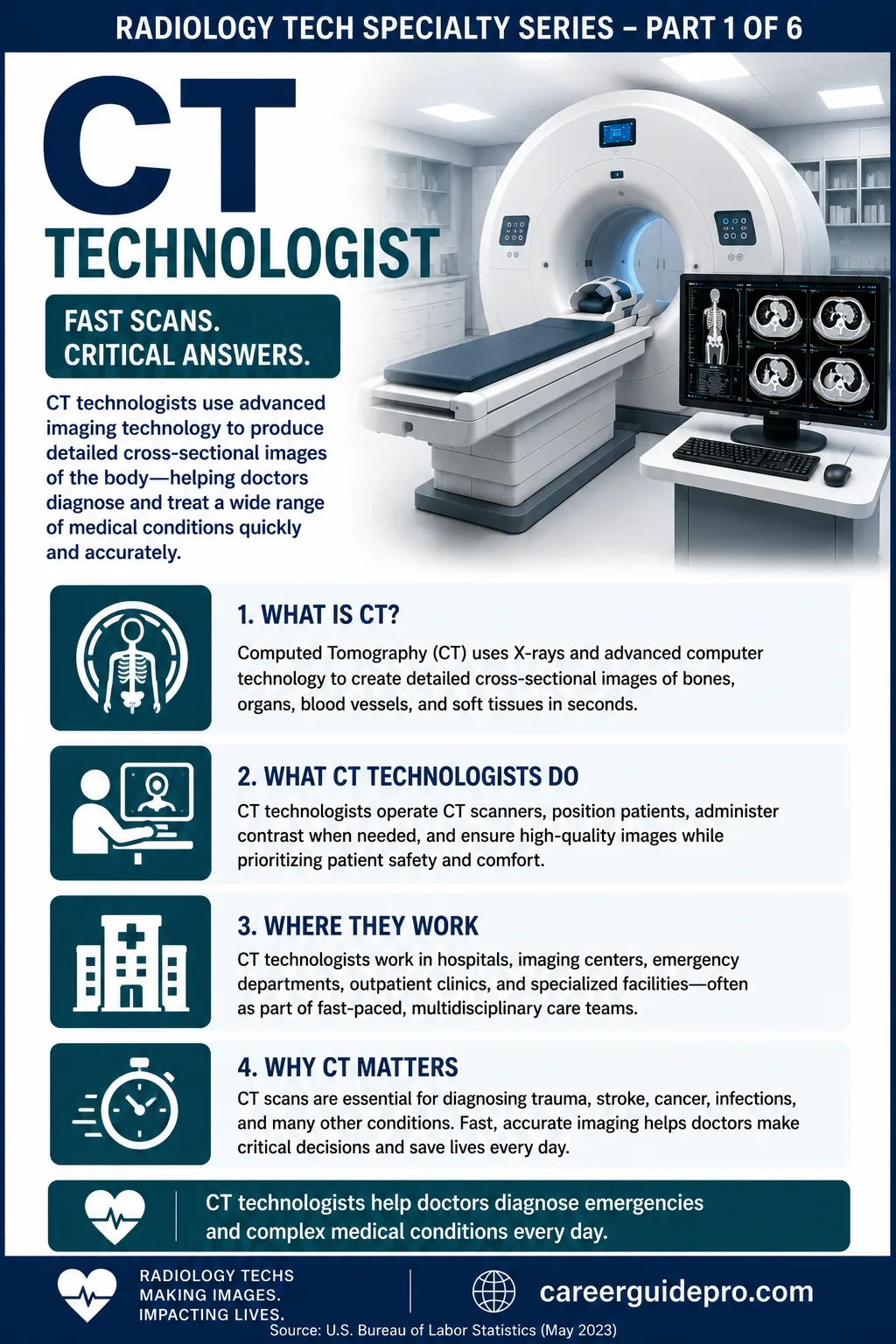
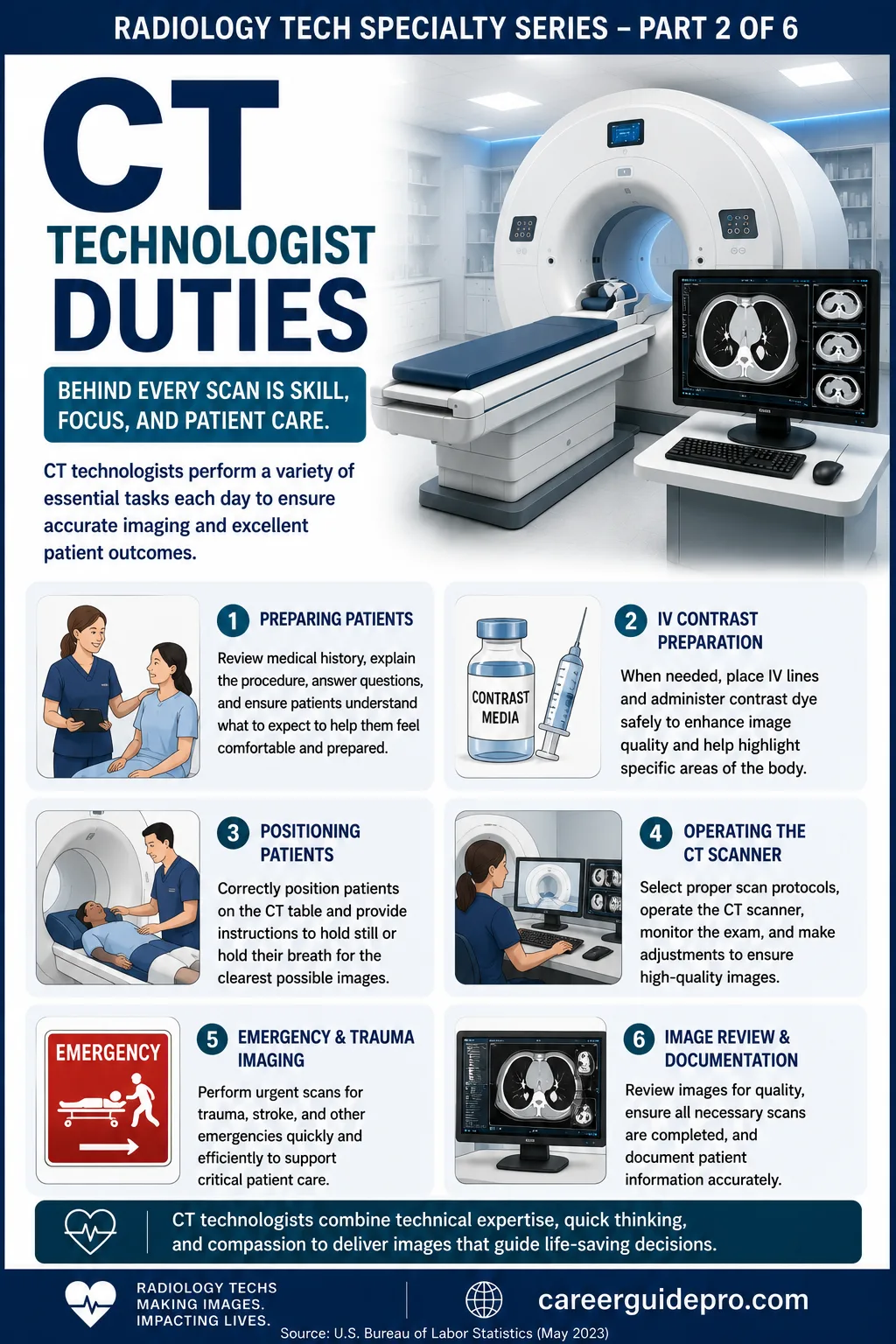
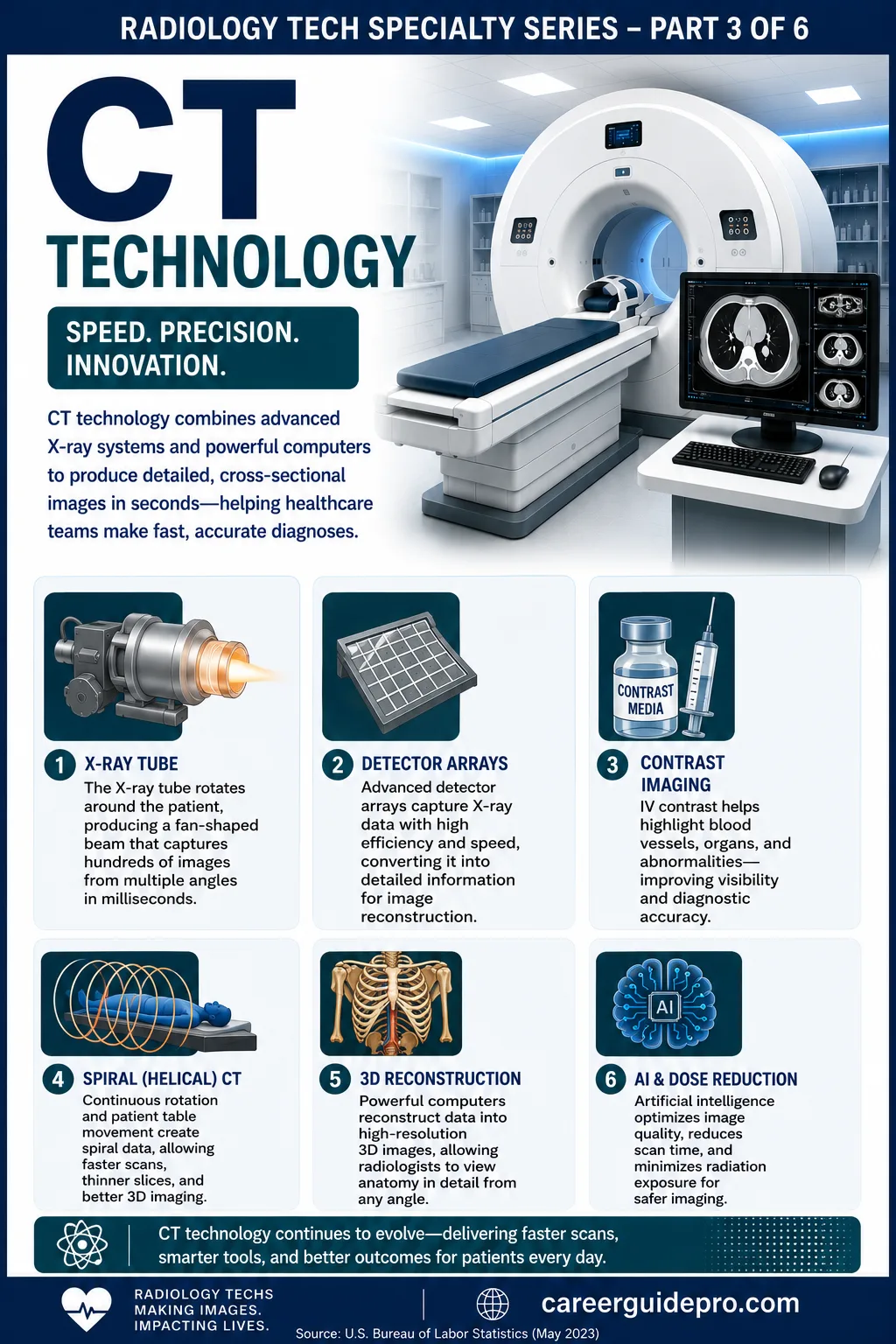
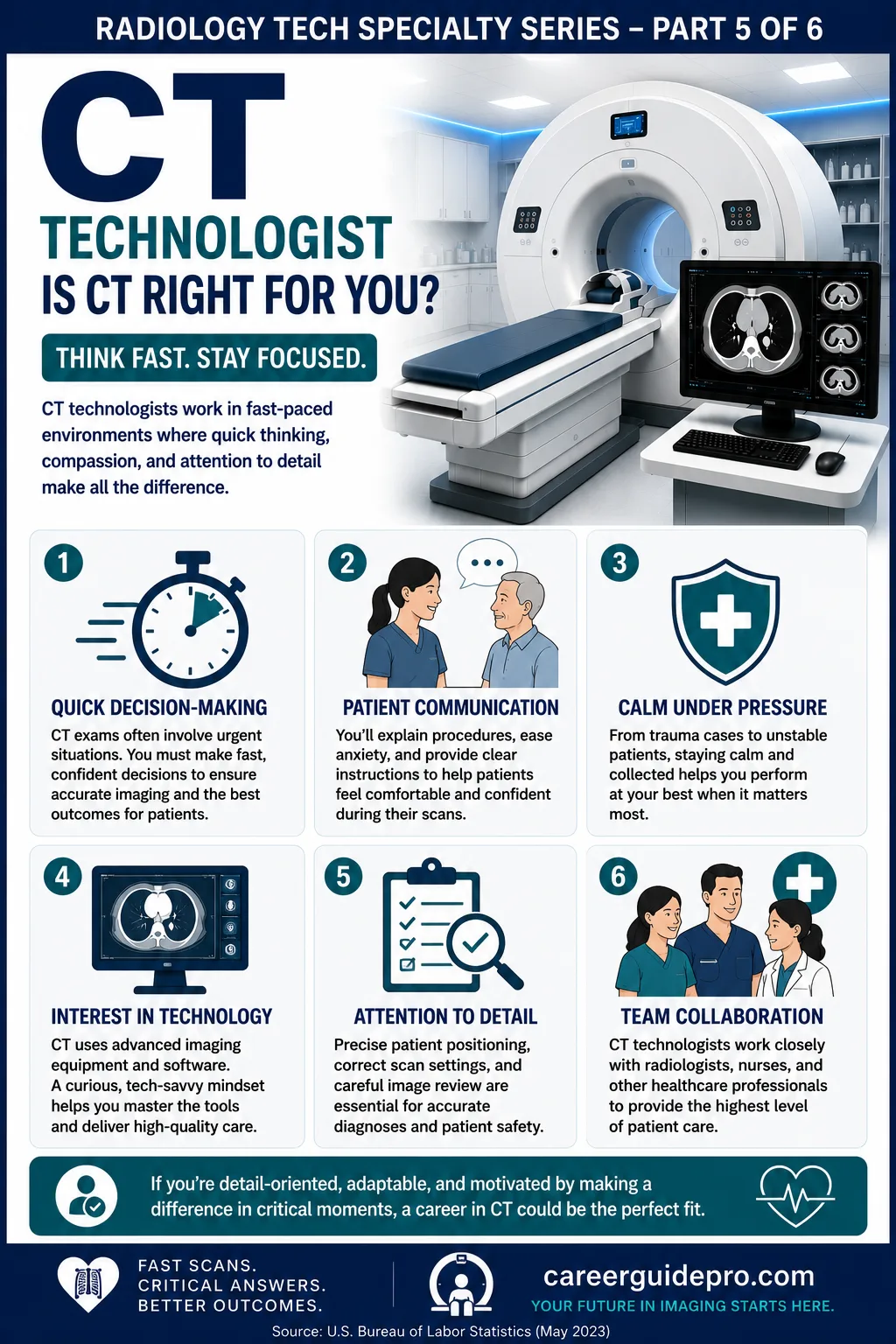
CT combines multiple x-ray measurements into detailed cross-sectional images. Day to day, you move fast: positioning patients, executing protocols, coaching breath-holds, reconstructing and post-processing images, and administering contrast per facility policy. Patient turnover is quick, and stroke, trauma, or emergency cases can reorder your entire shift without warning. The defining demand is speed with precision. You cannot skip pregnancy screening, dose optimization, or image-quality review just because the department is slammed. You watch for contrast reactions and extravasation and follow emergency procedures immediately. Like all techs, you never interpret images or share findings.
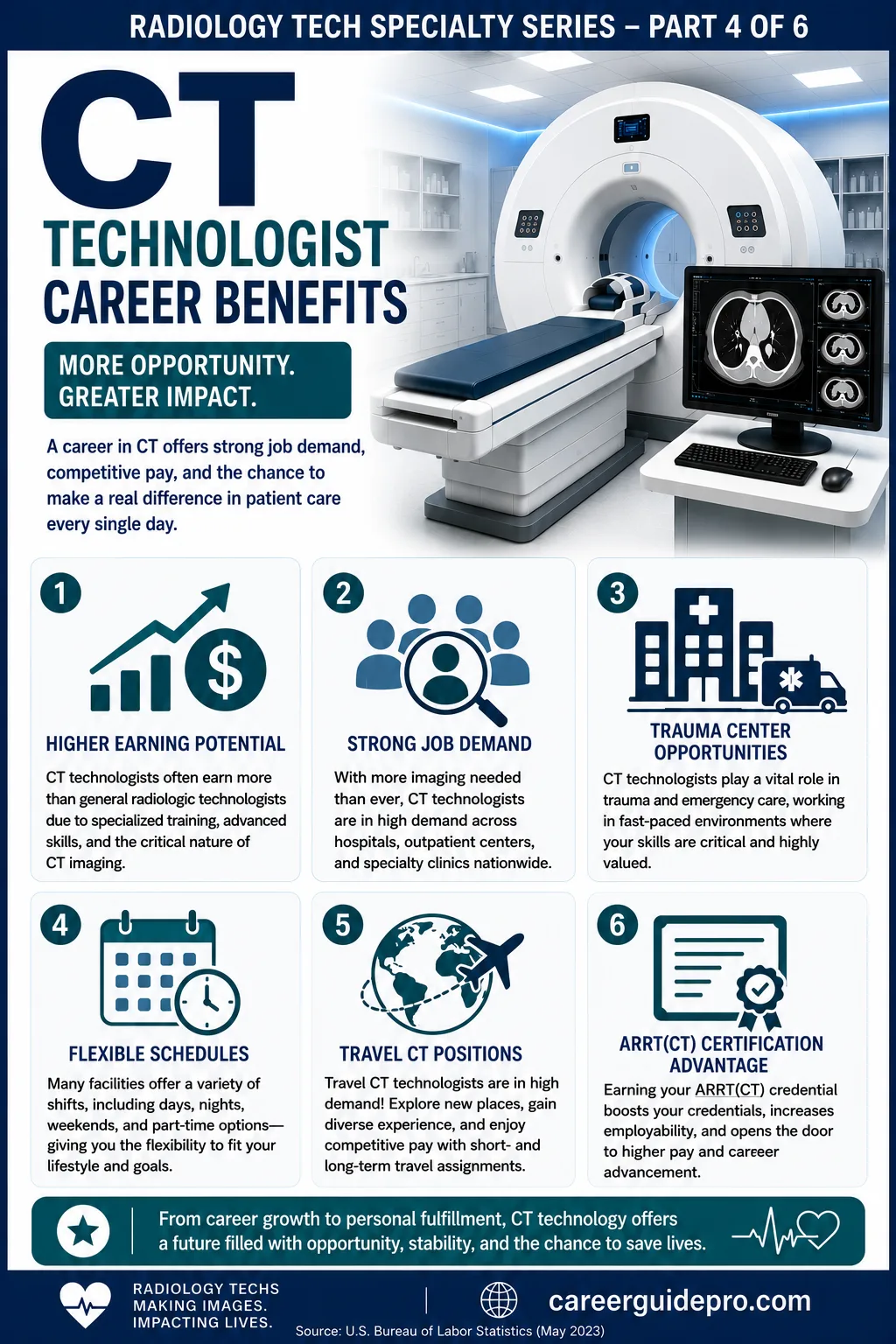
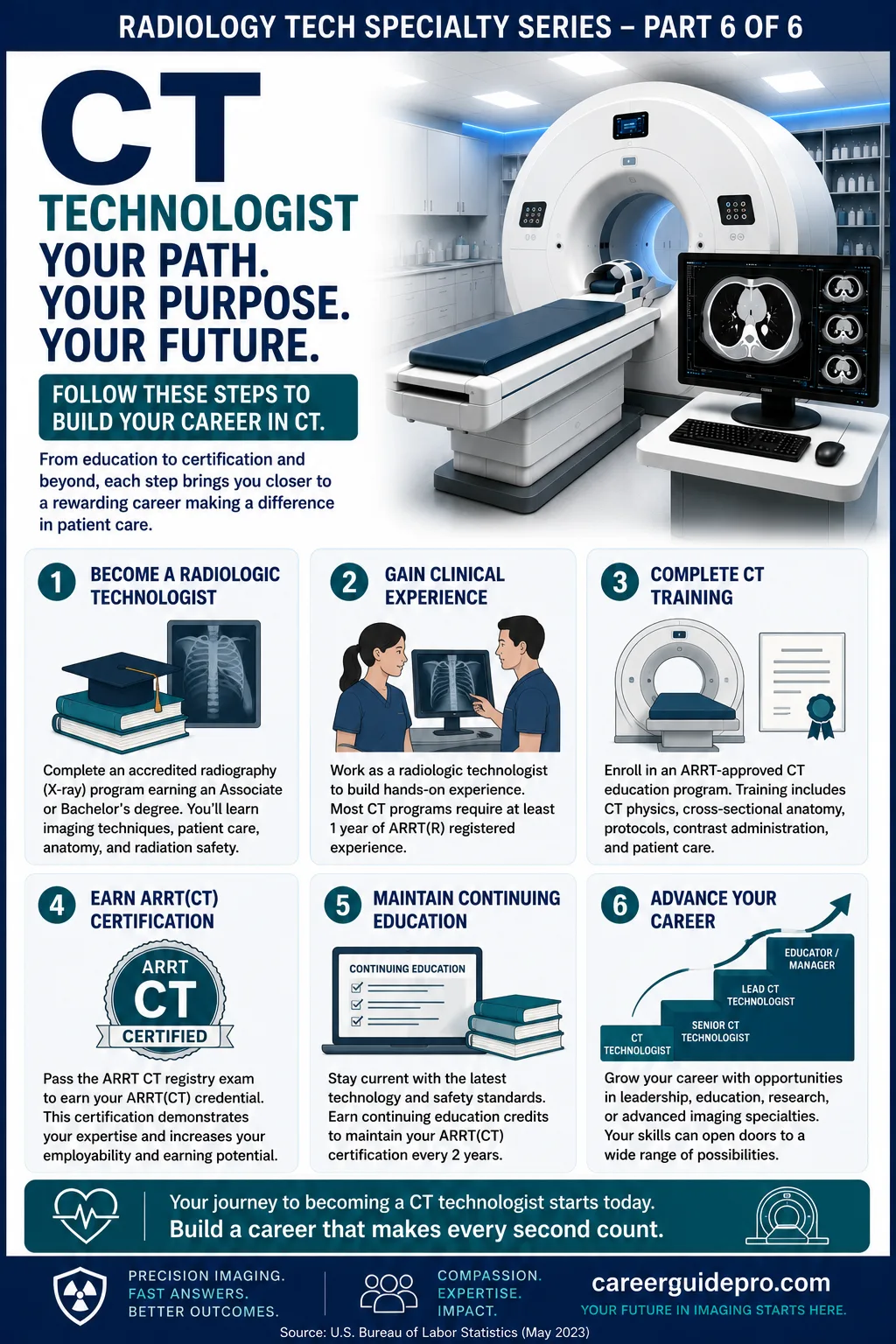
For working techs, CT is a voluntary ARRT post-primary certification. You hold an active R.T.(R) or another accepted supporting credential, complete structured education, document supervised clinical procedures, and pass the ARRT CT exam ($225 with an ARRT supporting credential). The bottleneck is clinical access, not coursework. The appeal is broad anatomy, emergency relevance, and accessible cross-training; the costs are radiation responsibility, contrast risk, high throughput, and around-the-clock hospital coverage. Rad tech median pay is $77,660 (BLS May 2024); CT has no separate BLS wage category, so expect no guaranteed premium.