How to Become a Radiologic Technologist

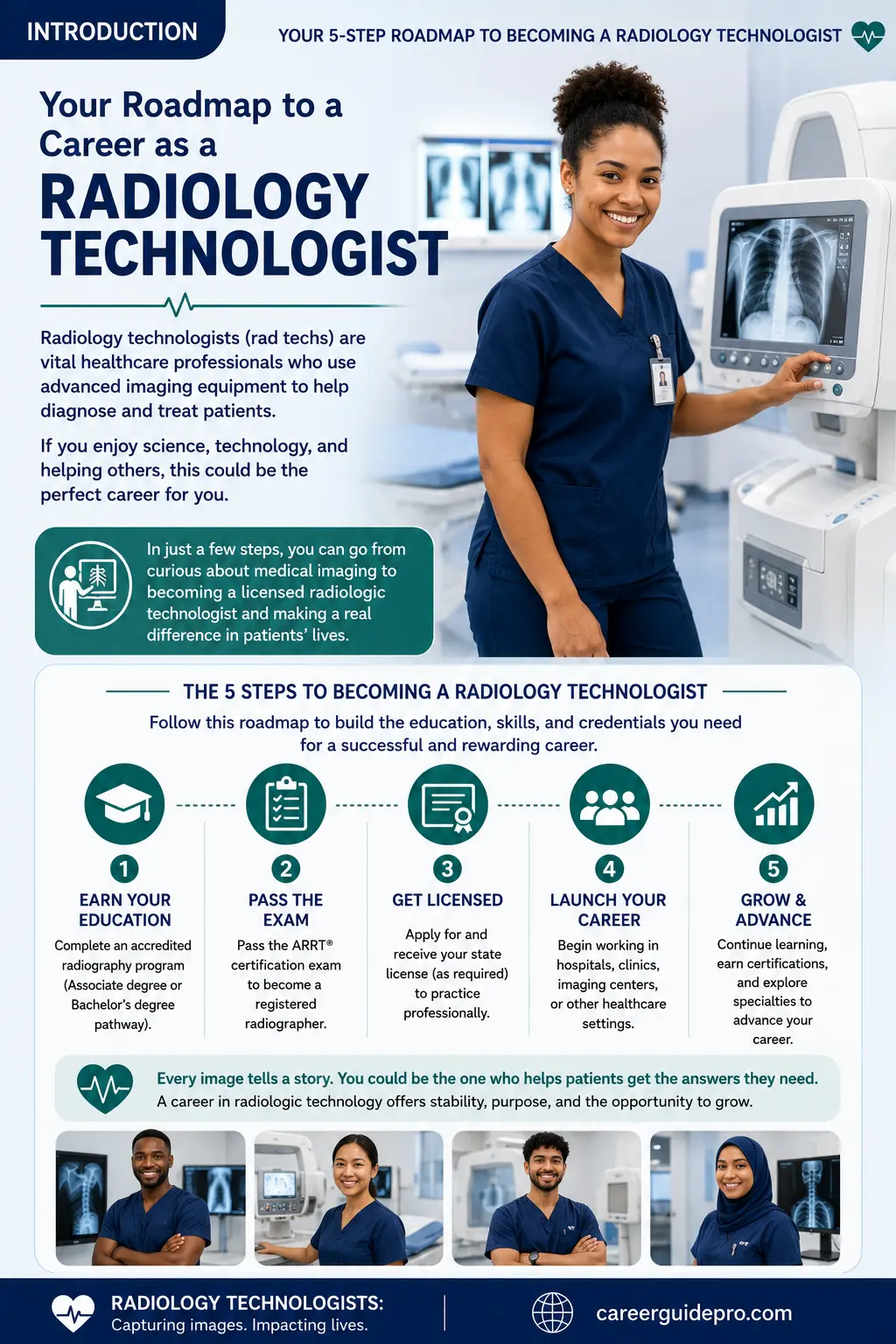
Earn a JRCERT-accredited associate degree in about two years, pass the ARRT exam to become an R.T.(R), and get your state license. From there you're ready to work in hospitals and imaging centers.

Radiologic technologist icon

Did You Know?

You can enter this field with just a two-year associate degree — no bachelor's required. Add a specialty like MRI later and your median pay jumps to around $88,180, often after only 6 to 12 months of extra training.

What Is a Radiologic Technologist?

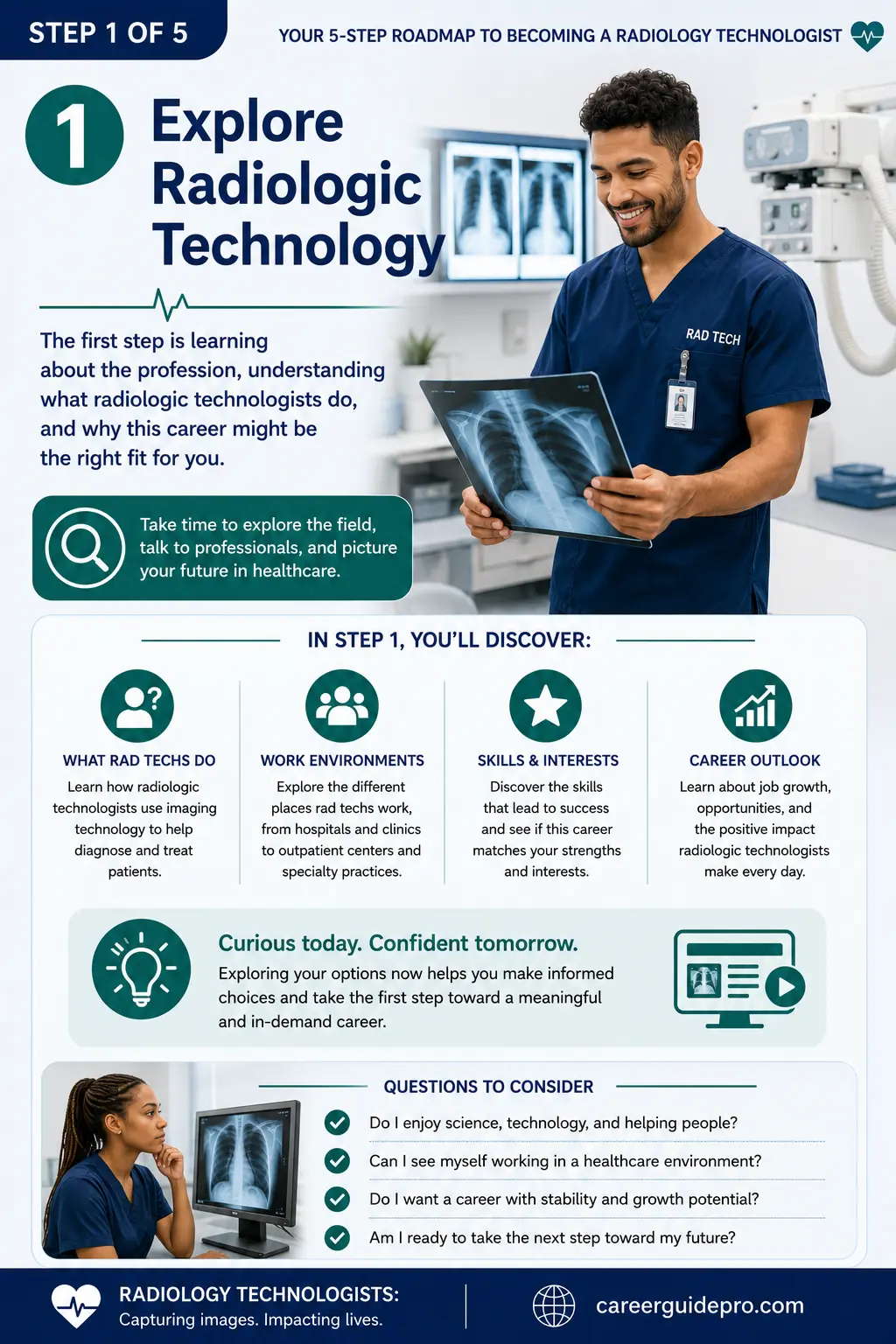
A radiologic technologist — also called a rad tech or radiographer — operates X-ray equipment to capture images doctors use to diagnose injuries and disease. You'll position patients, adjust the machine, follow strict radiation-safety protocols, and produce clear, accurate images on the first try. The standard route in is a two-year Associate of Science in Radiography from a JRCERT-accredited program, followed by the ARRT certification exam and, in most states, a license. It's one of the faster paths into stable, hands-on healthcare work.

Be realistic: rad tech programs are competitive, usually admitting one cohort a year, and you'll log 1,800-plus supervised clinical hours alongside classroom science. You'll be on your feet, lifting and repositioning patients, and accountable for radiation safety every shift. The payoff is real, though — a median salary of $77,660, about 228,000 jobs nationwide, and steady demand. Adding modalities like CT, MRI, or mammography raises your pay further, so the entry credential is a launchpad, not a ceiling.

Visual Guide

RT Roadmap Pins

Flip through Pinterest-style infographics for the steps to become an RT.

Path Check

How the Rad Tech Path Compares

Thinking about other healthcare routes? Here's how the road to R.T.(R) stacks up against the alternatives.

2 yrs vs. 2–4 for nursing

Both careers can start with an associate degree, but many hospitals now prefer nurses with a bachelor's, which stretches the nursing path toward four years. A radiology tech can be working and earning with an R.T.(R) in about two. If bedside patient care appeals to you more than imaging, the registered nurse path is the closer comparison to make before you commit.

1,800+ clinical hours built in

Surgical tech programs are often a few months shorter, but radiography's longer runway buys you more: 1,800+ supervised clinical hours across multiple imaging modalities before you graduate. Those hours are baked into every accredited radiography program, which is a big reason employers hire new grads with confidence.

+3 add-on registries after R.T.(R)

The rad tech path doesn't end at graduation — it's designed for stacking. Once you hold your primary credential, CT, MRI, and mammography registries each add earning power without another degree. The base certification and licensing requirements are the gate everything else hangs on, so nail those first.

Quick Answers

Before You Start the Path

The three questions we hear most from people comparing programs.

Do I need a bachelor's degree to become a rad tech?

No — the associate degree is the standard entry point, and it's what the ARRT requires as a minimum. A bachelor's can help later for supervisory or education roles, but it won't change your starting credential or your eligibility for the registry exam.

How do I know if a program is legitimately accredited?

Look for JRCERT accreditation specifically — it's the programmatic accreditor the ARRT recognizes, and graduating from a non-accredited program can lock you out of the exam entirely. You can verify any school directly in the JRCERT program directory before you apply.

How competitive is admission?

More competitive than most people expect. Programs cap enrollment based on clinical site capacity, so strong grades in anatomy, physiology, and math prerequisites matter, and many schools use a points system. Applying to more than one program in your region is the norm, not a backup plan.

How to Become a Radiologic Technologist

The path is clear and shorter than most healthcare careers. After high school, you'll knock out college prerequisites, get into a JRCERT-accredited associate program, finish about two years of classroom and clinical training, then pass the ARRT exam to earn your R.T.(R) credential. Finally, you'll obtain any required state license and start working. From start to finish, expect roughly two years once you're enrolled — plus 6 to 12 months if you need prerequisites first.

Demand is solid: about 15,400 openings a year through 2034, driven by an aging population, more diagnostic imaging, and retirements. Median pay sits at $77,660, with top earners over $106,990. This career suits people who are detail-oriented, calm under pressure, comfortable with technology, and genuinely care about patients having a steadying presence during a stressful exam. Physical stamina helps too — you'll stand and lift throughout your shift.

5 Steps to Becoming a Radiologic Technologist

1

Finish High School or Earn a GED

4 Years

Start with a high school diploma or GED. Because rad tech programs are competitive and often admit just one cohort per year, your grades matter from the beginning. Focus on math and science — biology, chemistry, and algebra build the foundation you'll lean on later in anatomy and radiation physics. Strong grades here make you a stronger applicant when admissions committees compare candidates for limited program seats.

2

Complete Program Prerequisites

6-12 Months

Most programs require college-level prerequisites before you apply. Expect to take anatomy and physiology, college algebra, English composition, and medical terminology. Aim for a 3.0+ GPA — these courses are how admissions teams rank applicants for limited seats. You can complete them at a community college, often part-time while working. Knock these out before applying so your application is competitive when the cohort opens.

3

Earn an Accredited Associate Degree

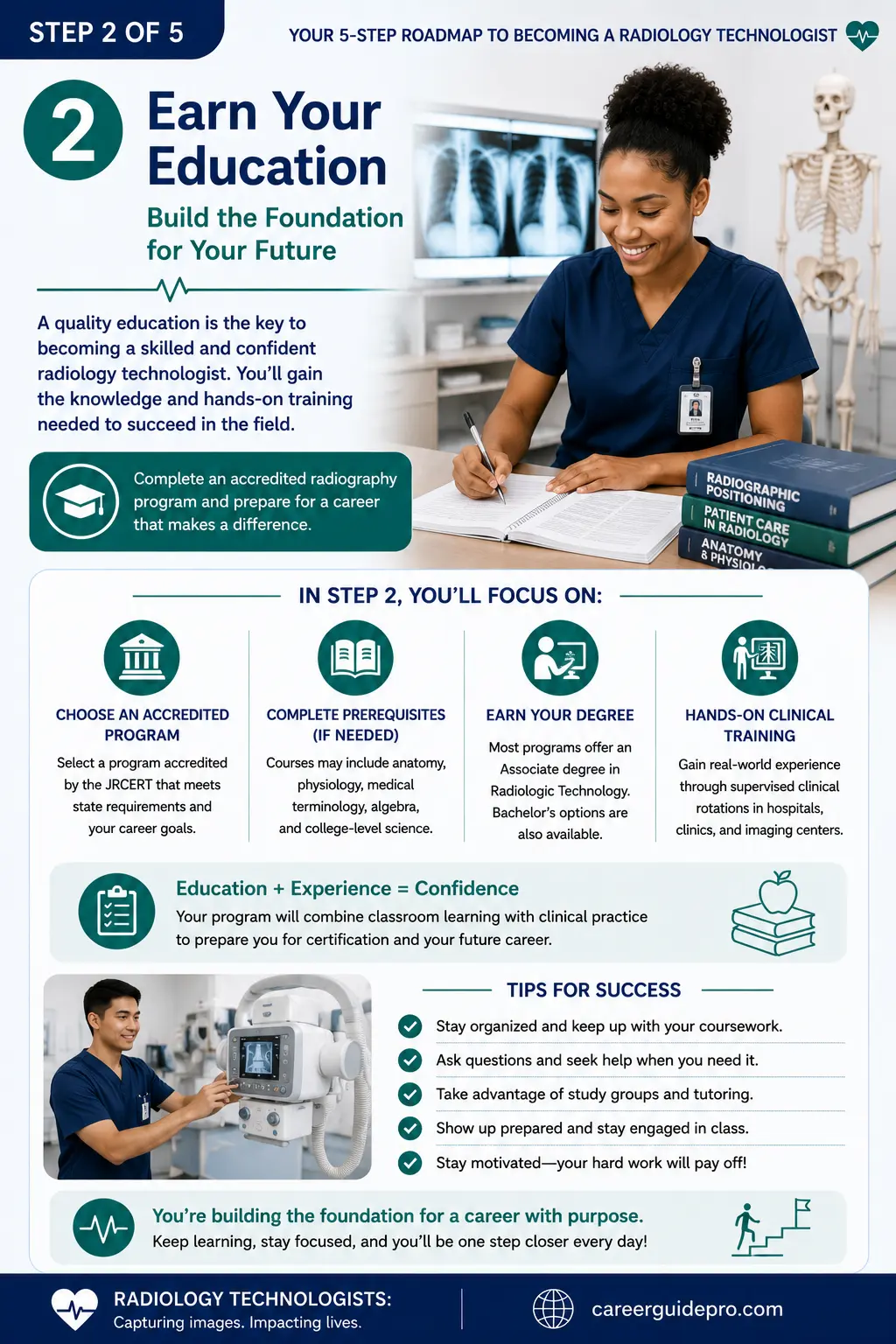
2 Years

Enroll in a JRCERT-accredited radiography program — accreditation is non-negotiable because it's what makes you eligible to sit for the ARRT exam. You'll combine classroom science (positioning, physics, radiation protection) with 1,800+ supervised clinical hours in real imaging departments. This is the demanding core of your training: long days, real patients, and direct accountability for image quality and radiation safety. A bachelor's isn't required to practice.

4

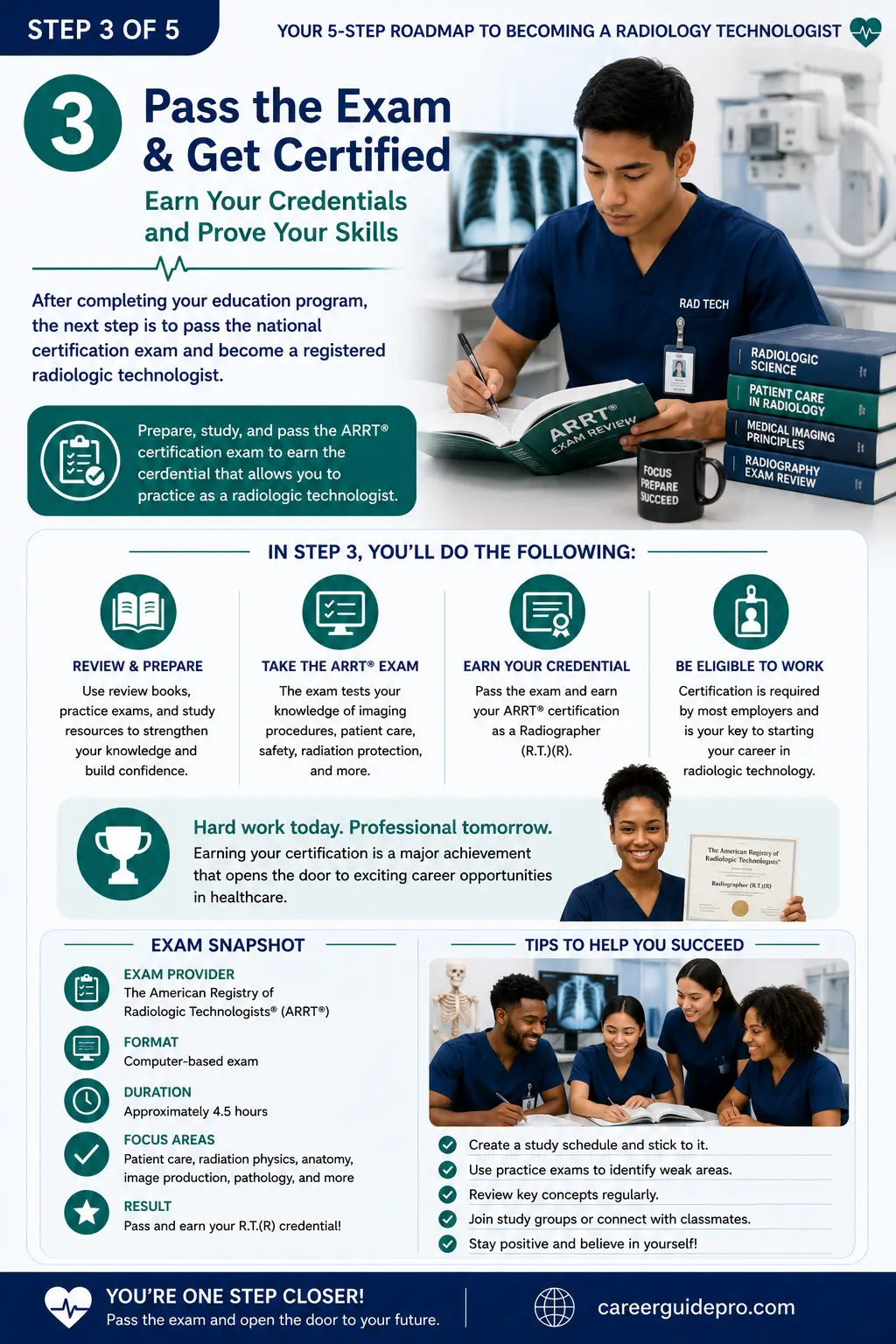
Pass the ARRT Certification Exam

1-2 Months

After graduating, you'll sit for the ARRT (American Registry of Radiologic Technologists) exam. Passing earns you the R.T.(R) credential — Registered Technologist in Radiography — a national certification that proves you've met entry-level standards. Most graduates test within a month or two of finishing. Use program review materials and practice exams to prepare; the test covers patient care, safety, image production, and procedures.

5

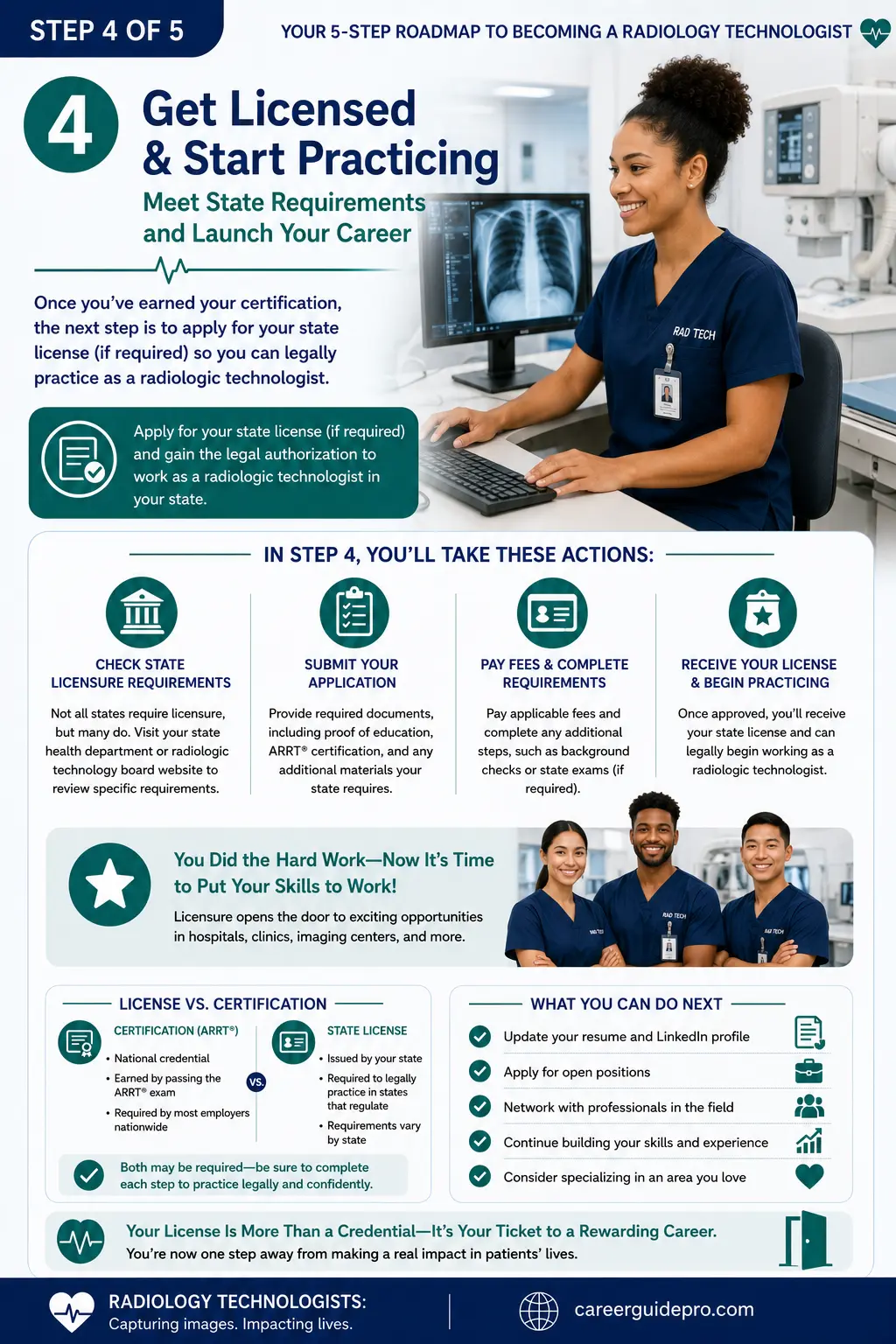
Get State Licensed and Start Working

2-4 Weeks

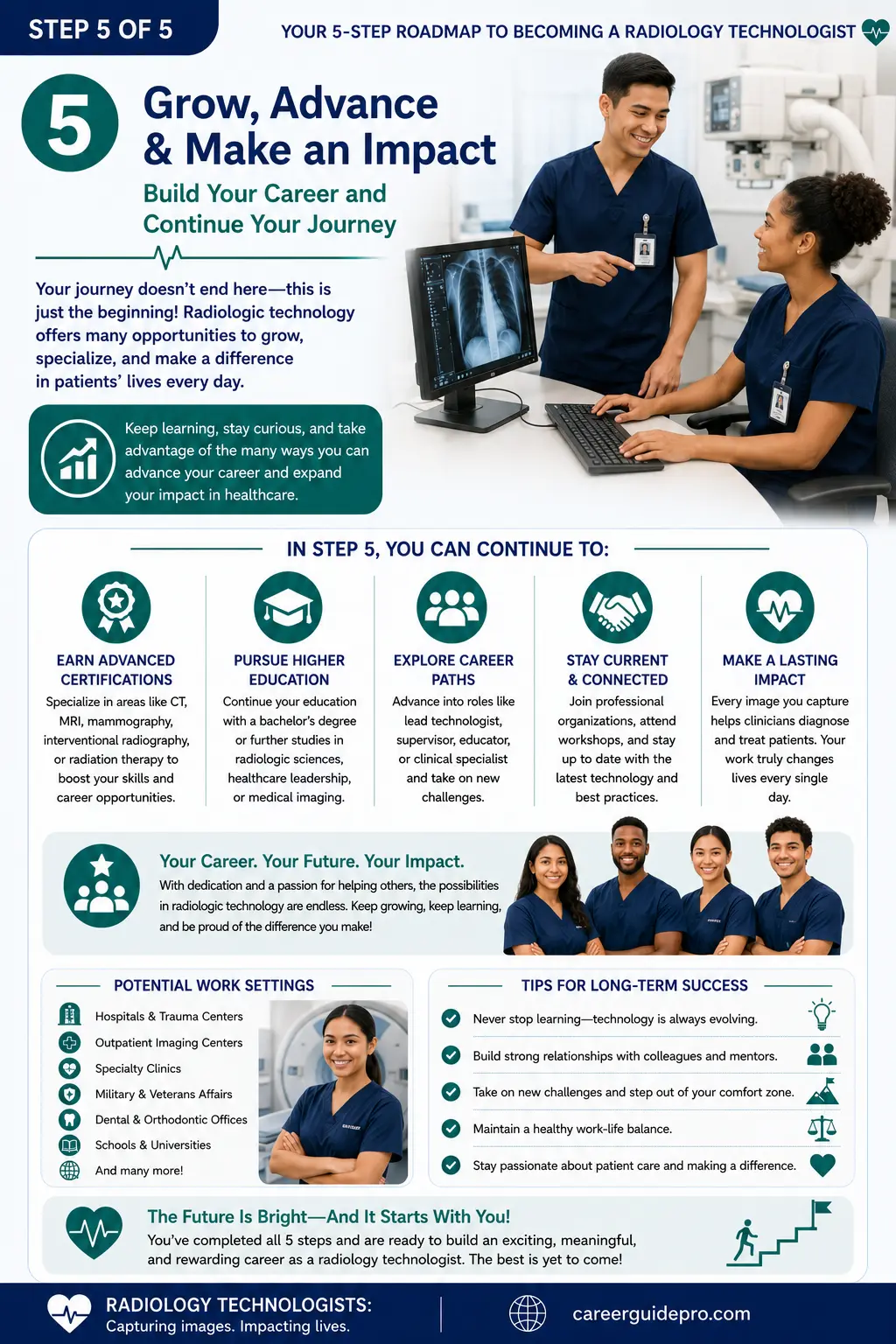
Most states require a state license in addition to ARRT certification, and many base licensure directly on holding it. Requirements vary, and a few states don't require a separate license — so check your state board. Once licensed, you can work in hospitals, imaging centers, and clinics. From there, consider adding a post-primary specialty like CT, MRI, or mammography to raise your pay and expand your options.

Fast-Track Tip

If you already have prerequisite credits, you could be working in about two years total. To stay competitive for limited program seats: keep your GPA above 3.0, shadow a working rad tech, and apply to several JRCERT-accredited programs at once. After you're certified, adding a modality like CT or MRI usually takes only 6 to 12 months of continuing education and clinical experience — and can meaningfully boost your pay.

Frequently Asked Questions

Do I need a four-year degree to become a rad tech?

No. The standard credential is a two-year associate degree from a JRCERT-accredited program. A bachelor's is optional and mainly helps if you later want supervisory, education, or administrative roles. For working as a staff technologist, the associate degree plus ARRT certification and a state license is all you need.

What's the difference between ARRT certification and a state license?

ARRT certification is a national credential earned by passing the exam after graduation. A state license is separate permission to practice in a specific state. Most states require both, and many issue licenses based on your ARRT certification. A few states don't require a separate license — always check your own state board.

Are specialty certifications like CT or MRI required?

No — they're voluntary, career-enhancing add-ons, not legal requirements to practice. Only your primary R.T.(R) credential and state license are required to work. Specialties like CT, MRI, and mammography typically take 6 to 12 months of extra training and can raise your pay; MRI technologists earn a higher median, around $88,180.

Becoming a radiologic technologist is one of the most direct routes into stable healthcare work. In about two years of accredited training, plus the ARRT exam and a state license, you can step into a role with a median salary of $77,660 and steady demand projected through 2034. You'll need to earn a competitive program seat and grind through 1,800-plus clinical hours, but the payoff comes faster than most healthcare paths.

If this fits you, start now: research JRCERT-accredited programs in your area and map out their prerequisites. Knock out anatomy, algebra, and medical terminology with strong grades, shadow a working tech to confirm it's right for you, then apply. Once you're certified and licensed, keep growing by adding a specialty like CT or MRI — your R.T.(R) is a launchpad, not a ceiling.

Where This Career Can Take You

Your R.T.(R) opens the door to higher-paying modalities. Tap a specialty to see what the work involves and the extra training it takes to get there.

MRI Technologist

MRI techs use powerful magnetic fields and radio waves to produce detailed images of soft tissue, organs, and the nervous system. It's one of the highest-paying paths for rad techs, with a median around $88,180. You'll work in hospitals and dedicated imaging centers, with strong attention to magnetic safety.

Extra Training6-12 months CE + clinical
Typical SettingHospitals, imaging centers

CT Technologist

Computed tomography techs capture cross-sectional images that show bone, soft tissue, and blood vessels in remarkable detail. CT is in heavy demand for trauma, cancer, and emergency imaging, making it a popular and well-paid first specialty. You'll often work fast-paced shifts in hospital settings.

Extra Training6-12 months CE + clinical
Typical SettingHospitals, ER, imaging centers

Mammographer

Mammography techs specialize in breast imaging for cancer screening and diagnosis. The role blends technical precision with strong patient care, since many patients are anxious. You'll work in hospitals, women's health centers, and dedicated breast imaging clinics, and the specialty has its own certification standards.

Extra Training6-12 months CE + clinical
Typical SettingWomen's health, imaging centers

Interventional/Vascular Technologist

Interventional techs assist with minimally invasive, image-guided procedures like angiograms, stent placements, and catheterizations. You'll work alongside physicians in specialized labs, using real-time imaging to guide treatment. It's a high-skill, high-responsibility path that often comes with strong pay and a fast-moving environment.

Extra TrainingOn-the-job + advanced CE
Typical SettingCath labs, hospitals

Radiologic Technology Schools & Programs

Choosing the right program is the single most important decision on this path. Only a degree from a program accredited by the JRCERT makes you eligible to sit for the ARRT exam — so accreditation is non-negotiable. Beyond that, compare clinical placement quality, exam pass rates, and how many students each cohort admits. Because most programs take one group per year, applying to several accredited schools at once improves your odds of landing a seat in your target timeline.

Program Pathways

🎓 Associate of Science in Radiography

This is the standard entry route. A two-year, JRCERT-accredited associate degree blends classroom science with 1,800+ supervised clinical hours and prepares you for the ARRT exam. Offered at community colleges and many hospitals, it's the most affordable and direct path to becoming an R.T.(R) and starting work.

🏥 Hospital-Based Certificate Programs

Some hospitals offer accredited certificate programs, sometimes for people who already hold a degree in another field. These are clinically intensive and tied directly to a working imaging department. Like associate programs, they must be JRCERT-accredited to qualify you for the ARRT exam, so always confirm accreditation before enrolling.

Find Programs Near You

Enter your location and filters to see matching radiography programs.

Did You Know?

💡

Did You Know?

You must complete 24 continuing education credits every two years to keep your ARRT certification active.

Did You Know?

Many states base their licensure decisions directly on whether you hold a current ARRT certification.