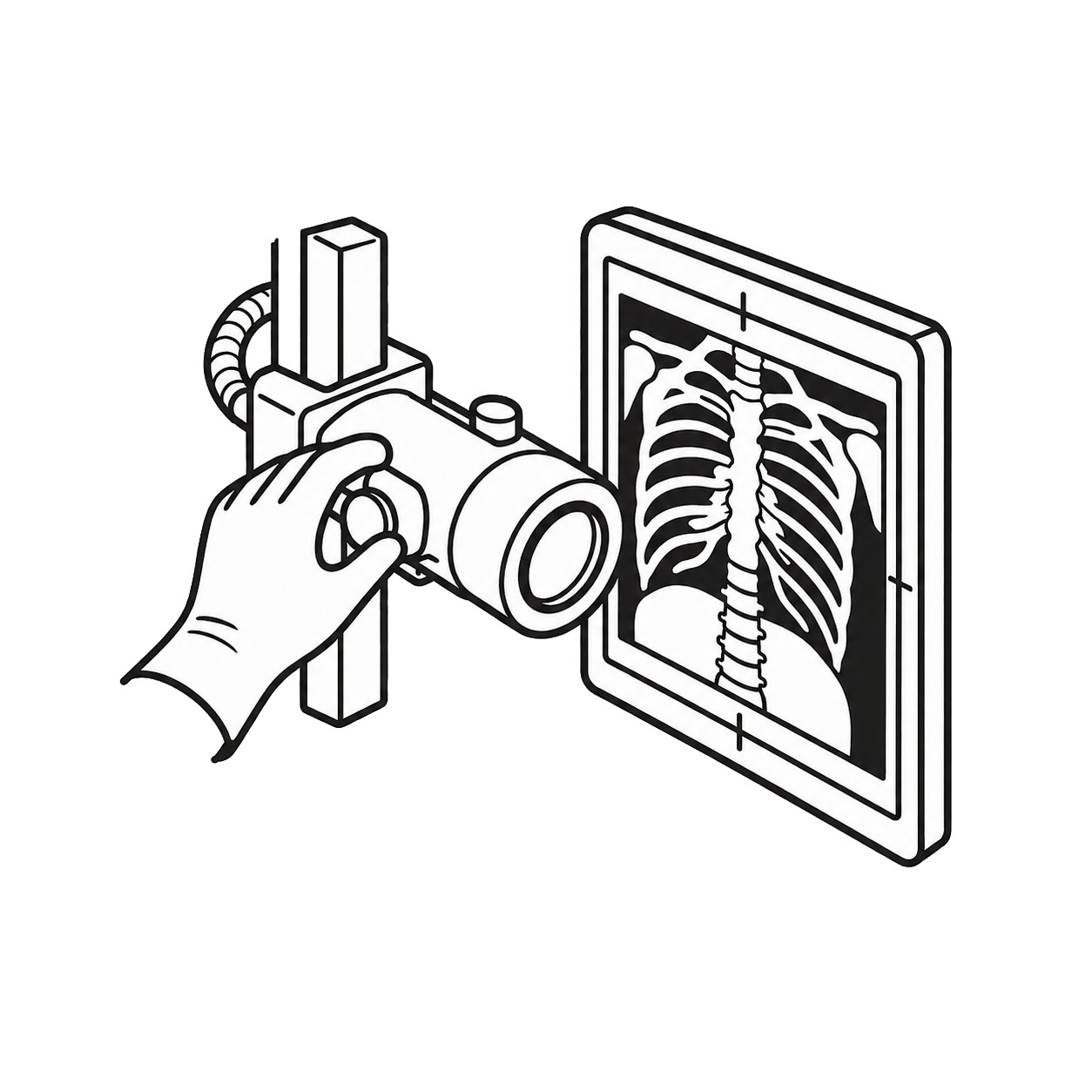
Radiologic Technologist

Radiologic technologists operate X-ray, CT, and MRI equipment to create the medical images doctors use for diagnosis. You can enter the field in about two years through an accredited associate degree.

Radiologic technologist icon

Did You Know?

Accredited radiography programs require at least 1,800 supervised clinical hours before you graduate. That's roughly a full year of hands-on practice with real patients built into a two-year degree.

What Does a Radiologic Technologist Do?

Radiologic technologists produce medical images that physicians rely on to diagnose injuries and disease. Day to day, you operate X-ray, CT, and MRI equipment, position patients precisely so the right anatomy is captured, and adjust technical settings for clear, usable images. You explain procedures to nervous patients, shield them from unnecessary radiation, and follow strict safety protocols. Much of the work is on your feet, moving equipment and helping patients who can't move easily. You collaborate closely with radiologists, nurses, and emergency staff throughout each shift.

This career carries real responsibility. You control radiation exposure for every patient, so precision and safety habits matter enormously. The physical demands are genuine: long hours standing, lifting, and repositioning people. The payoff is solid. Radiologic technologists earned a median salary of $77,660 in May 2024, with the top 10% over $106,990. Employment is around 228,000 jobs and projected to grow about 5% through 2034. Once credentialed, you can add specialties like CT or MRI that raise your pay and open new roles.
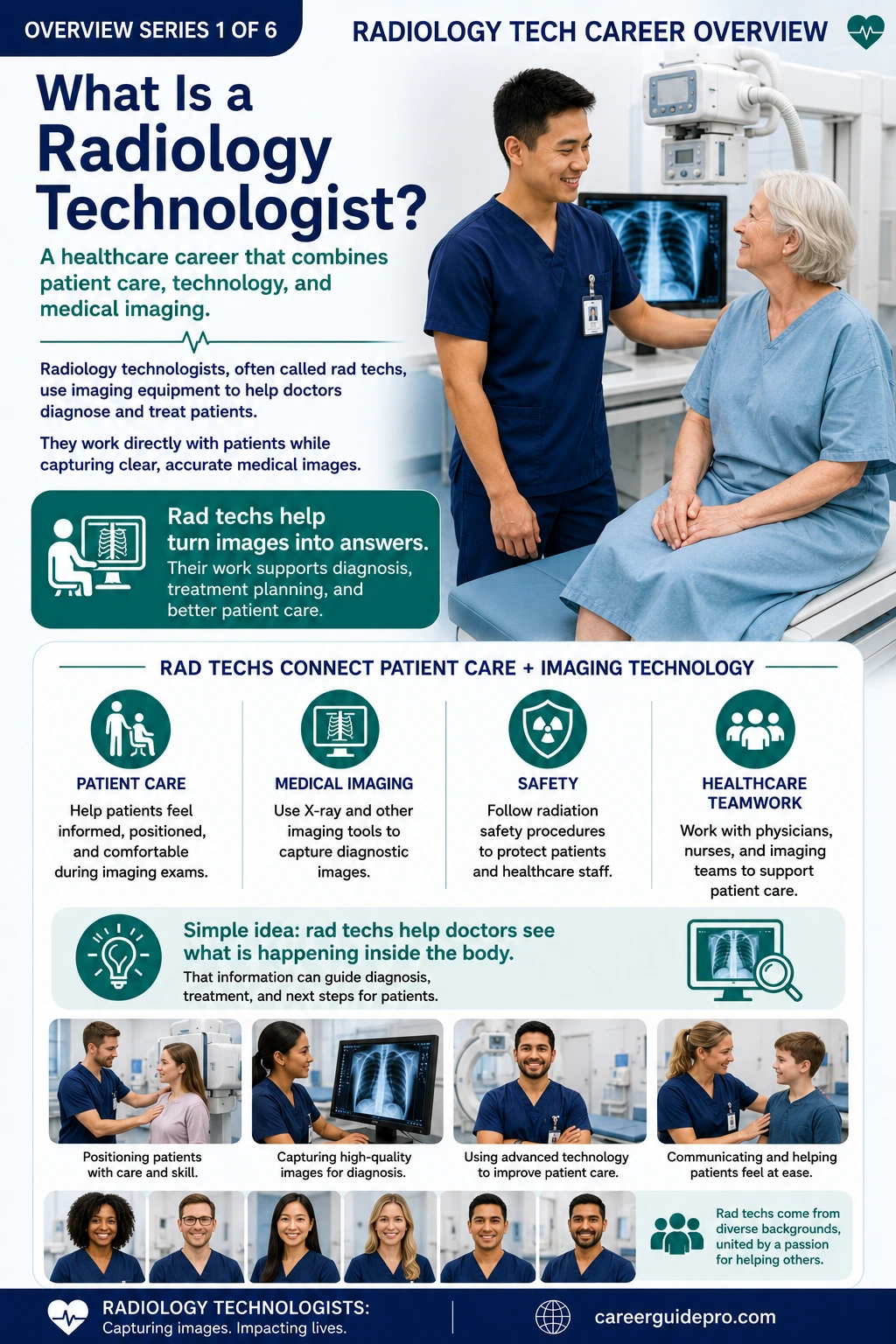
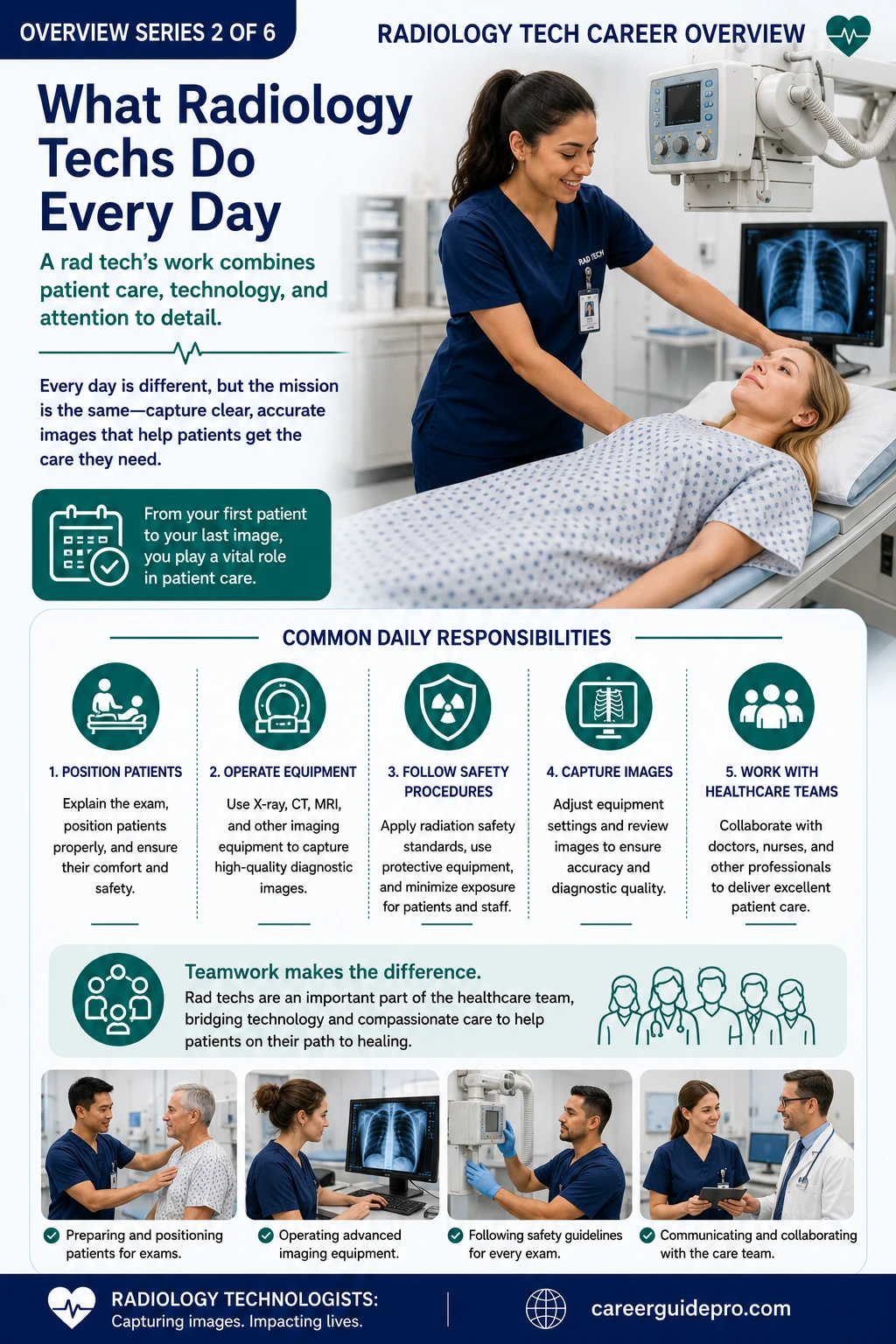
Visual Guide

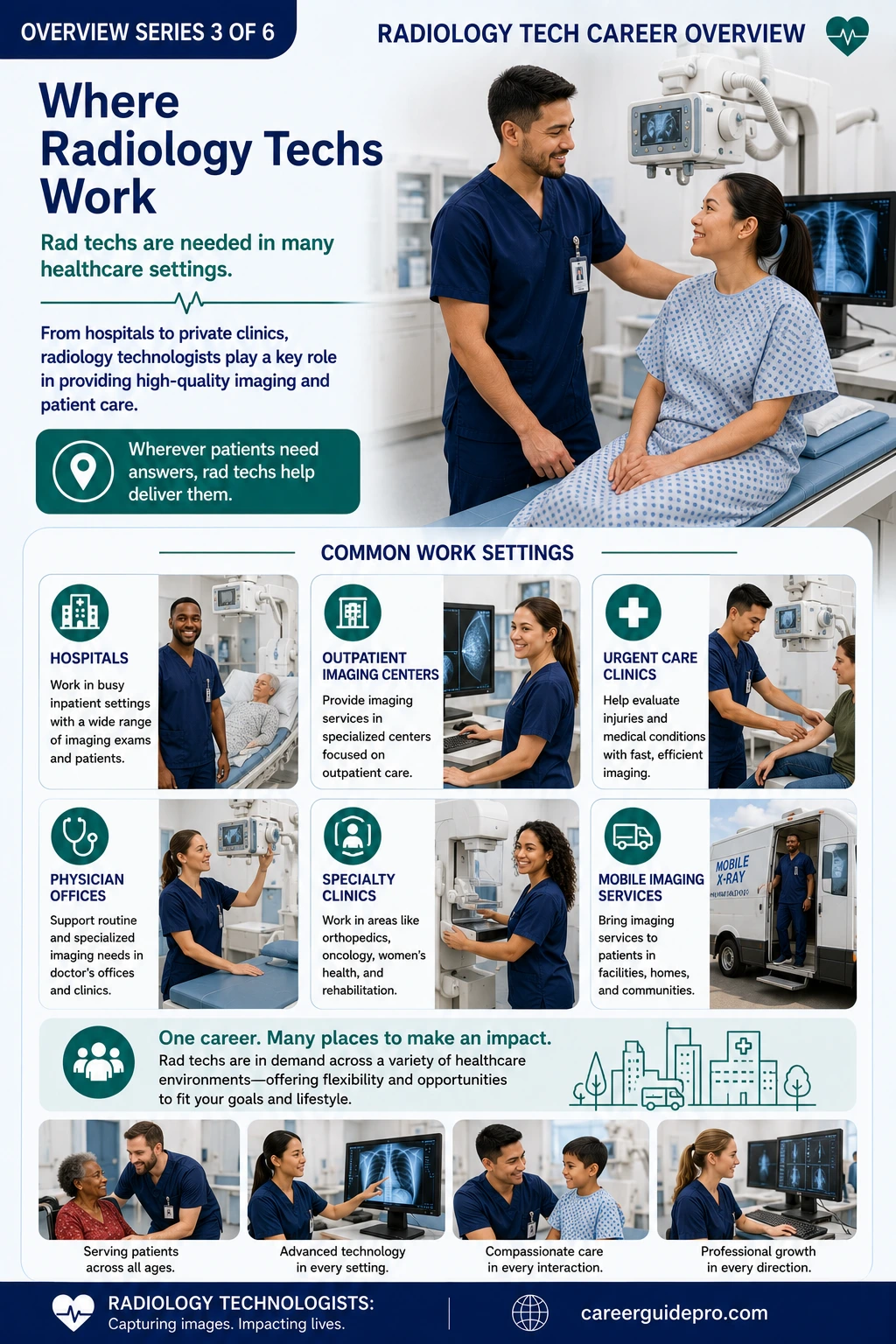
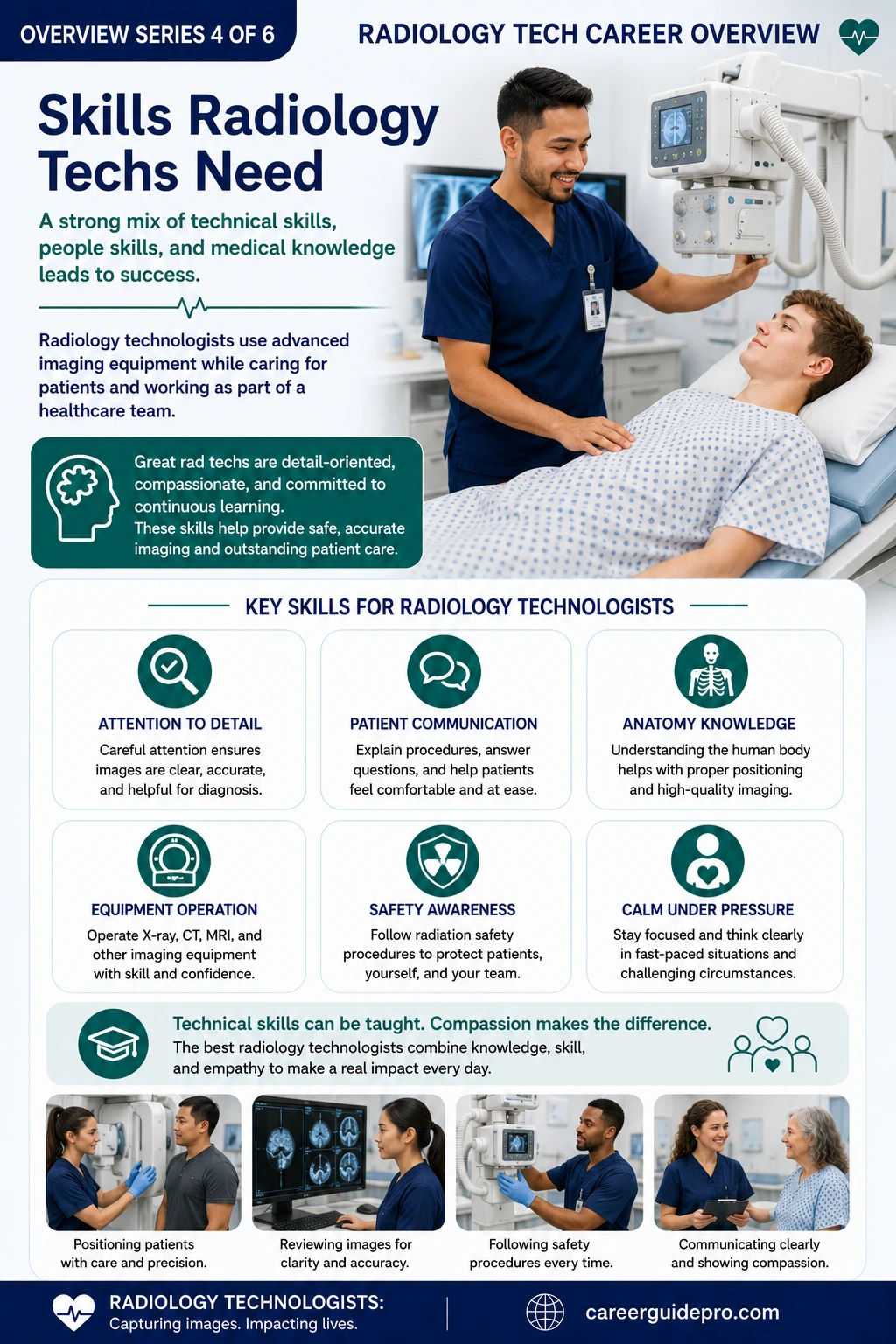
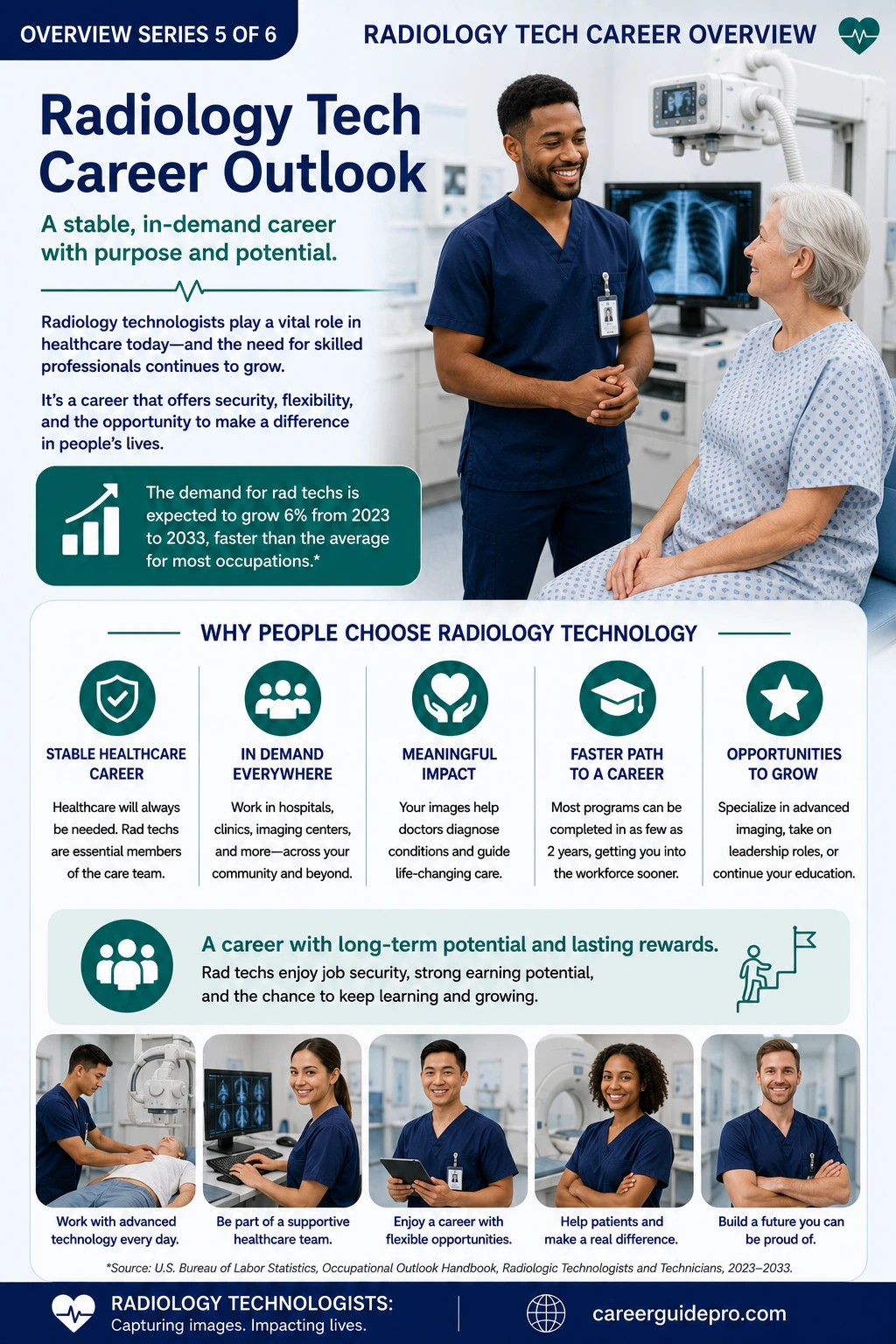
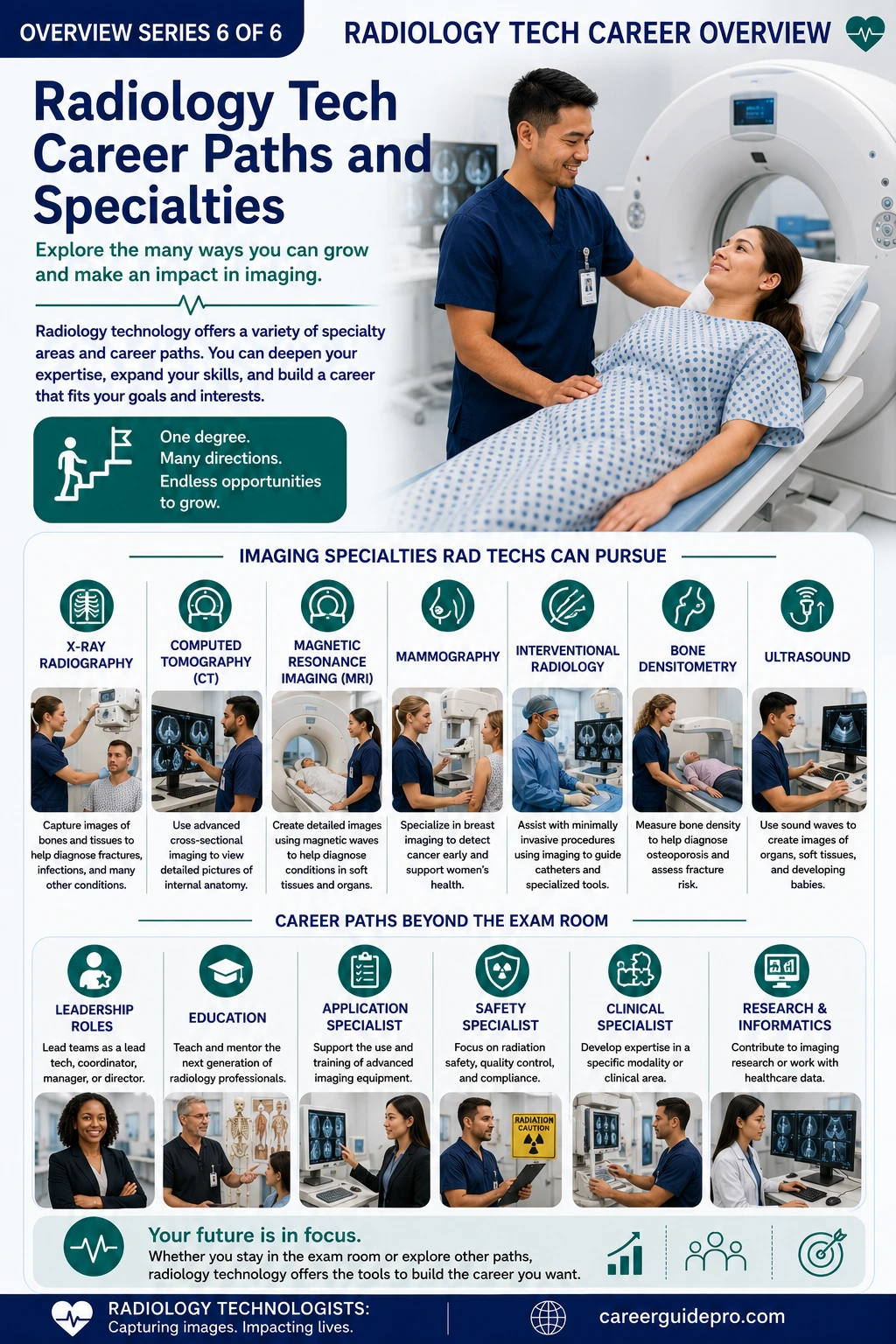
Radiology Technologist Overview Pins

Flip through Pinterest-style infographics that explain the radiology technologist career, work settings, education path, and career outlook.

Pay Check

How Rad Tech Pay Stacks Up

Pick a comparison to see how radiologic technologist earnings compare with other two-year healthcare careers.

+25% higher median pay

Radiologic technologists earned a median of $77,660 in May 2024 — roughly 25% more than the $62,340 median for licensed vocational nurses. Both careers take about two years of training, so the pay gap comes from the work itself, not extra school. See the full state-by-state breakdown of radiologic technologist salary data, or compare it directly against LVN salary figures.

+24% higher median pay

Surgical technologists earned a median of $62,830 in May 2024, putting rad techs about 24% ahead. The two roles share a similar path — an associate degree, heavy clinical training, and national certification — but imaging offers more room to grow, since credentials like CT and MRI stack on top of your base license and raise your ceiling over time.

+$10K typical specialty bump

Adding an ARRT specialty credential is the fastest raise in this field. MRI technologists out-earn general radiographers by roughly $10,000 a year at the median, and CT and mammography offer similar bumps. You earn your R.T.(R) first, then add registry exams — the requirements for each are covered on our radiology tech specialties page.

Quick Answers

Before You Apply

Three things prospective students ask most, answered in a sentence or two.

How long does an accredited program actually take?

Plan on about two years for the JRCERT-accredited associate degree, plus any prerequisite courses your school requires before admission. Program length, cost, and admission requirements vary quite a bit by school — our guide to radiology tech programs breaks down what to look for and what to avoid.

What are clinical rotations like?

You'll complete 1,800+ supervised hours in real hospitals and imaging centers, unpaid, alongside your coursework. Your school assigns most sites, but it helps to know what's near you — you can search clinical rotations sites nationwide through the ASRT career center.

Is ARRT certification the same as a state license?

No — ARRT certification is national, and most states require a separate license on top of it. The order of operations matters, so follow the step-by-step sequence in our guide on how to become a radiologic technologist before you schedule anything.

5 Things to Know About Becoming a Rad Tech

Becoming a radiologic technologist takes about two years through an accredited associate degree, but the path has clear steps. You'll finish high school, complete prerequisite courses, earn a JRCERT-accredited degree with 1,800+ clinical hours, pass the ARRT exam for the R.T.(R) credential, and obtain a state license where required. The reward is a median salary near $77,660 and steady demand. Here's how each step fits together.

Your Path to Becoming a Rad Tech

1

Finish High School

4 Years

Earn your diploma or GED. Take biology, anatomy, chemistry, algebra, and physics if offered. Strong grades in science and math help you compete for admission later. Programs are selective, so building a solid academic record now gives you a real advantage when you apply.

2

Complete Prerequisites

6-12 Months

Many programs require college-level prerequisites before you apply, such as anatomy and physiology, medical terminology, and college math. Some students knock these out at a community college first. Strong prerequisite grades matter because rad tech admission is competitive and often based on GPA.

3

Earn an Accredited Associate Degree

2 Years

Complete a JRCERT-accredited Associate of Science in Radiography. You'll combine classroom study with 1,800+ supervised clinical hours in real hospitals and imaging centers. This is where you learn to position patients, operate equipment, and apply radiation safety hands-on.

4

Pass the ARRT Exam

1-2 Months

After graduating, take the ARRT certification exam to earn the R.T.(R) credential. This national exam tests patient care, safety, image production, and procedures. Passing it proves you meet the standard employers and states expect from an entry-level technologist.

5

Get Your State License

Set by State Law

Most states require a license to practice, and requirements vary. Many accept ARRT certification as the basis for licensure. Always check your state's board for exact rules, fees, and renewal requirements before applying for jobs so nothing delays your start.

Radiologic Technologist Career Snapshot

Entry-Level Education: Associate of Science in Radiography (JRCERT-accredited)
Program Length: About 2 years
Certification: ARRT exam earns the R.T.(R) credential; most states require a license
Median Salary: $77,660 (BLS, May 2024)
Job Growth: About 5% from 2024 to 2034
Total Employment: About 228,000 jobs (2024)

Frequently Asked Questions

How long does it take to become a rad tech?

The standard route is about two years through an accredited associate degree, plus prerequisite coursework beforehand for some applicants. After graduating, you pass the ARRT exam and obtain a state license, which usually takes another one to two months.

What's the difference between certification and licensure?

ARRT certification is a national credential you earn by passing the exam, giving you the R.T.(R) title. A state license is separate legal permission to practice. Most states require both, and many use your ARRT certification to grant the license. Always check your state board.

Do I need a specialty like CT or MRI to get hired?

No. Specialties are voluntary and come after you earn your primary R.T.(R) credential. Many technologists start in general radiography, then add CT, MRI, or mammography later to raise pay and expand their options. You don't need them to land your first job.

The path to becoming a radiologic technologist is clear and reasonably short: about two years of accredited training, the ARRT exam, and a state license. Admission is competitive and the work is physically demanding, but the rewards are real. You'll earn a median salary near $77,660, work in a field projected to add about 15,400 openings a year, and gain the option to specialize in CT, MRI, or mammography to boost your earnings over time.

Radiologic Technology Specialties

After earning your R.T.(R) credential, you can add voluntary specialties that raise your pay and change your daily work. Expand each card to see what the role involves and what it requires.

Computed Tomography (CT)

Detailed Cross-Sections

CT technologists use rotating X-ray equipment to create detailed cross-sectional images of the body. You'll often work in emergency and trauma settings where fast, accurate scans guide urgent decisions. CT is one of the most in-demand specialties, and adding it can meaningfully raise your pay.

Requirements
  • Hold an active R.T.(R) credential first
  • Complete required CT clinical experience
  • Pass the ARRT CT registry exam

Magnetic Resonance Imaging (MRI)

No Radiation

MRI technologists operate magnetic scanners that produce detailed soft-tissue images without ionizing radiation. Safety focuses on keeping metal away from the strong magnet. Scans take longer and require patience, but many technologists enjoy the calmer pace and the imaging quality MRI provides.

Requirements
  • Hold an active R.T.(R) credential first
  • Complete required MRI clinical experience
  • Pass the ARRT MRI registry exam

Mammography

Breast Imaging

Mammographers perform specialized breast imaging used to screen for and diagnose breast cancer. The role emphasizes precise positioning, gentle patient care, and compassion during a stressful exam. Because early detection saves lives, many technologists find this specialty especially rewarding, and demand remains steady.

Requirements
  • Hold an active R.T.(R) credential first
  • Complete required mammography clinical experience
  • Pass the ARRT mammography registry exam

Choosing an Imaging Specialty

Every specialty here is optional and builds on your primary R.T.(R) credential, so you don't have to decide right away. Many technologists work in general radiography first, then choose a path based on what they enjoy. If you like fast-paced trauma work, CT may fit. Prefer detailed soft-tissue imaging without radiation? MRI could appeal. Interested in preventive care? Mammography is meaningful and in demand. Consider the physical demands, the equipment, patient interaction, and local job openings. Each specialty typically requires additional clinical experience and a separate ARRT registry exam to earn.

Did You Know?

MRI uses powerful magnets and radio waves instead of radiation, so MRI technologists follow completely different safety rules focused on keeping metal objects far away from the scanner.

Employment by Setting

🎓 Radiologic Technology Education & Programs

Choosing the right program is the most important decision you'll make entering this field. To sit for the ARRT exam, your program must be accredited, typically by JRCERT. Attending an accredited associate degree program ensures your education meets national standards, includes the required 1,800+ clinical hours, and qualifies you for certification and state licensure. Skipping accreditation can leave you unable to test or get licensed, so verify it before you enroll.

Admission is competitive. Programs often accept a limited number of students each year and rank applicants by GPA, prerequisite grades, and sometimes interviews or entrance exams. Expect a demanding schedule that mixes classroom lectures with long clinical rotations in hospitals. Many students describe the clinical hours as intense but the best preparation for real work.

Program Formats

🏫 Associate of Science in Radiography

Program Length: About 2 years

Average Cost: Roughly $6,000-$40,000 total depending on public or private

Who It's For: The standard entry route for most new technologists.

What to Expect:

  • Classroom study in anatomy, physics, and radiation safety
  • 1,800+ supervised clinical hours in real facilities

Career Outcome: Qualifies you for the ARRT exam, R.T.(R) credential, and state licensure.

🎓 Bachelor's Degree in Radiologic Sciences

Program Length: About 4 years

Average Cost: Roughly $40,000-$100,000+ total

Who It's For: Those aiming for leadership, education, or advanced specialties later.

What to Expect:

  • All the clinical training of an associate program plus advanced coursework
  • Management, research, and expanded imaging content

Career Outcome: Same entry credential path, with stronger positioning for supervisory and advanced roles.

Find Programs Near You

Enter your location and filters to see matching radiography programs.

💡 Key Facts About Rad Tech Education

💡

Things Most People Don't Know

You cannot take the ARRT exam without graduating from an accredited program. Confirm JRCERT accreditation before enrolling, because otherwise your degree may not qualify you to become certified or licensed.

Things Most People Don't Know

Admission is genuinely competitive. Many programs accept only a small cohort each year and rank applicants by GPA and prerequisite grades, so strong science and math results matter early.

Things Most People Don't Know

Clinical rotations are unpaid and demanding. You'll complete 1,800+ hours in real hospitals, often on shifts that include early mornings, alongside your classroom coursework.

Things Most People Don't Know

Certification and licensure are different. ARRT certification is national; a state license is separate. Most states require both, so always check your state board's specific rules.

Things Most People Don't Know

Specialties like CT, MRI, and mammography are optional. You earn your R.T.(R) first, then add registry exams later to raise your pay and expand your career options.