How Rad Tech Certification Actually Works
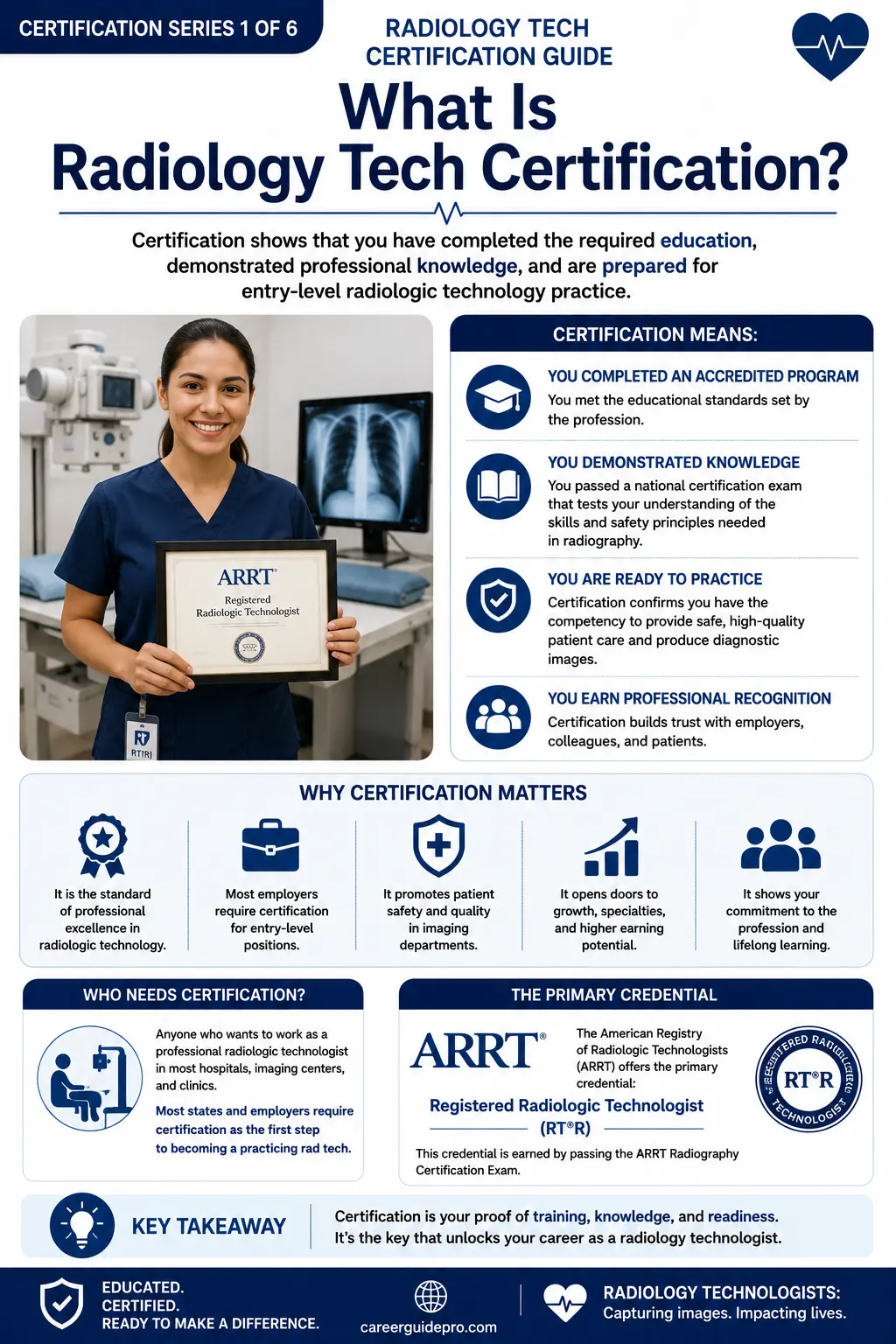
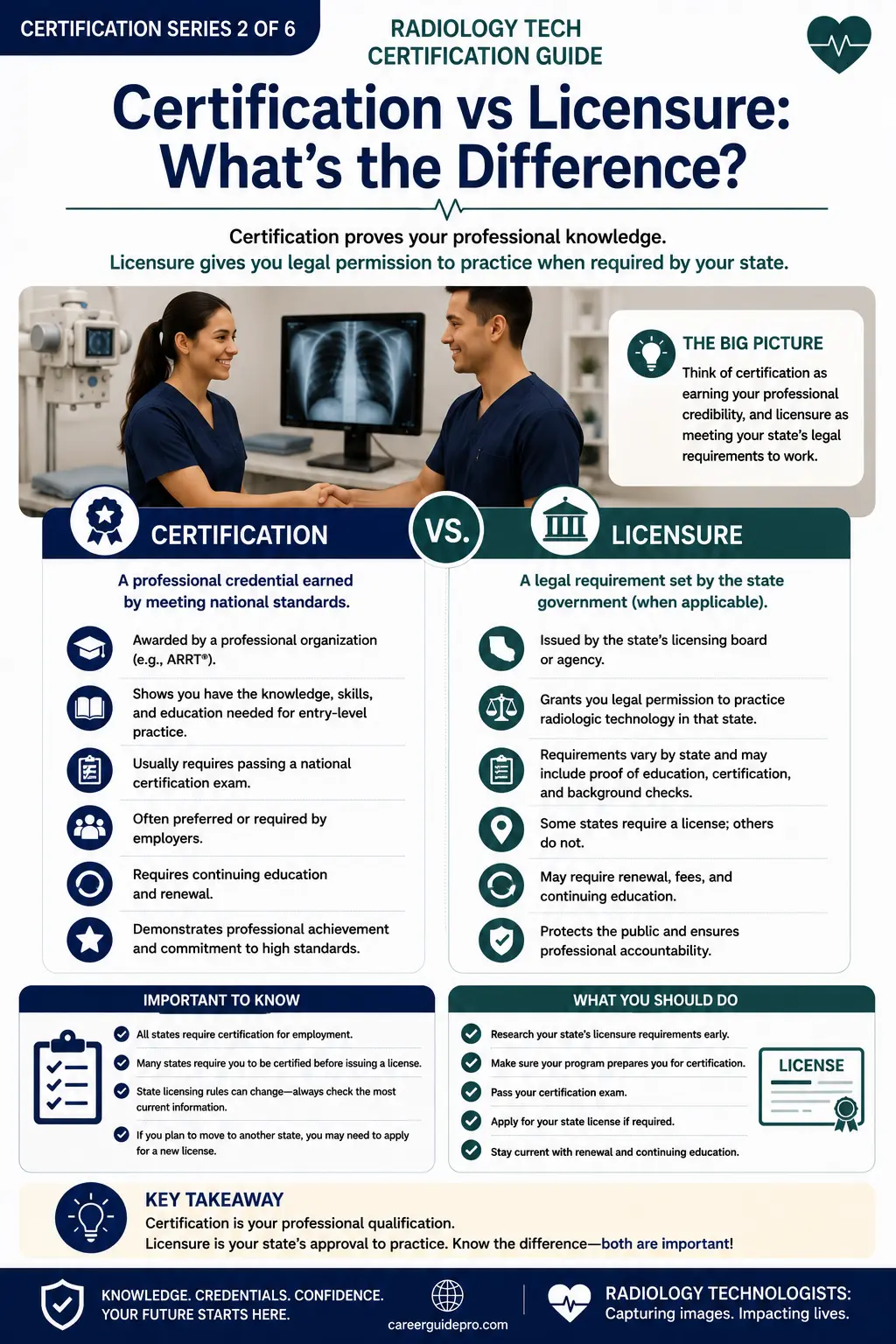
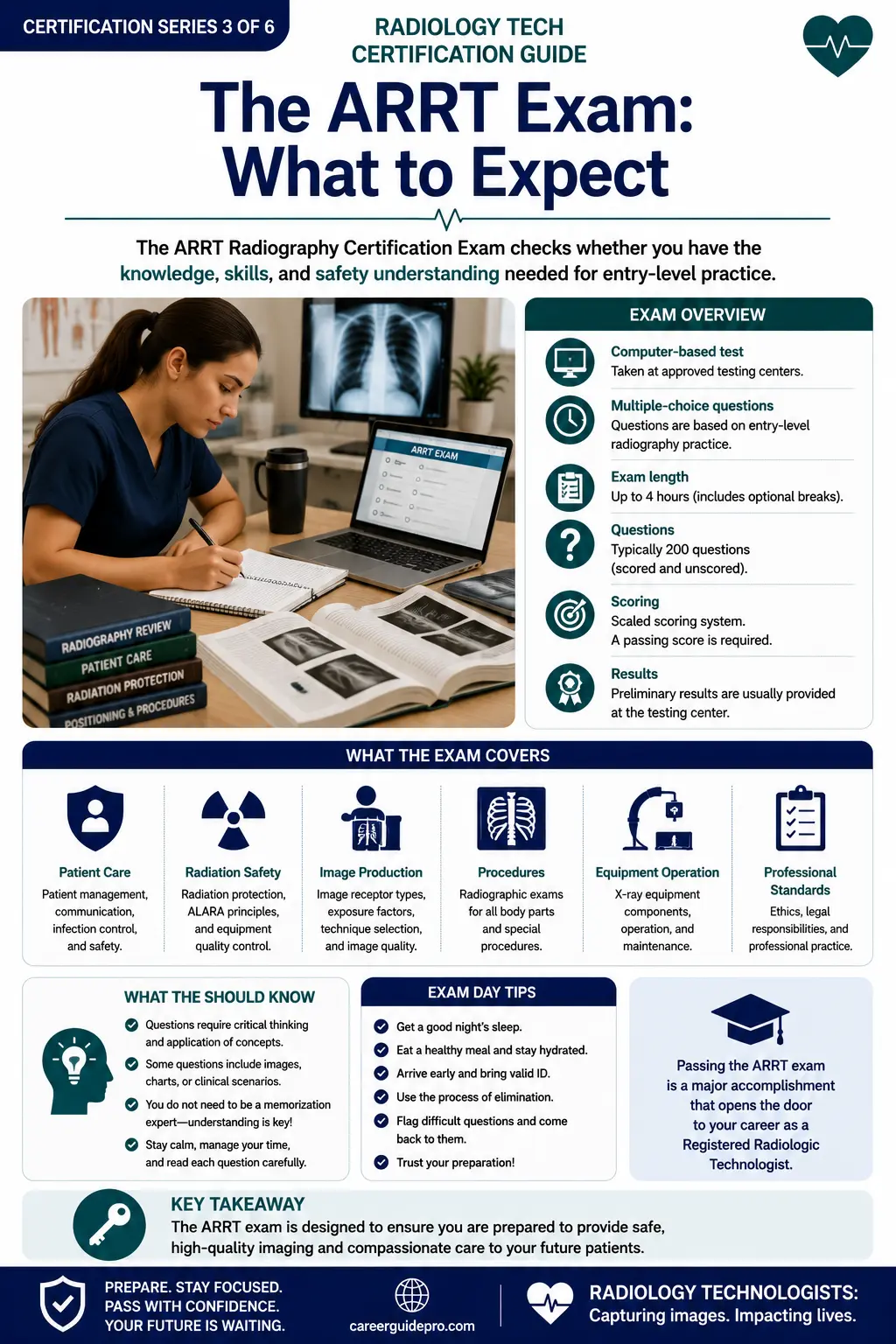
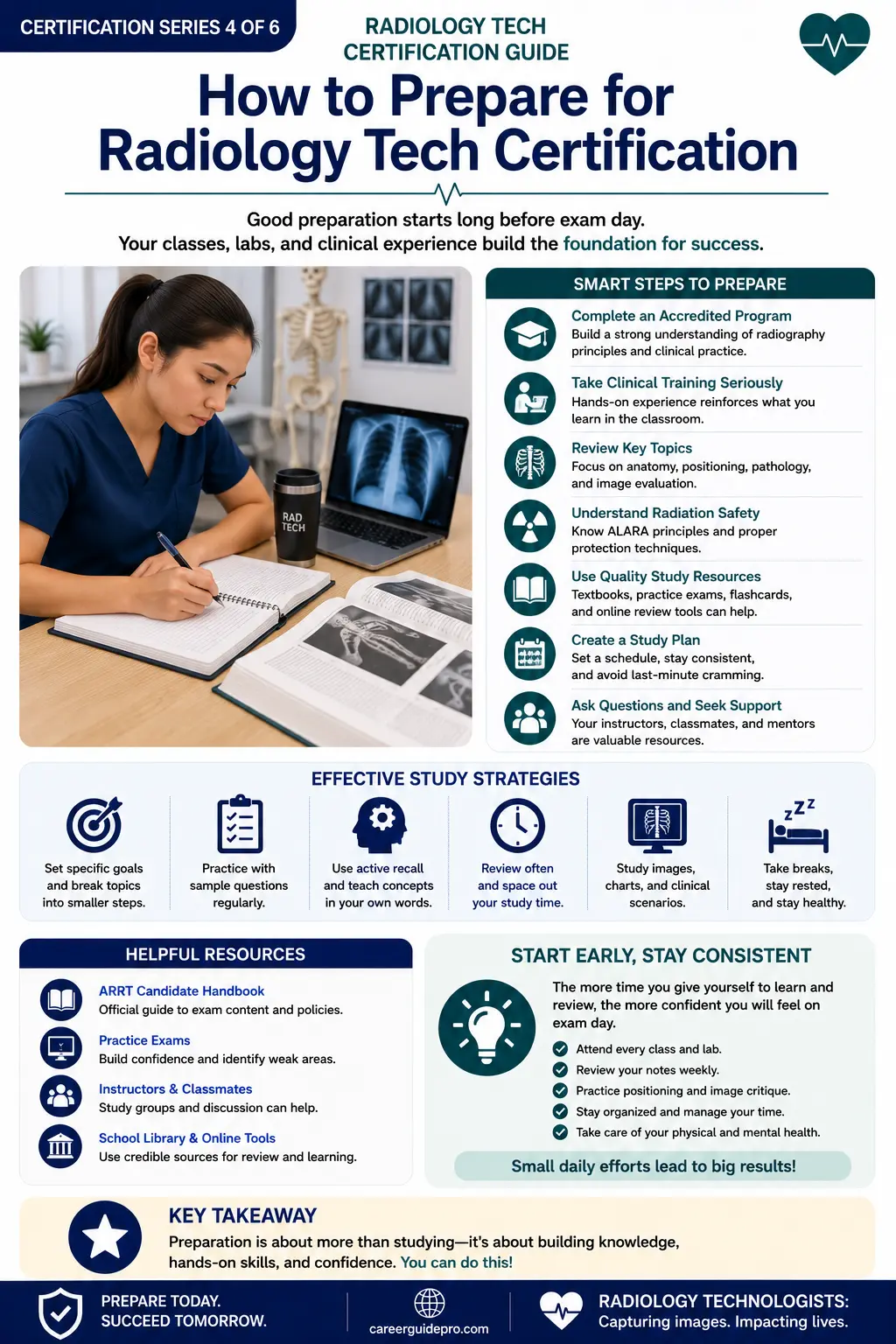
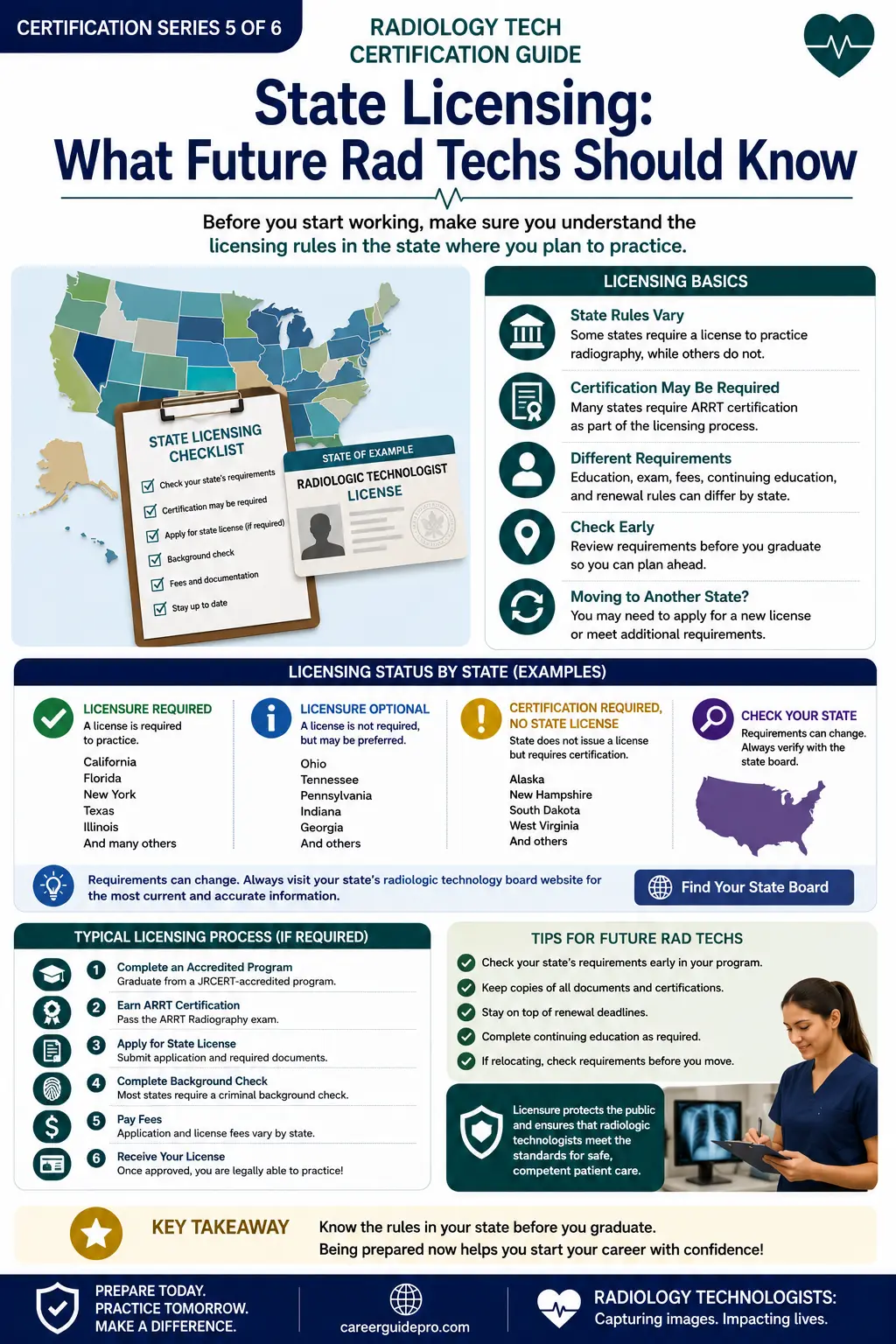
The path runs in a clear order. First, you graduate from an ARRT-recognized program, usually one accredited by JRCERT. Near graduation, you apply for the ARRT Radiography exam through your program and pay the $225 fee. Pass it, and you earn the R.T.(R) credential — a national certification. But certification isn't the same as a license. Certification is issued by ARRT nationwide; a license is legal permission to work, issued by your state. Most states require both, so you'll often need a state license in addition to R.T.(R).
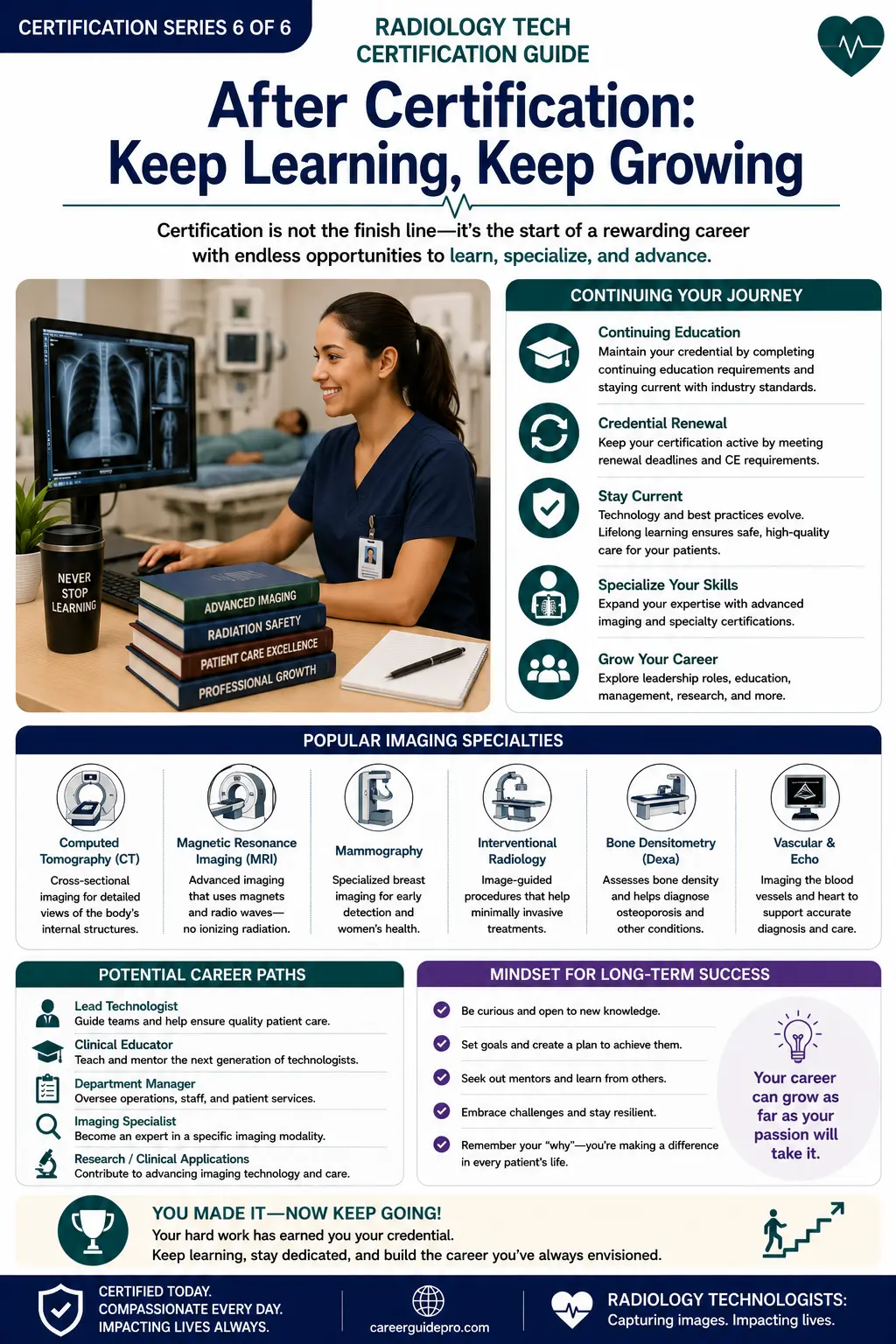
Earning the credential once isn't the end. To keep your R.T.(R) active, you complete 24 continuing education credits every two years, renew your ARRT registration annually, and stay compliant with ARRT's ethics standards. Once you're established, voluntary post-primary certifications open doors. Specialties like CT, MRI, and mammography require an active R.T.(R) plus documented clinical experience — they're optional, not required, but they typically push your pay above the $77,660 median for radiologic technologists.