What Rad Techs Can — and Can't — Do
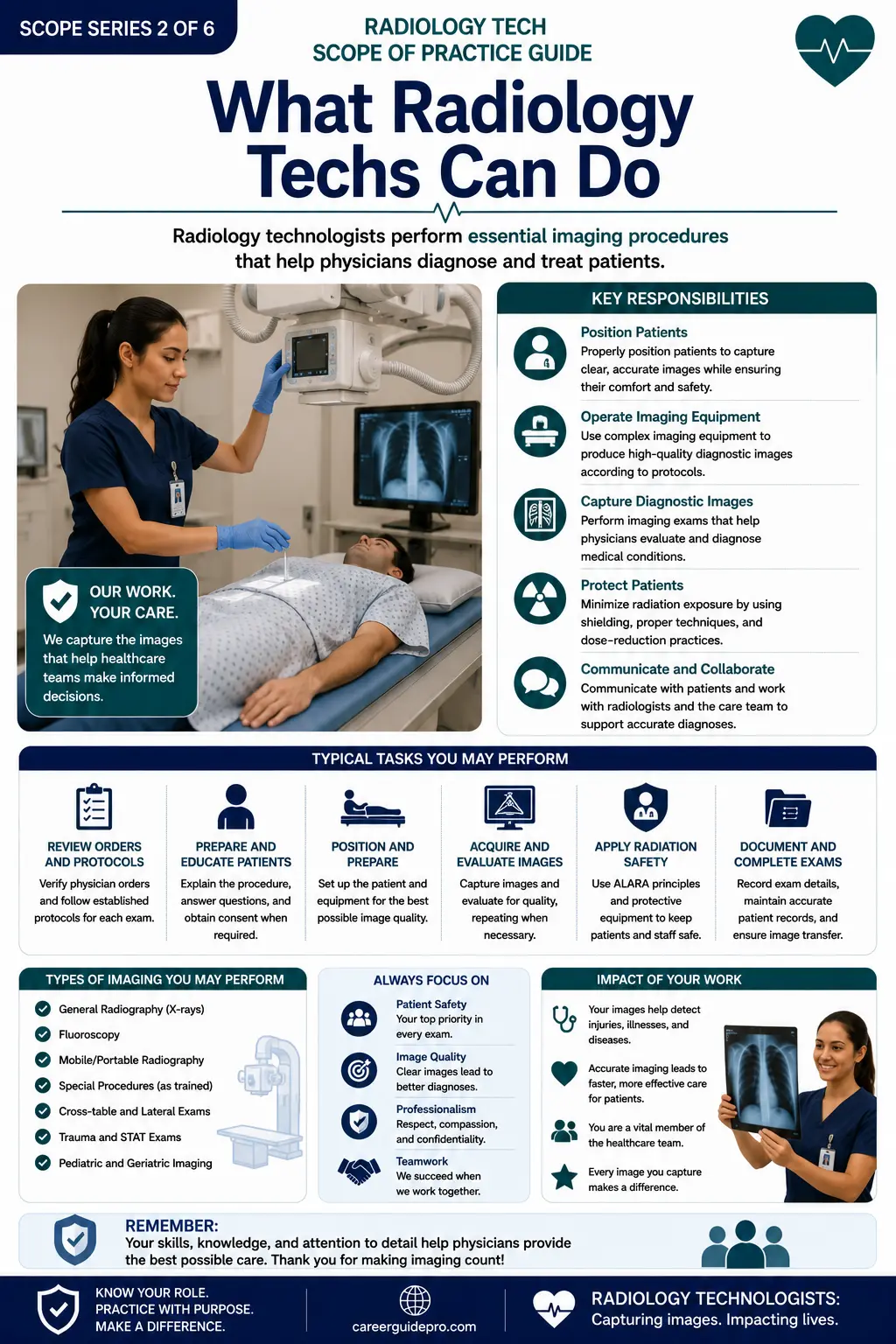
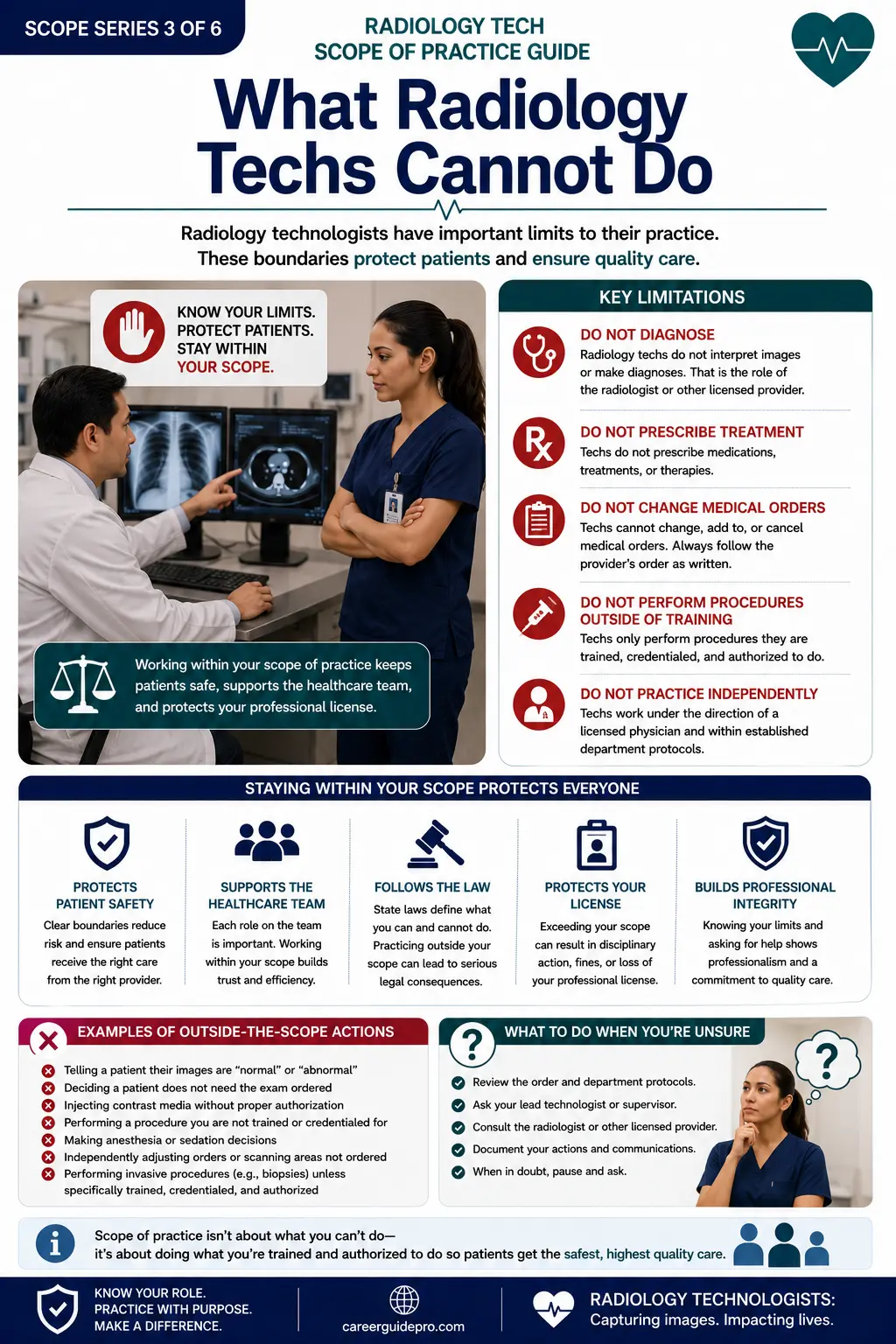
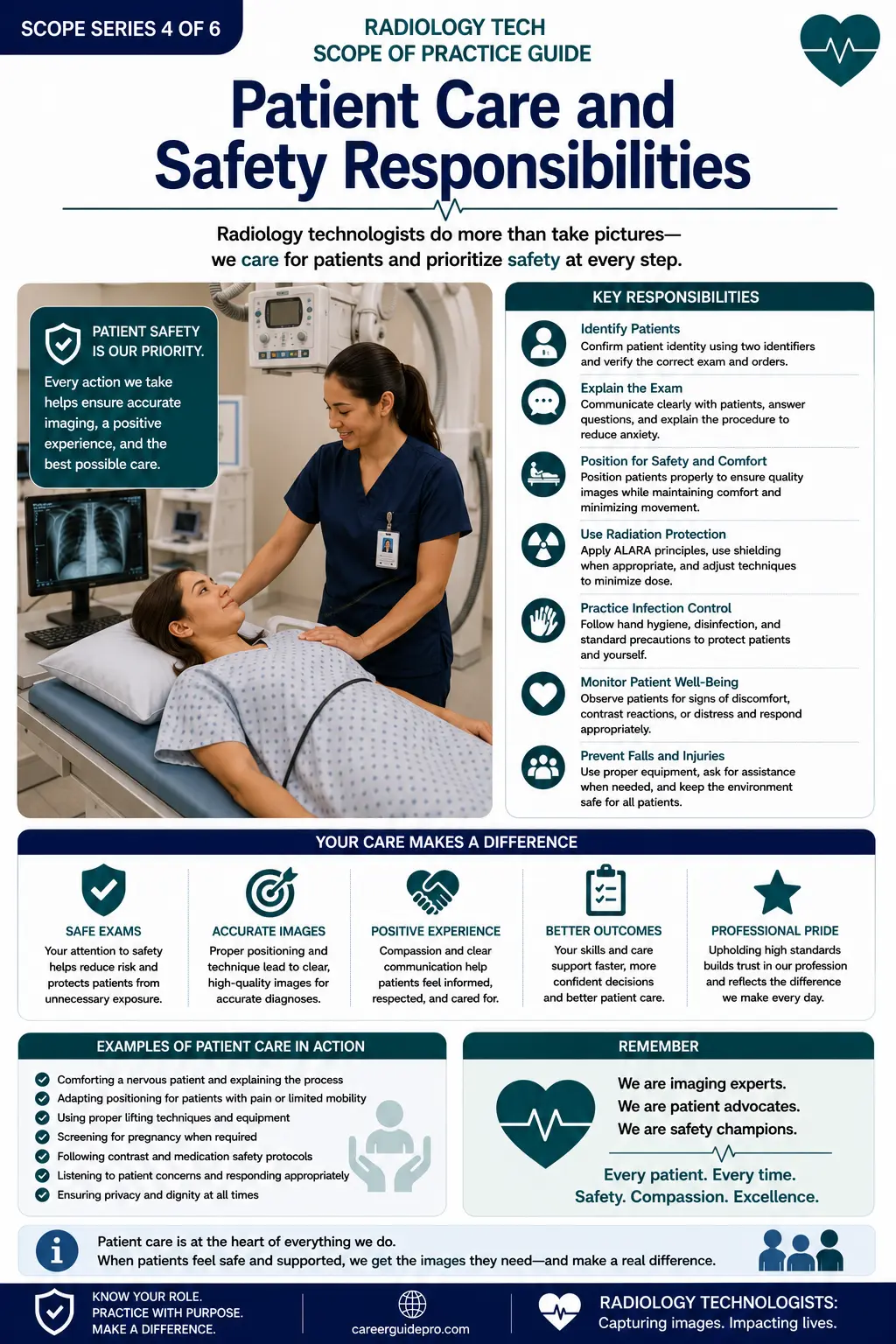
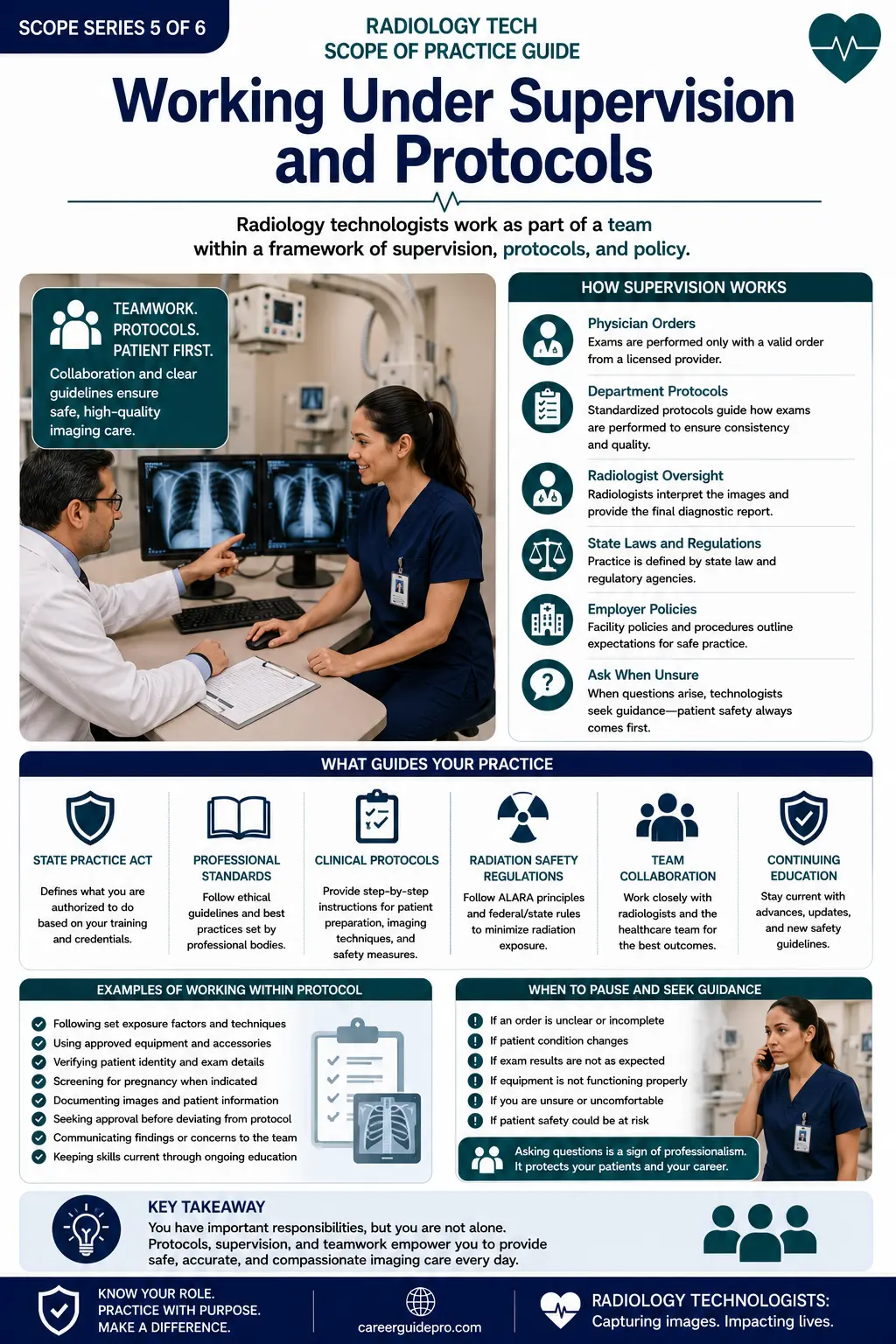
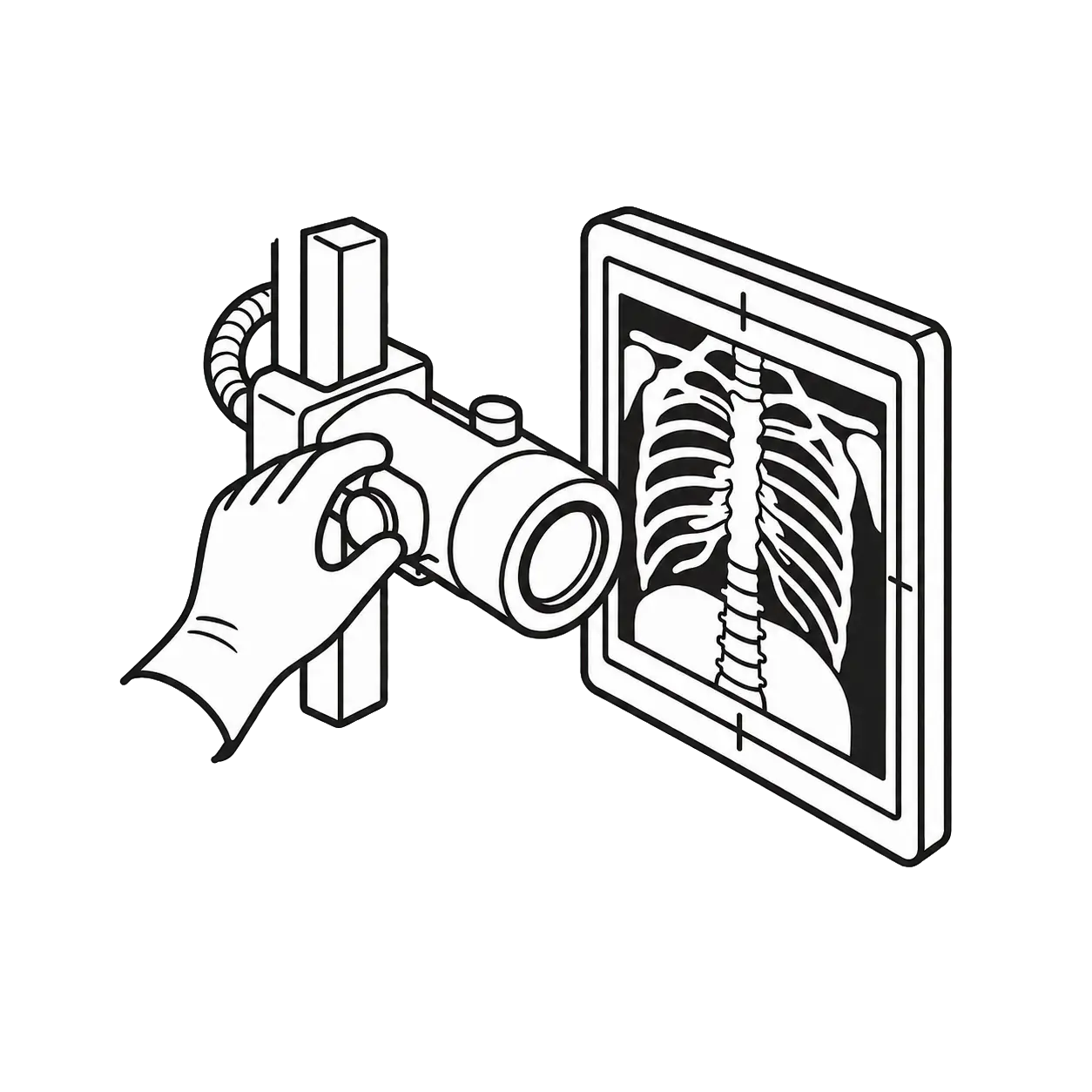
Your core job is producing quality diagnostic images. You operate X-ray and CT equipment following ordered protocols, position patients precisely, and select exposure factors. You shield patients and yourself from unnecessary radiation, confirm patient identity, prep and educate the patient, and document the exam. You evaluate whether an image is technically good enough to send to the radiologist. What you never do is interpret it. You don't diagnose, and you don't tell patients what an image shows. Even a casual "your scan looks fine" crosses the line — that finding belongs to the physician.
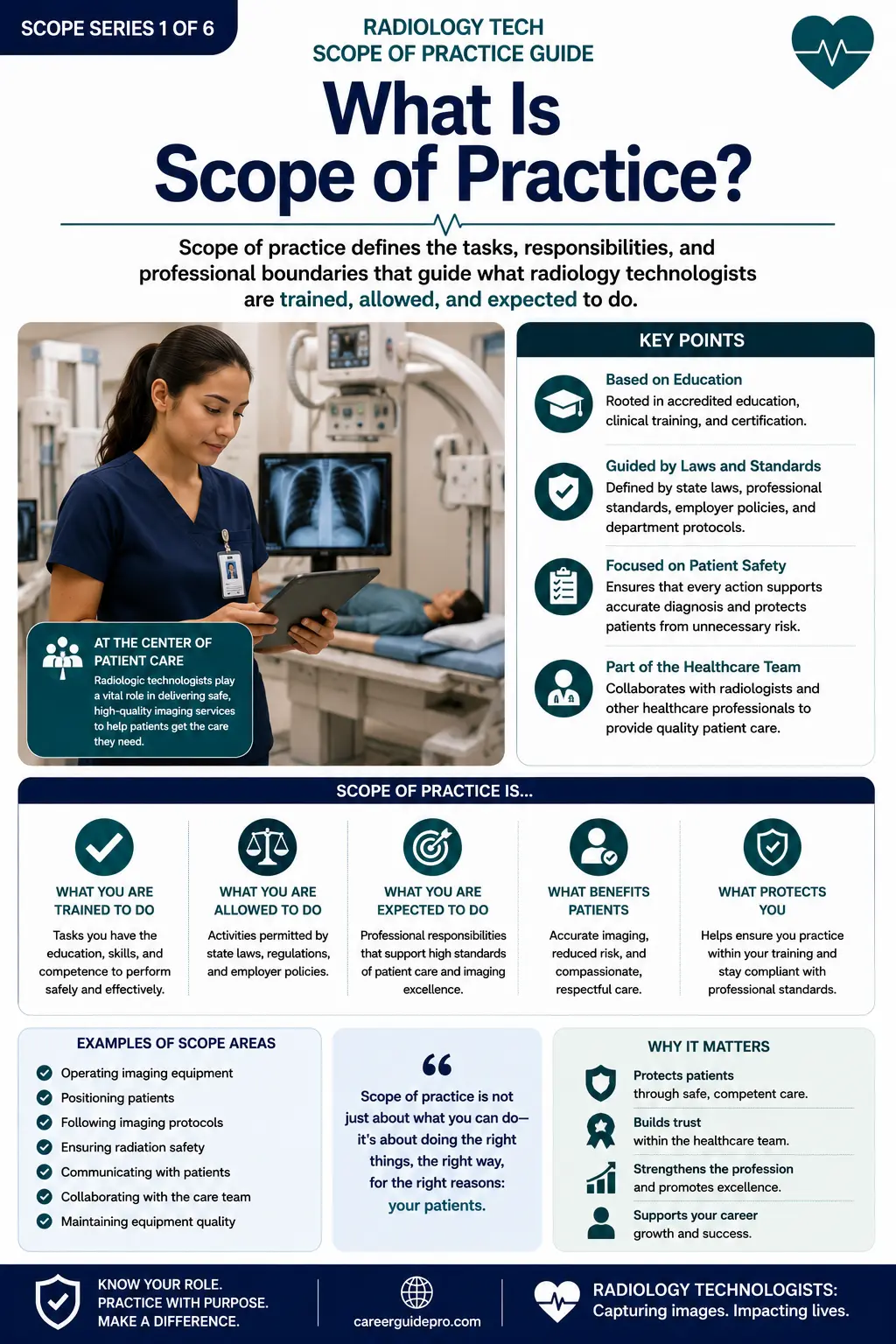
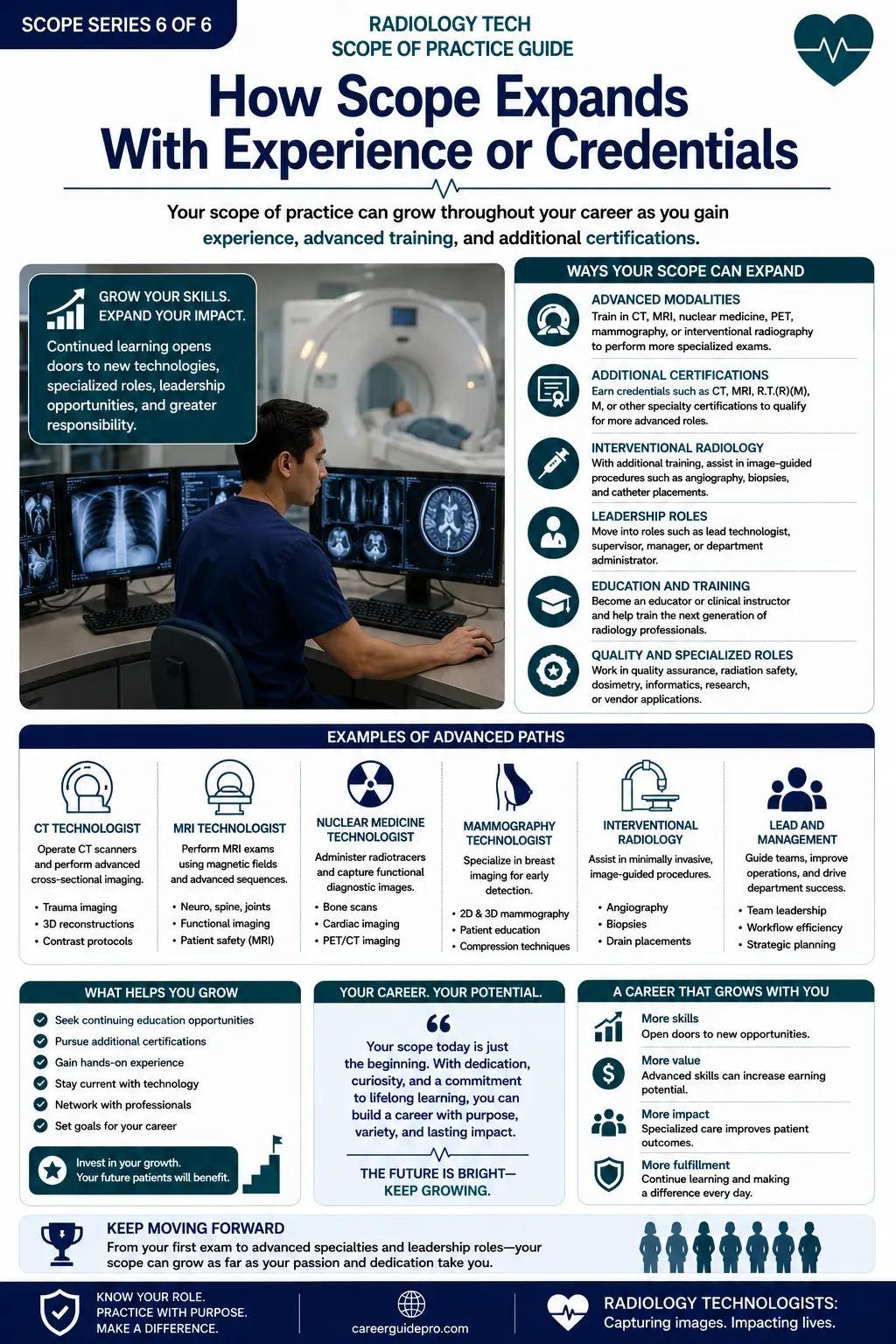
So who decides your scope? State law sets the legal limits, and your facility's policy narrows them further. ARRT certification alone doesn't grant permission — it proves competency. Some tasks genuinely vary: administering contrast media and starting IVs (venipuncture) are allowed for techs in some states and facilities but not others. These limits protect patients from harm and protect your license from discipline. Good news: your scope grows as you earn post-primary certifications in new modalities like CT, MRI, or mammography. The interpretation line, however, never moves.