What an Interventional Radiology Tech Actually Does
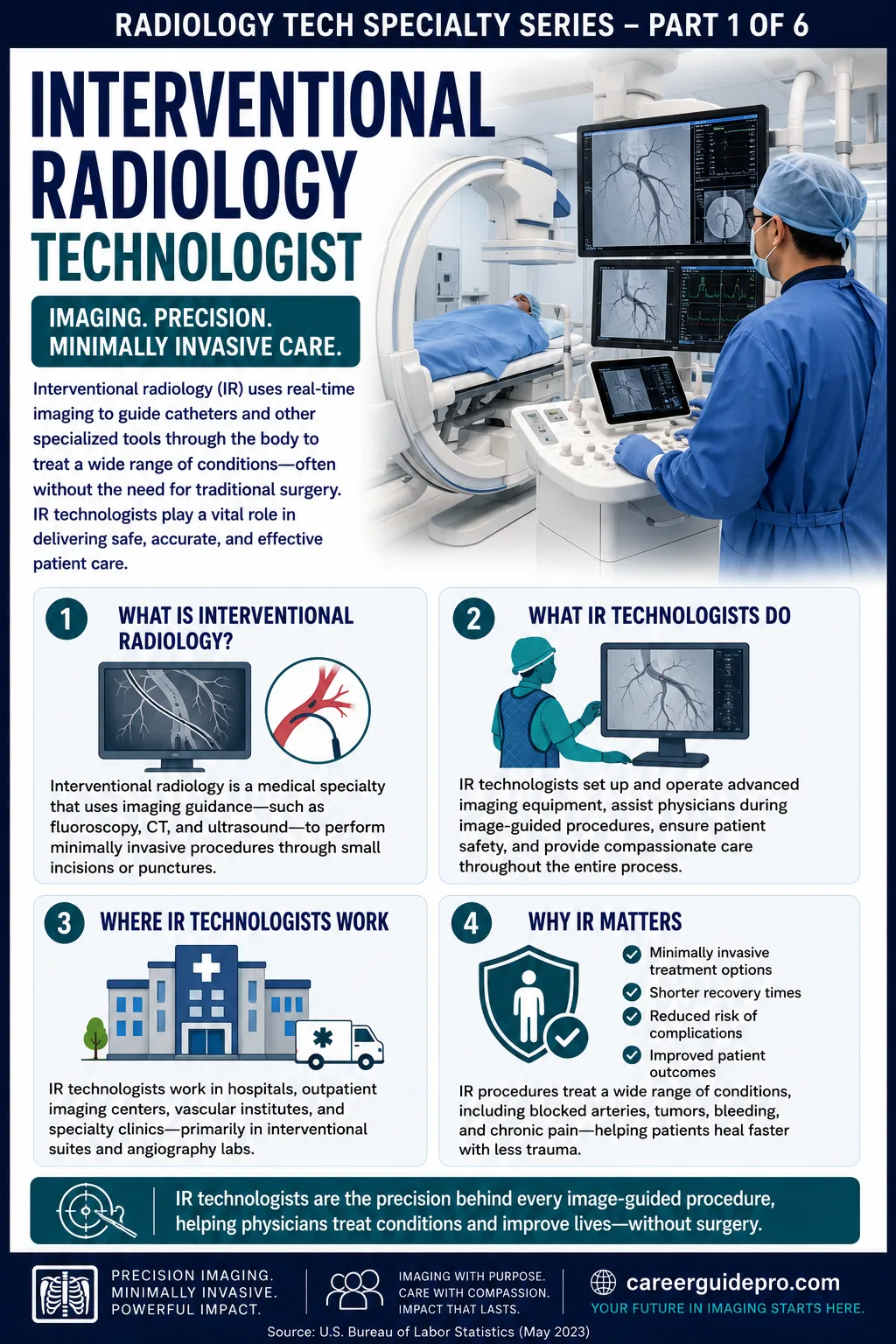
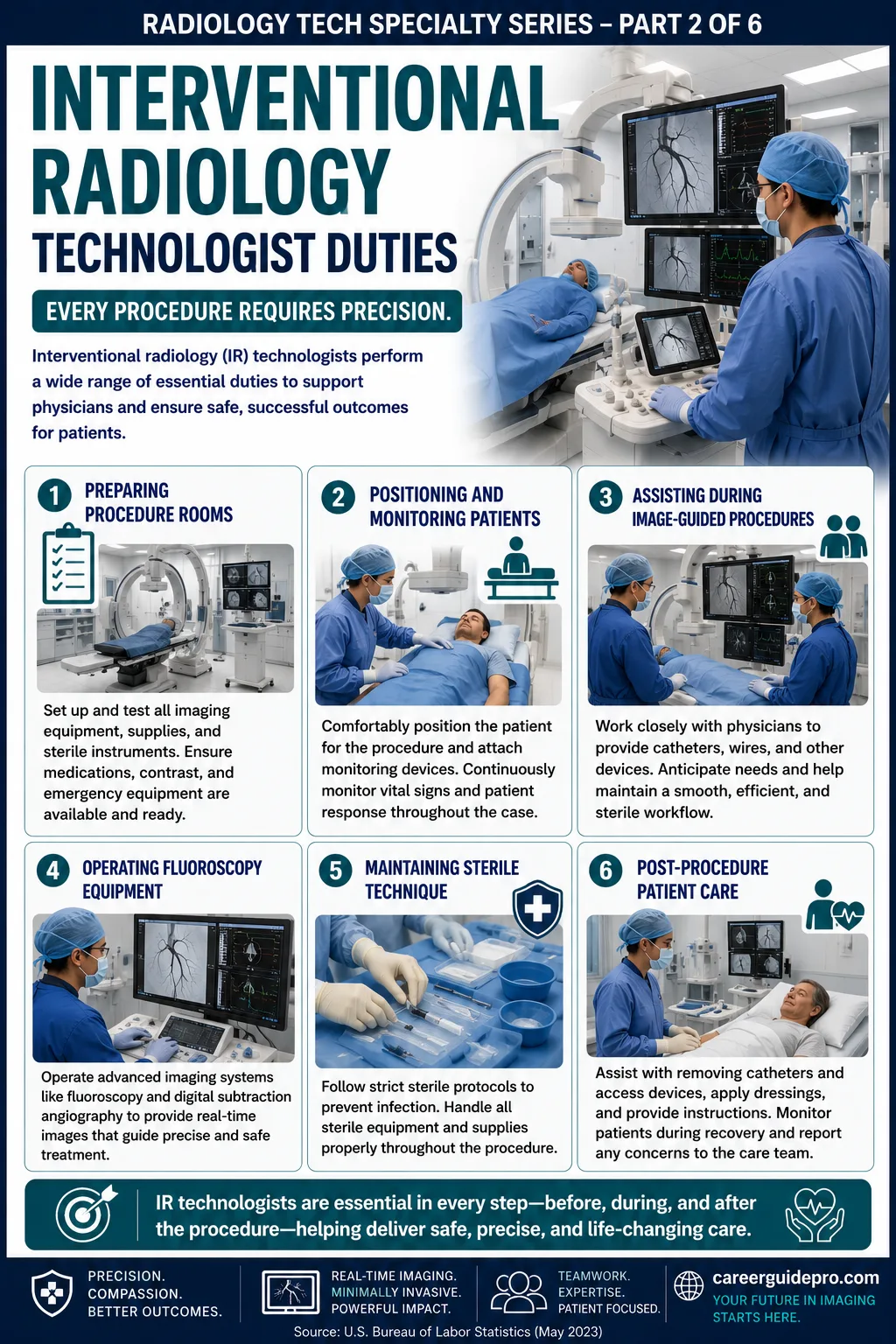
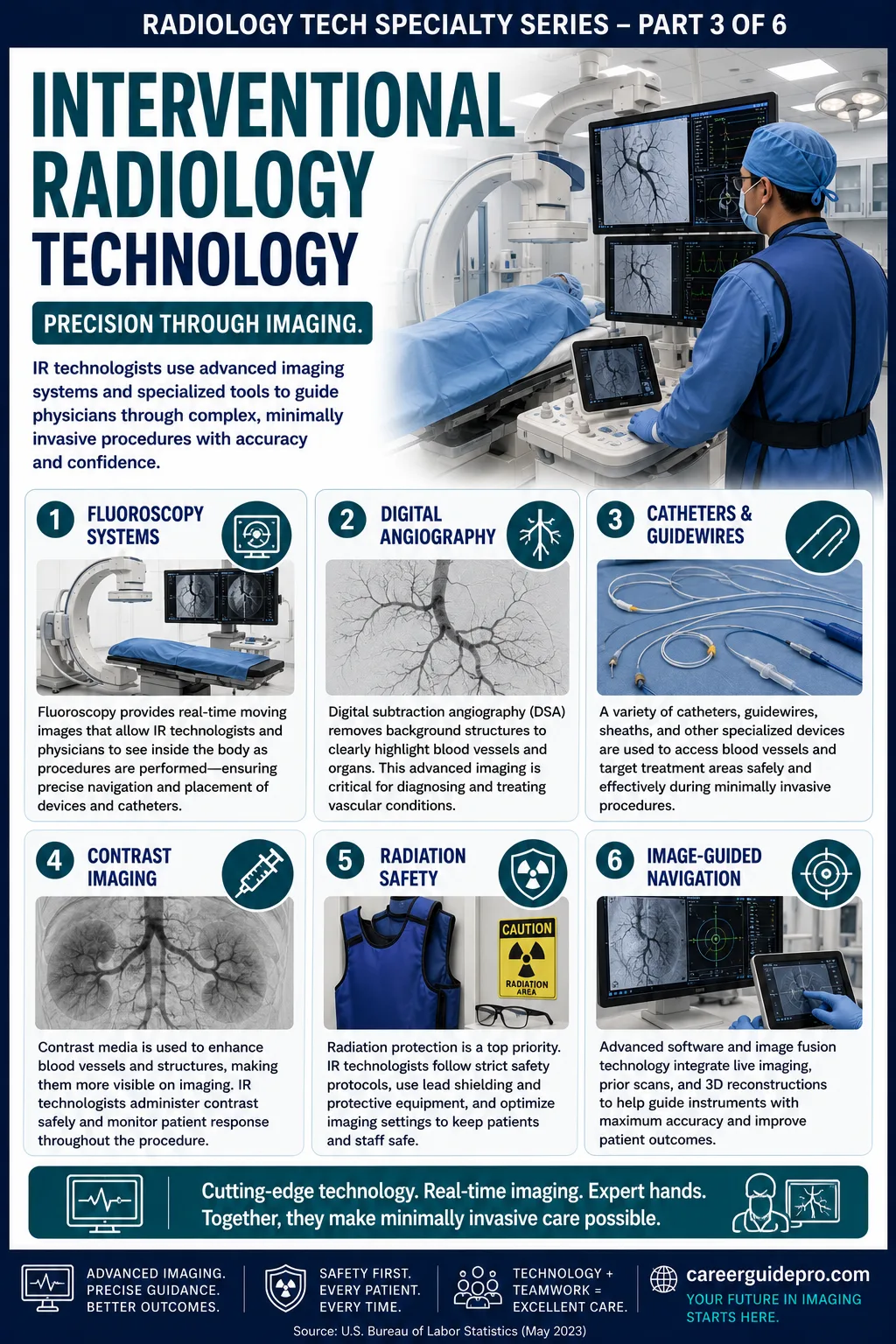
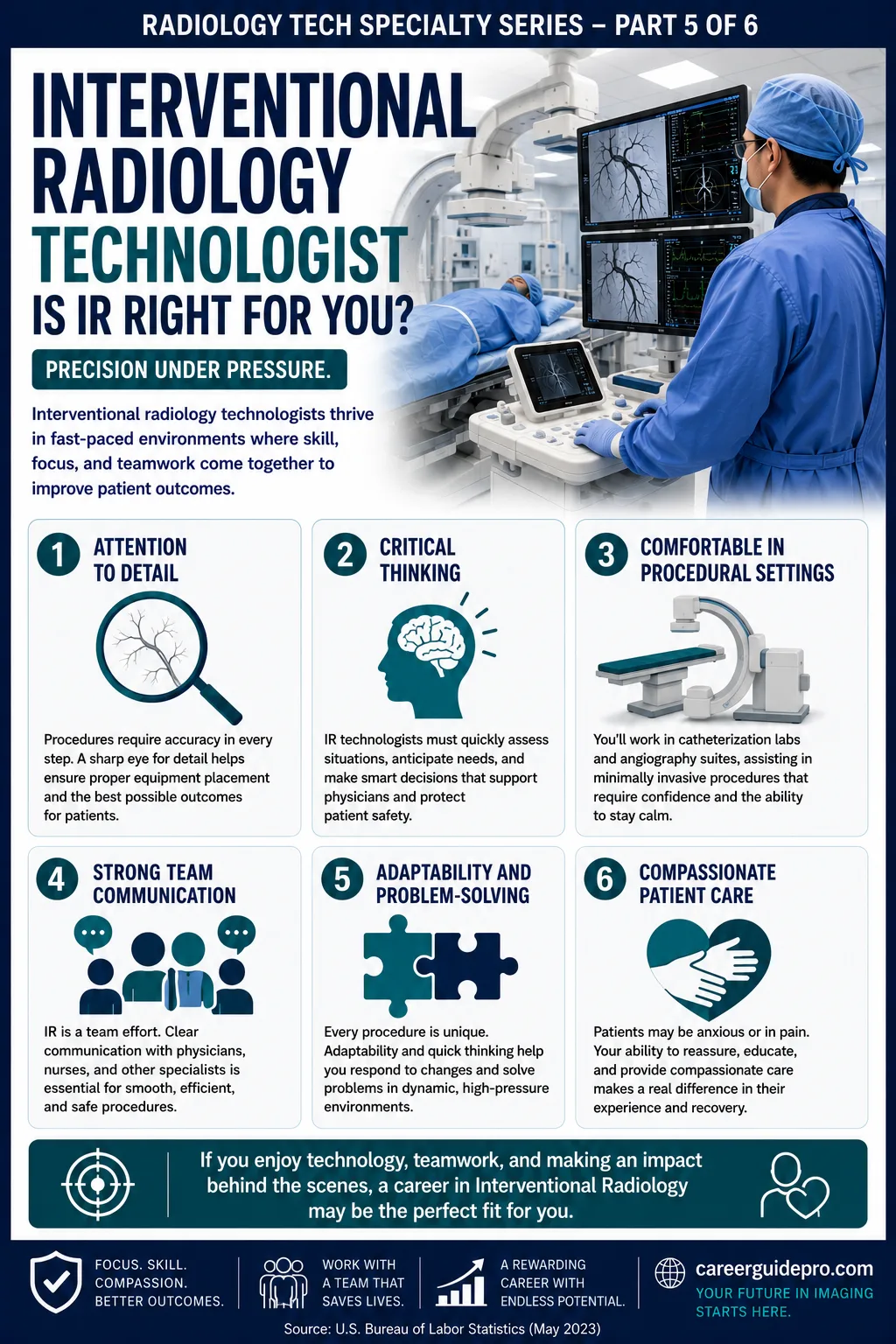
You prepare the suite, open sterile supplies, and position patients for image-guided procedures. During the case you operate fluoroscopic equipment, capture images, and assist the physician with wires, catheters, and devices. You monitor the patient within your assigned scope, document the case, and support post-procedure care. Radiation protection, sterile technique, patient identification, and contrast and medication safeguards are central to the job, not afterthoughts. You never interpret images or decide treatment — you anticipate what the team needs and catch problems fast, from sterile-field breaks to changes in patient condition.
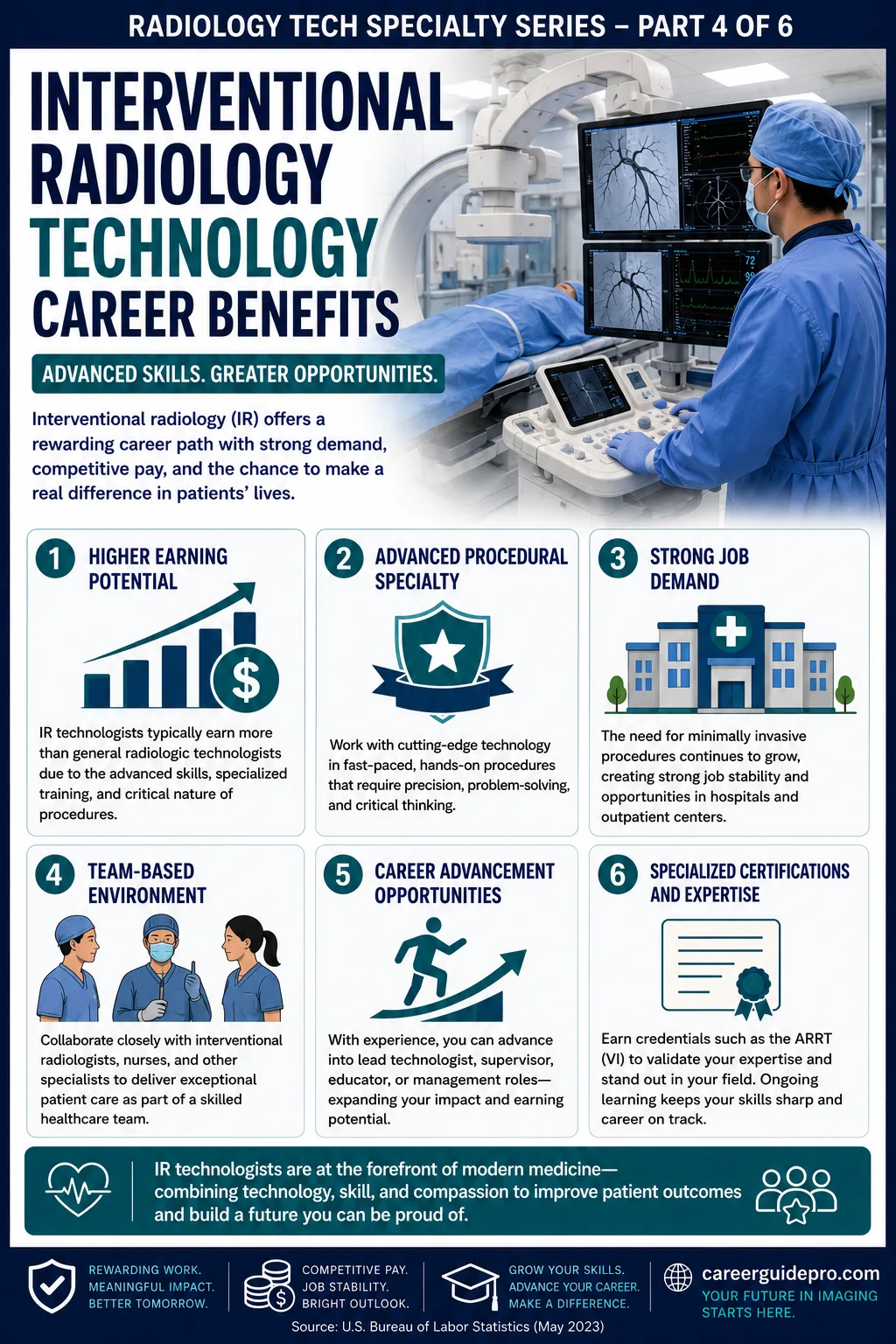
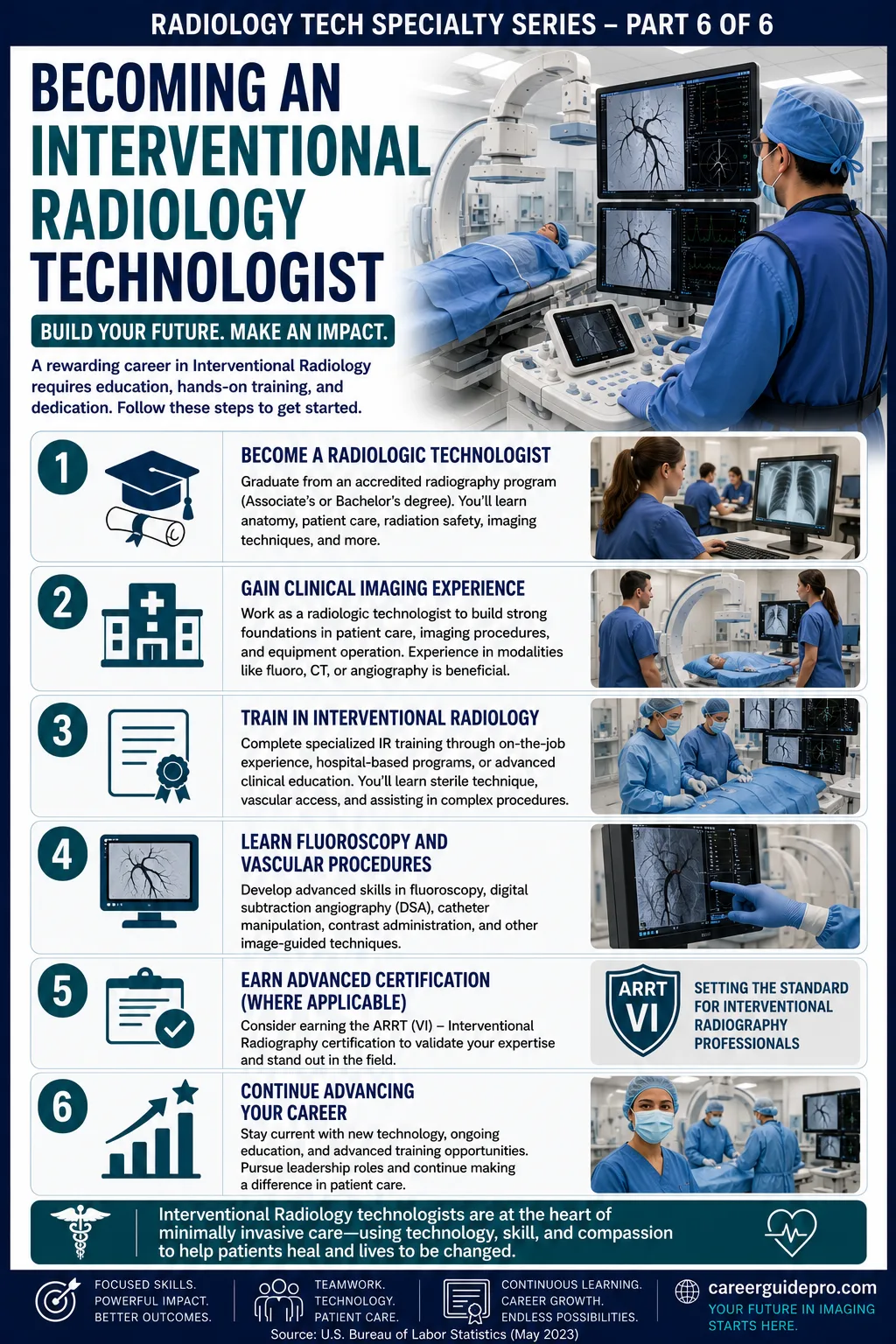
The route is a voluntary post-primary path: hold an active R.T.(R), complete structured VI education, document supervised procedures, and pass the ARRT VI exam ($225). The real bottleneck is clinical access — you need a department, physicians, and cases willing to train and verify you. The appeal is hands-on procedures, advanced imaging, and visible teamwork. The costs are call, long cases in lead, and critically ill patients. Rad tech median pay is $77,660 (BLS May 2024); IR techs sit within that broader occupation, with no separate BLS wage category.