What Advanced Imaging Actually Includes
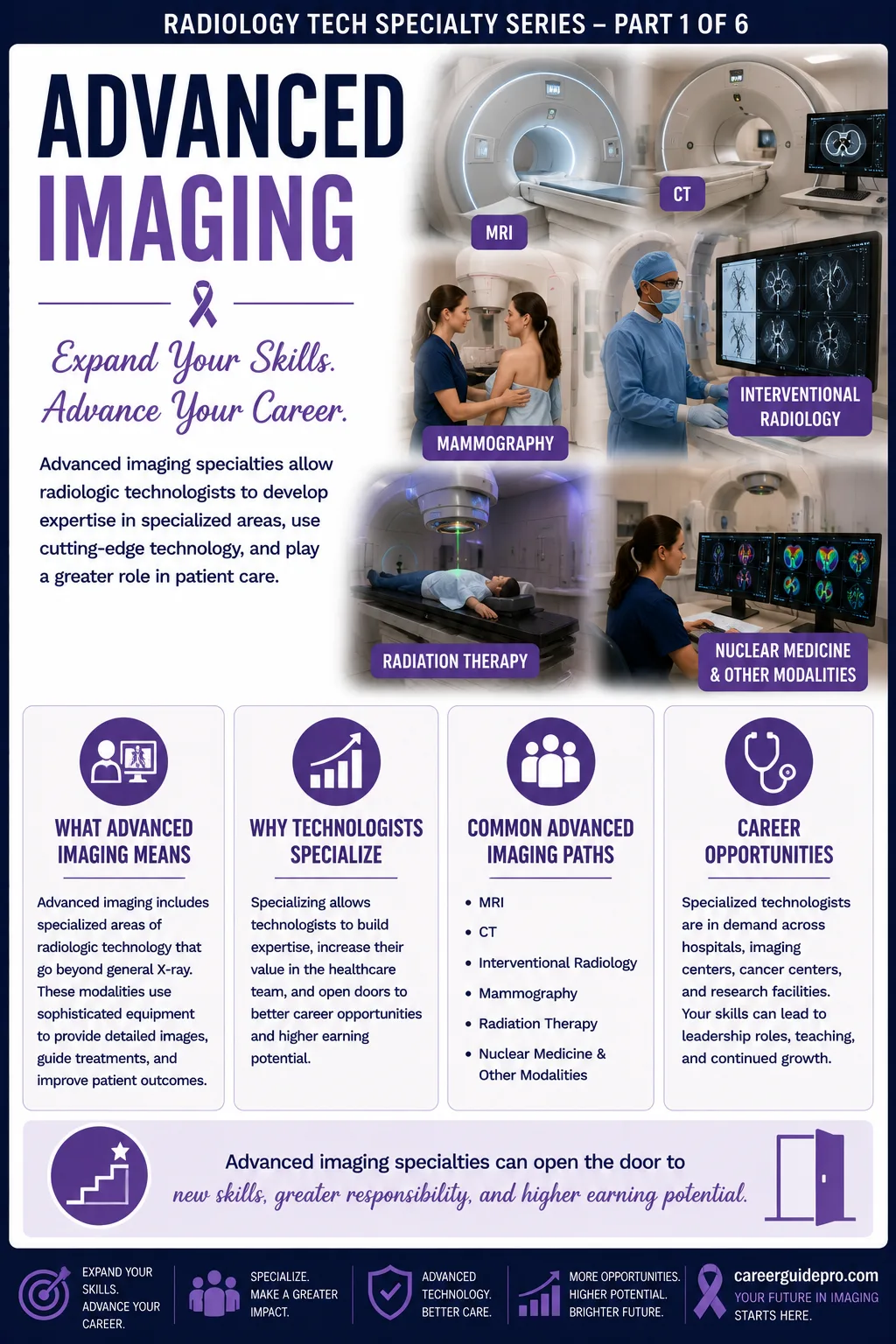
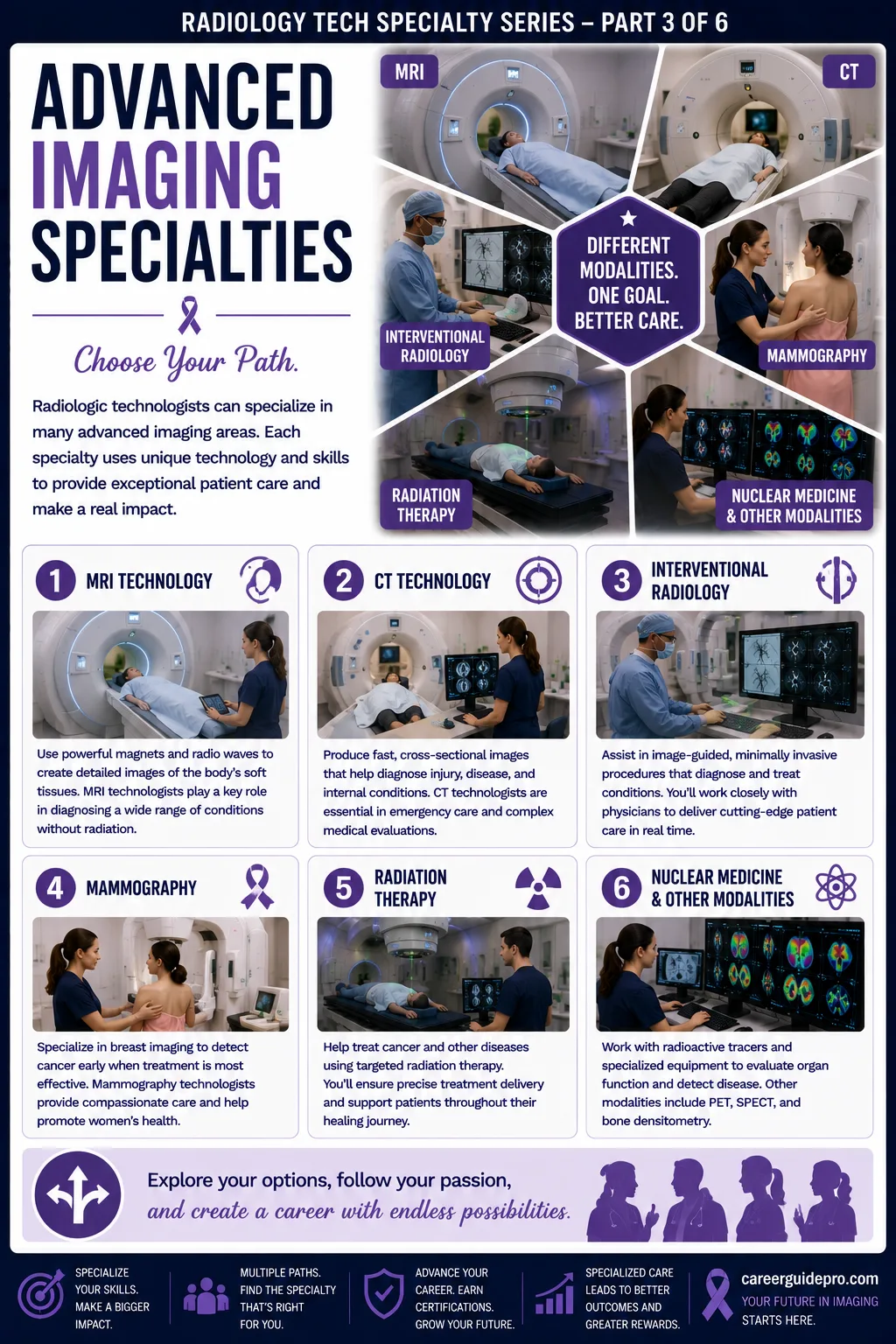
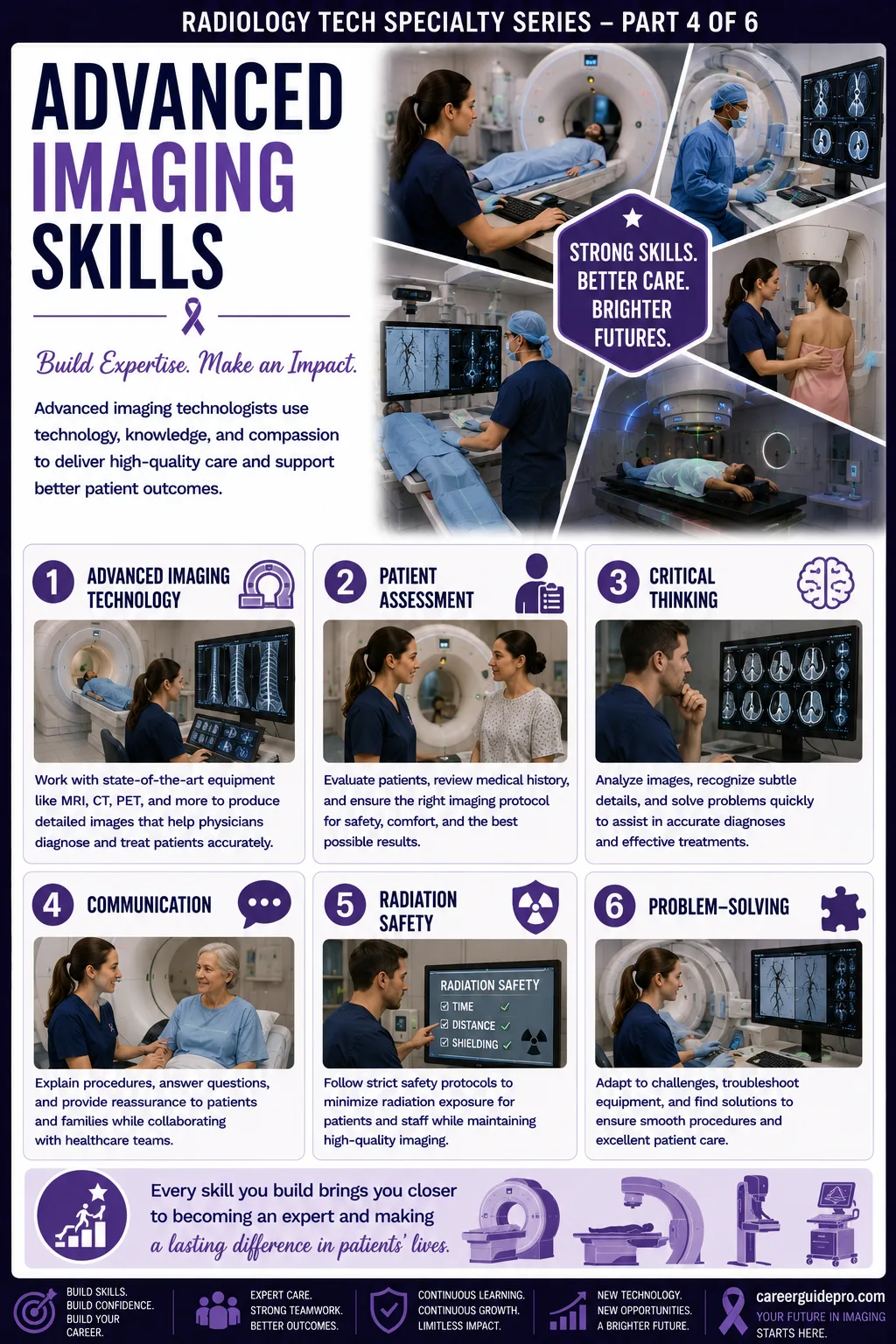
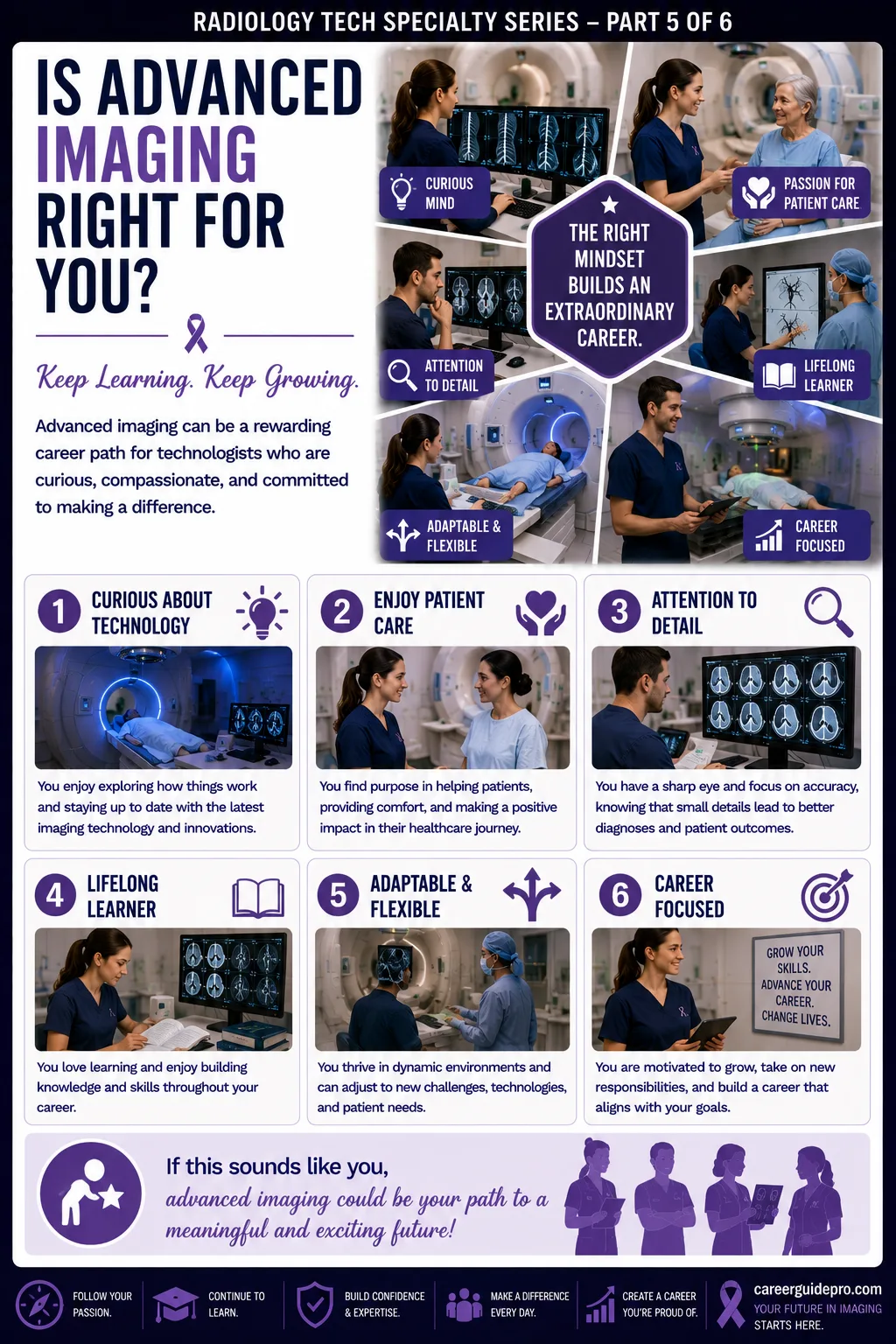
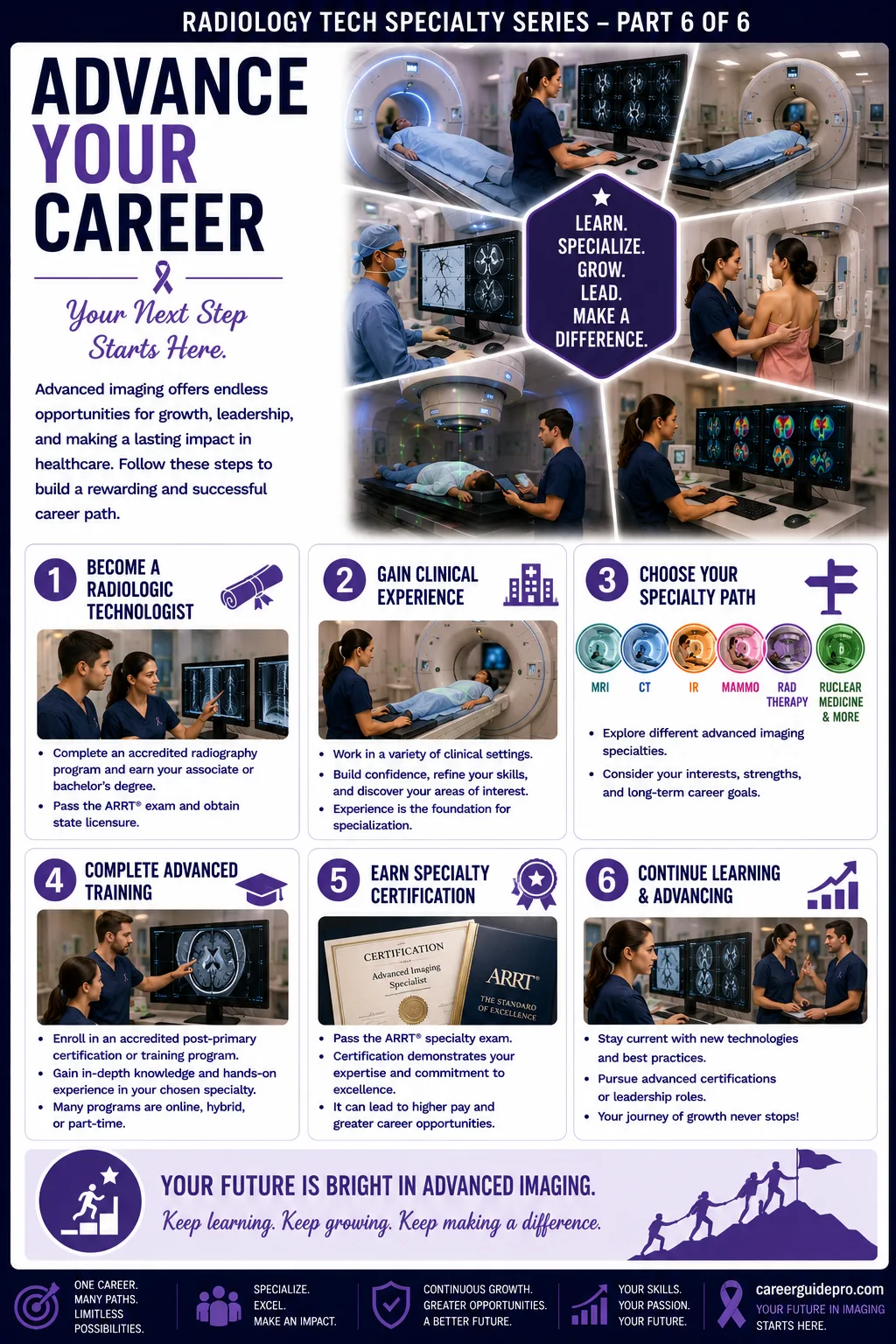
Advanced imaging covers several distinct directions rather than one job. CT emphasizes rapid cross-sectional imaging, dose management, contrast, and emergency workflow. MRI focuses on magnet safety, implant screening, longer exams, and patient coaching with no ionizing radiation. Mammography centers on breast positioning, compression, and image quality under separate MQSA rules. Interventional paths bring fluoroscopy, sterile technique, and high-acuity teamwork. Each modality has its own daily rhythm and safety culture. No modality certificate lets a technologist diagnose, independently interpret images, or share findings—scope stays controlled by state law, facility policy, and physician oversight.
The common route for a working R.T.(R) is post-primary: choose a discipline, confirm the supporting credential, complete structured education, document supervised clinical procedures, and pass the applicable exam. MRI and Vascular Sonography can also be earned through primary pathways. Clinical access is usually the bottleneck—not coursework. The appeal is broader skills and more career directions; the costs are extra education, clinical hours, exams, and ongoing competence maintenance. Rad tech median salary is $77,660 (BLS May 2024); there is no BLS "advanced imaging technologist" occupation. [VERIFY: current ARRT pathway list and requirements at ARRT.org before publishing.]