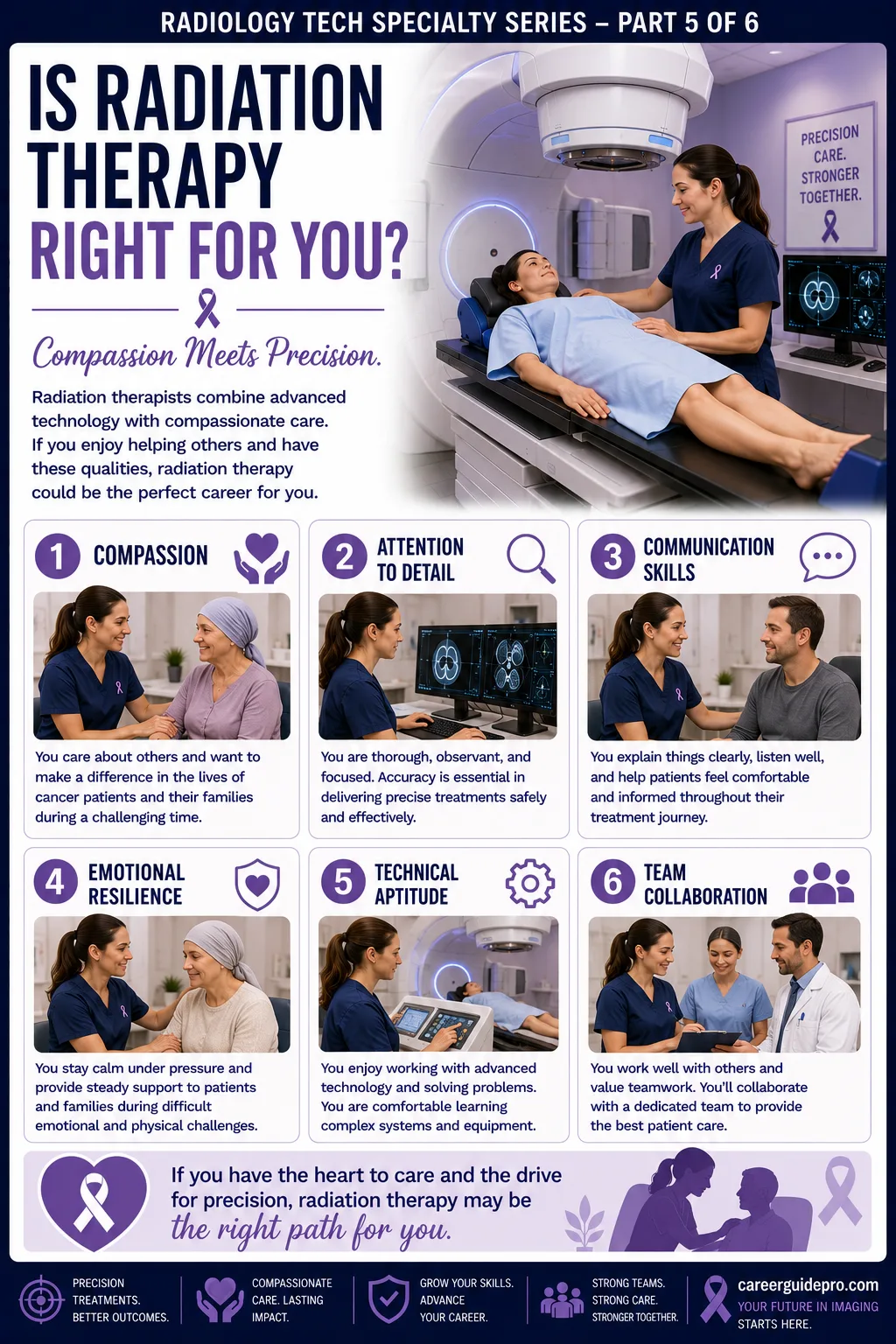
What a Radiation Therapist Actually Does
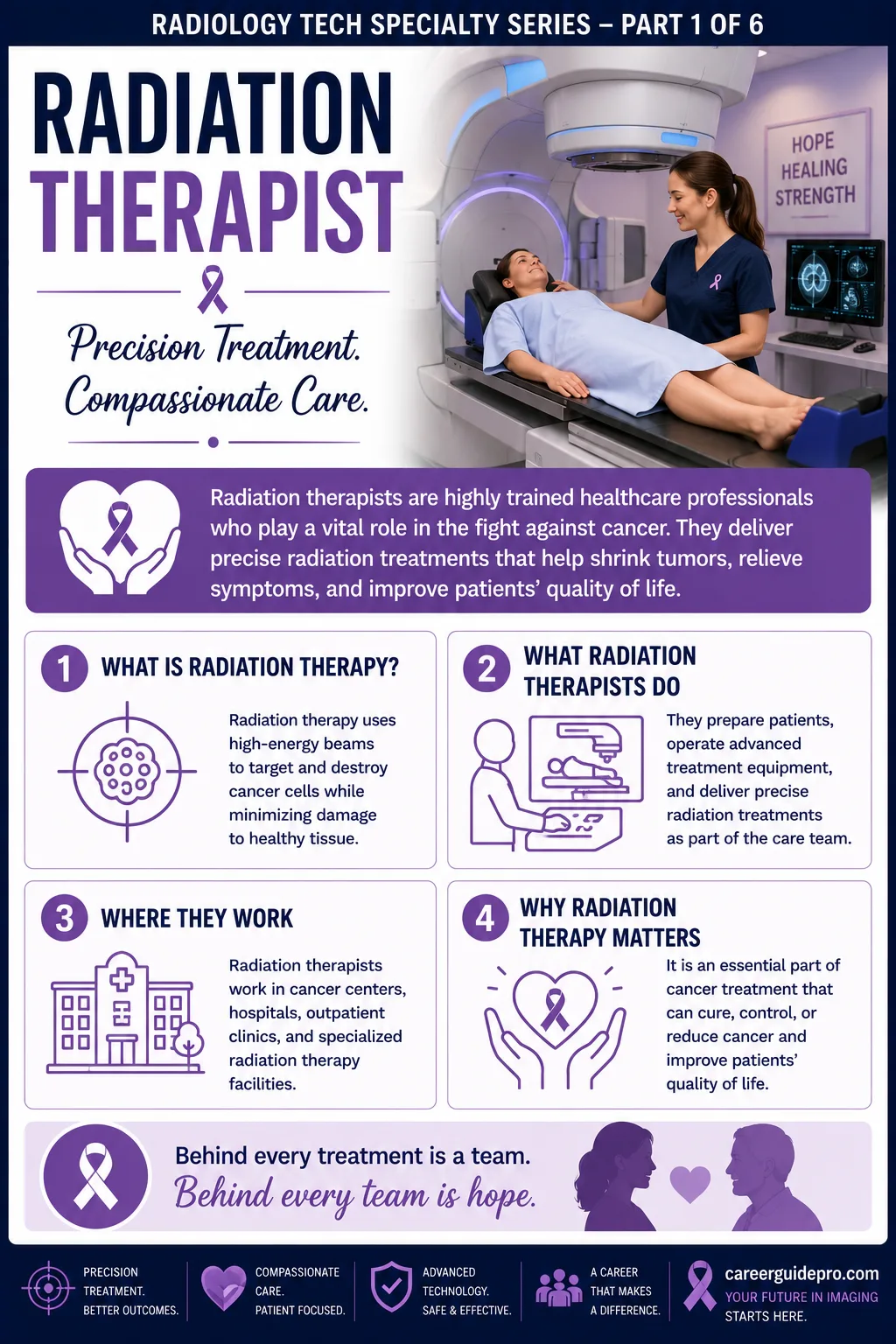
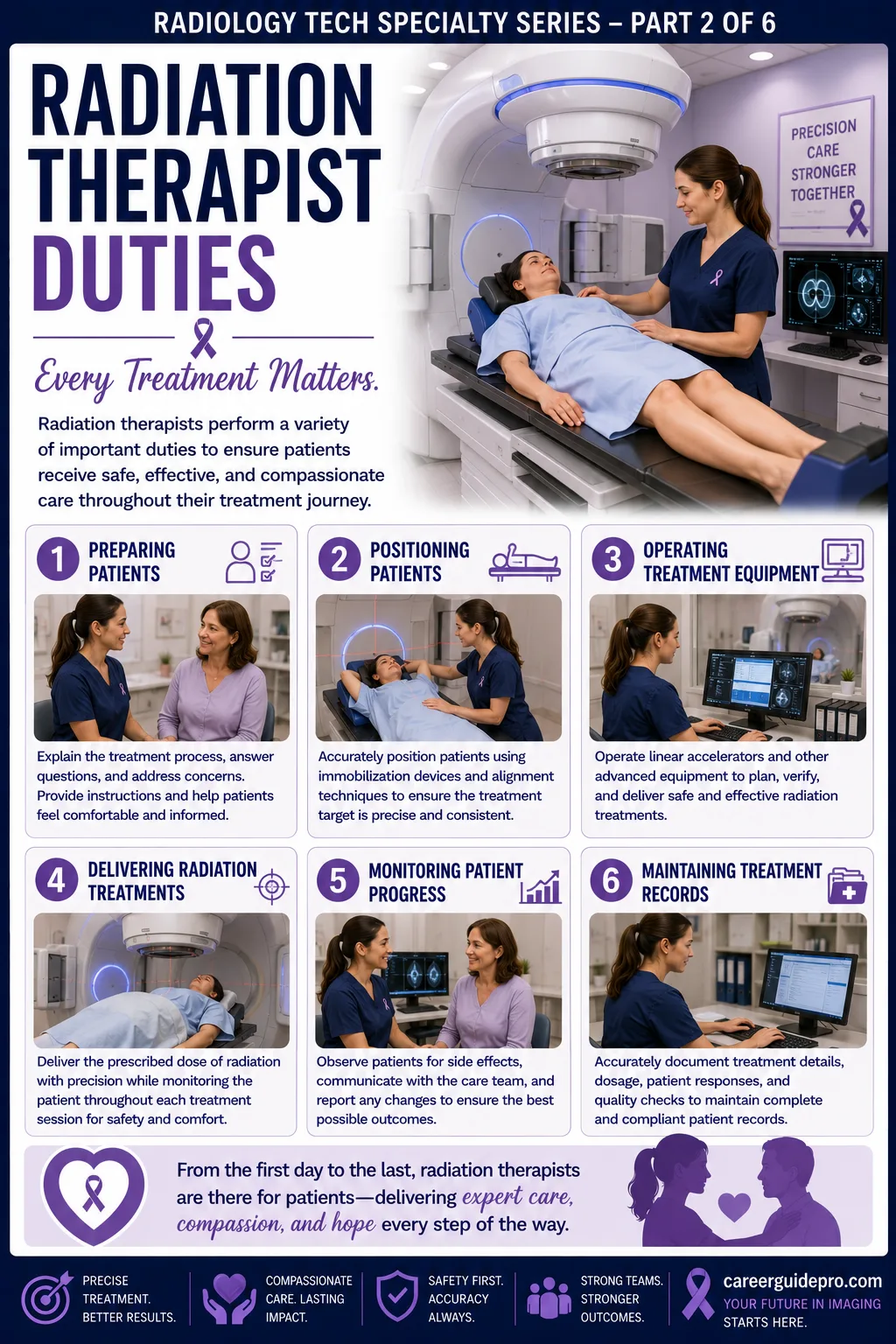
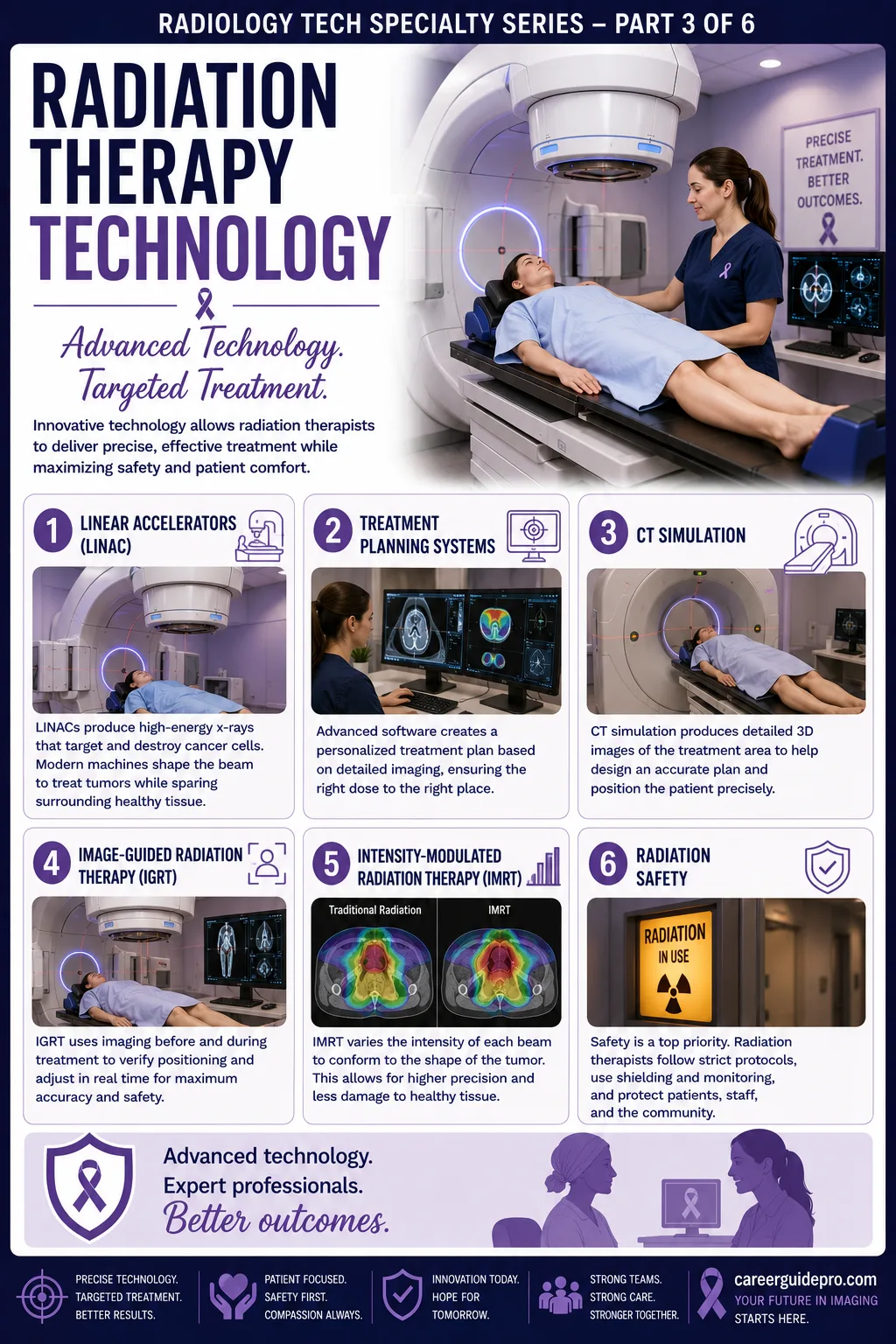
A radiation therapist delivers a prescribed course of high-energy ionizing radiation to treat cancer and other diseases. You prepare the treatment room, identify the patient, review the approved record, reproduce exact positioning and immobilization, use image guidance as directed, and operate the treatment machine. You monitor the patient, document delivery, and report concerns to the team. You never prescribe radiation, design plans independently, diagnose disease, or interpret images. The radiation oncologist prescribes; dosimetrists and physicists plan and verify. You see the same patients repeatedly across weeks of treatment, so continuity and precision define the work.
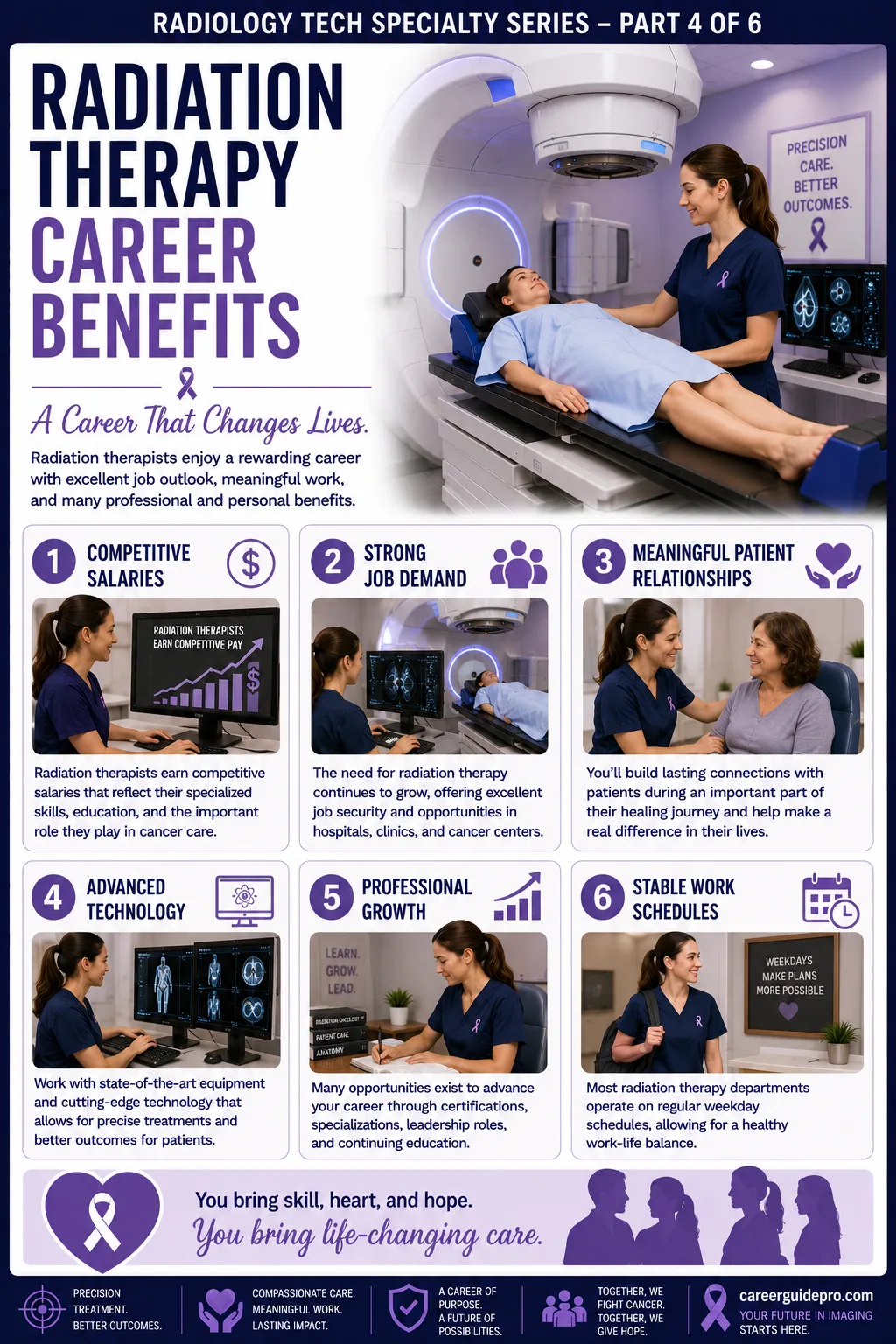
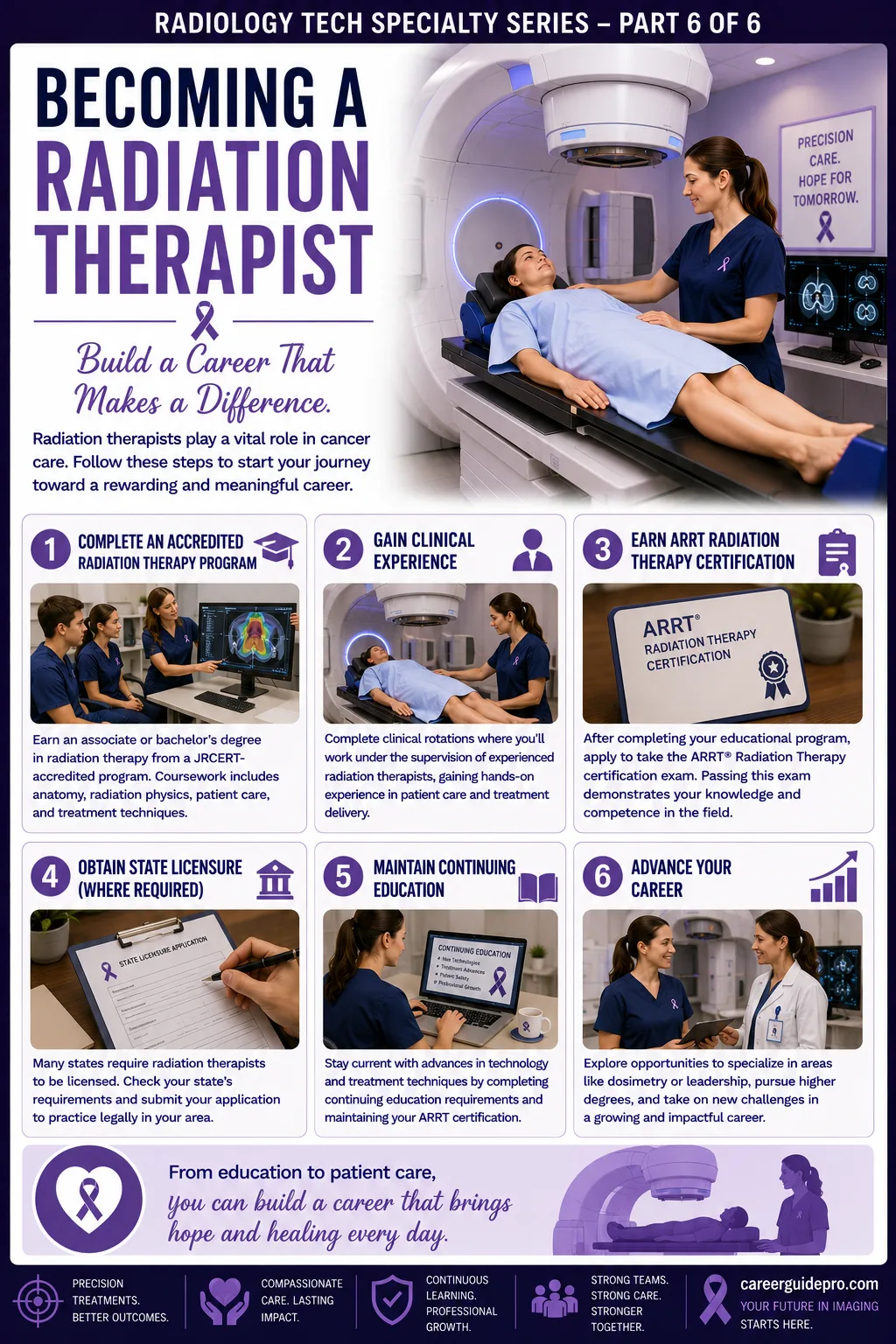
This is a separate ARRT primary pathway, not a post-primary certification you cross-train into. You need an associate degree or higher, completion of an ARRT-approved radiation therapy program with didactic and clinical competencies, compliance with ethics requirements, and the ARRT Radiation Therapy exam ($225) to earn R.T.(T). State licensing is separate. Your existing R.T.(R) may strengthen an application and transfer skills, but it does not replace the program. The appeal: higher national median pay, regular schedules, oncology teamwork, patient continuity. The costs: returning to school, clinical hours, and emotional strain. [VERIFY: current ARRT and state requirements.]